
Electric Boats' Contribution to the Rammang-Rammang Tourist Area
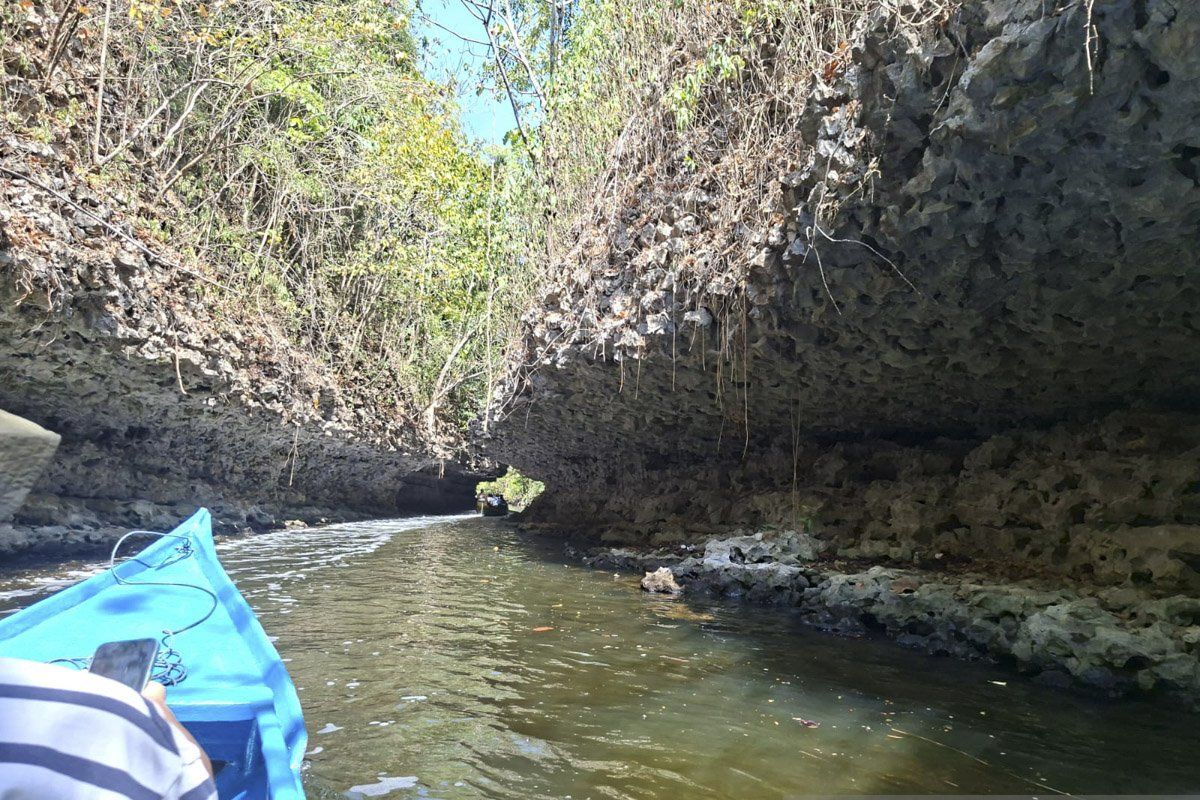
A boat glides across the river in the Rammang-Rammang Karst tourism area, a UNESCO World Heritage site, its engine so quiet it is almost inaudible.
The absence of noisy engine roar allows visitors to better enjoy the natural panorama and tranquillity of the area.
This is the advantage of the electric boats provided by PT PLN to support transport in the Rammang-Rammang Karst tourism area in Maros, South Sulawesi.
According to Sunardi, a member of the Anak Sungai Community, the electric boat provided by PLN in 1992 is not only silent but also more economical than fuel-powered boats.
Amid global uncertainty that has caused fuel supply problems, electric boats have become a mainstay in supporting connectivity in the tourism area.
The electric boats are used not only to transport domestic and international tourists but also to support the mobility of local children travelling to school.
The electric boats are also admired and have become the transport mode of choice for international tourists from countries such as Saudi Arabia, the Netherlands, Spain and Australia because they support the sustainability of the Rammang-Rammang destination.
The Rammang-Rammang tourism area has a number of captivating spots and is considered the second most beautiful karst site in the world after China. Many tourists take photographs both from the boats and when disembarking.
Beyond its beautiful panoramas, the UNESCO World Heritage site also contains a number of tourism areas estimated to date back 5,000 to 20,000 years.
For example, at Pier 1 there is an ancient cave containing prehistoric human palm-print wall paintings tens of thousands of years old.
The tourism area also has a Bidadari Lake that is a favourite among foreign tourists because it can be used for bathing while enjoying the beautiful scenery.
Such valuable tourism assets certainly require environmentally friendly vehicles such as electric boats to preserve their sustainability.
When the UNESCO assessor team came in 2022 to evaluate the Rammang-Rammang tourism area, they were taken around the site by electric boat. Likewise, when the team returned to validate the karst tourism area in 2026, electric boats were again present as environmentally friendly transport.
The presence of electric boats will certainly be a positive factor in the assessment because the destination has already implemented environmentally friendly practices.
PLN’s electric boat assistance to support the Rammang-Rammang Karst destination was eventually followed by other parties, such as the local government, which provided three additional electric boats.
With the additional electric boats from the local government, the electric boat fleet in the area has grown and is ready to support transport for tourists and local residents.
Positive impact of TJSL
The presence of electric boats initially stemmed from PLN’s Corporate Social and Environmental Responsibility (TJSL) programme. As an energy company in Indonesia, PLN is committed to implementing the Sustainable Development Goals (SDGs) through various initiatives.
As part of its corporate strategy, PLN focuses on realising clean energy and reducing environmental impact by investing in various sustainability initiatives. PLN aims to align its business operations with global climate standards. To that end, it is increasing energy access and ensuring sustainable energy production.
In addition to environmental goals, PLN is actively involved in community empowerment through its TJSL programme. These initiatives are designed to support local communities through environmental and community improvement and empowerment. Through TJSL, PLN helps create sustainable opportunities and improve quality of life in its operational areas.
One tangible contribution of the TJSL programme is PLN’s electric boat assistance in support of the Rammang-Rammang Karst destination.
In terms of specifications, the electric boat uses a 1.47 kW motor with a 2x58 Volt DC battery. Compared with a diesel engine, the electric boat is silent, making visitors more comfortable during their visit.
The fibreglass electric boat is 6.2 metres long and 1 metre wide, allowing it to carry up to seven tourists.
PLN Maros Customer Service Unit Manager Sadrach said that in addition to producing no noise, the electric boat is also environmentally friendly and therefore causes no pollution in the Rammang-Rammang tourism area.
To support the operation of the electric boats, PLN has also built a public electric vehicle charging station (SPLU) at Pier 2 in the tourism area.
The SPLU has a capacity of 7,700 watts and allows the electric boats to be recharged in about two to three hours. The SPLU built by PLN certainly supports tourist transport mobility well in the tourism area.
One current challenge is the need for an electric boat maintenance workshop.
PLN is considering providing an electric boat maintenance workshop in the future. In addition, the state-owned electricity company is also thinking about adding SPLU facilities in the Rammang-Rammang tourism area if the number of electric boats there continues to grow.
TJSL programmes such as PLN’s electric boat assistance in the Rammang-Rammang tourism area not only contribute positively to environmental preservation and energy savings but also help connectivity in transport for tourists and local residents.
Source: jawawa.id (https://jawawa.id/newsitem/electric-boats-contribution-to-the-rammang-rammang-tourist-area-1786424058)
Originally published by Antara (Indonesian) (https://www.antaranews.com/berita/5688665/kontribusi-perahu-listrik-bagi-kawasan-wisata-rammang-rammang), translated from Indonesian