
Electric Adventure Motorcycle Technology Begins to Enter Dual-Purpose Segment
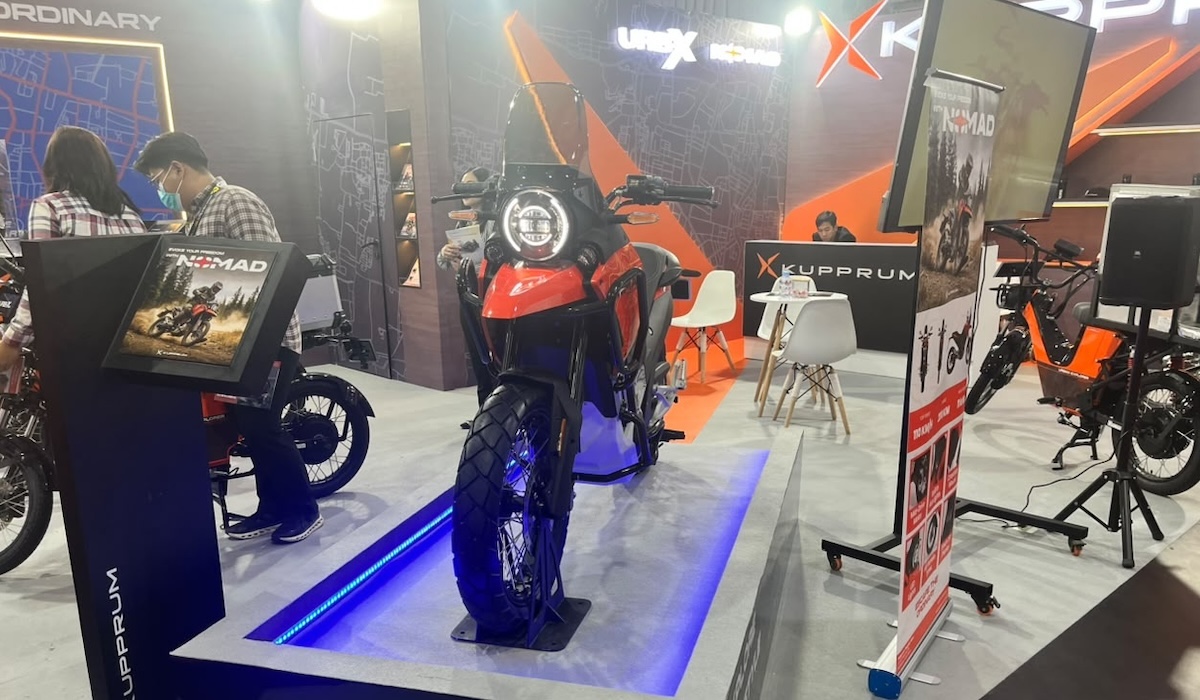
An electric motorcycle in a dual-purpose format, previously introduced as a prototype at GIIAS 2025, has reappeared in its production version at GIIAS 2026 held at ICE BSD City, Tangerang. The unit was also made available for brief testing in the exhibition’s test ride area, although the confined space meant not all performance aspects could be thoroughly evaluated. The short test provided an initial impression of the riding position, acceleration response, handling characteristics, and suspension performance. In terms of design, the NOMAD adopts a dual-purpose motorcycle approach with an upright seating position, an open frame structure, and elements designed for use on both paved roads and uneven surfaces. Its designer, Nafi Nugraha, stated that the concept was developed to meet diverse mobility needs. He explained that the NOMAD was chosen as an answer to the varied mobility requirements of the Indonesian public, presenting a local electric motorcycle that offers a futuristic design and dynamic performance. ‘This motorcycle is designed not only for urban users who need a stylish and tough vehicle, but also for those who enjoy adventure—or even just for traversing urban floodwaters,’ Nafi said on Wednesday (5/8). Upon first sitting on it, the weight of around 170 kilograms felt quite significant, but the mass distribution seemed concentrated in the lower centre, influenced by the placement of the 72V 95Ah lithium battery used as the main power source. The upright riding position provides wide forward visibility, a configuration common in adventure category motorcycles as it supports control both when seated and standing on the footpegs. When the throttle was twisted from a standstill, the motorcycle displayed the instant response typical of electric vehicles. Power from the 11 kW electric motor felt immediately available, with a relatively smooth and predictable delivery characteristic at low speeds. However, the limitations of the test area at the exhibition meant testing could not reach high speeds, including the manufacturer’s claimed top speed of 200 km/h. Manoeuvring at low to medium speeds showed the motorcycle to be stable enough for urban use and light track simulations. On the simulated bumpy track and corners in the test ride area, the suspension dampened uneven surfaces reasonably well, with no signs of harsh jolts during the brief test, although further evaluation is still needed for extreme road conditions. This test did not cover actual off-road conditions, long-distance travel, or use with a full load. The manufacturer claims the motorcycle has a top speed of up to 200 km/h, but this figure could not be verified during the exhibition area test. Other information such as range, charging time, battery management system, and water resistance was not explained in detail during this session. Kupprum stated the normal price for the NOMAD is Rp85 million on the road in Jakarta. Information regarding the distribution schedule, homologation status, battery warranty, service network, and spare parts availability remains an important part of assessing the product’s market readiness.