
Election Bill and the Crossroads of Women's Representation in Parliament
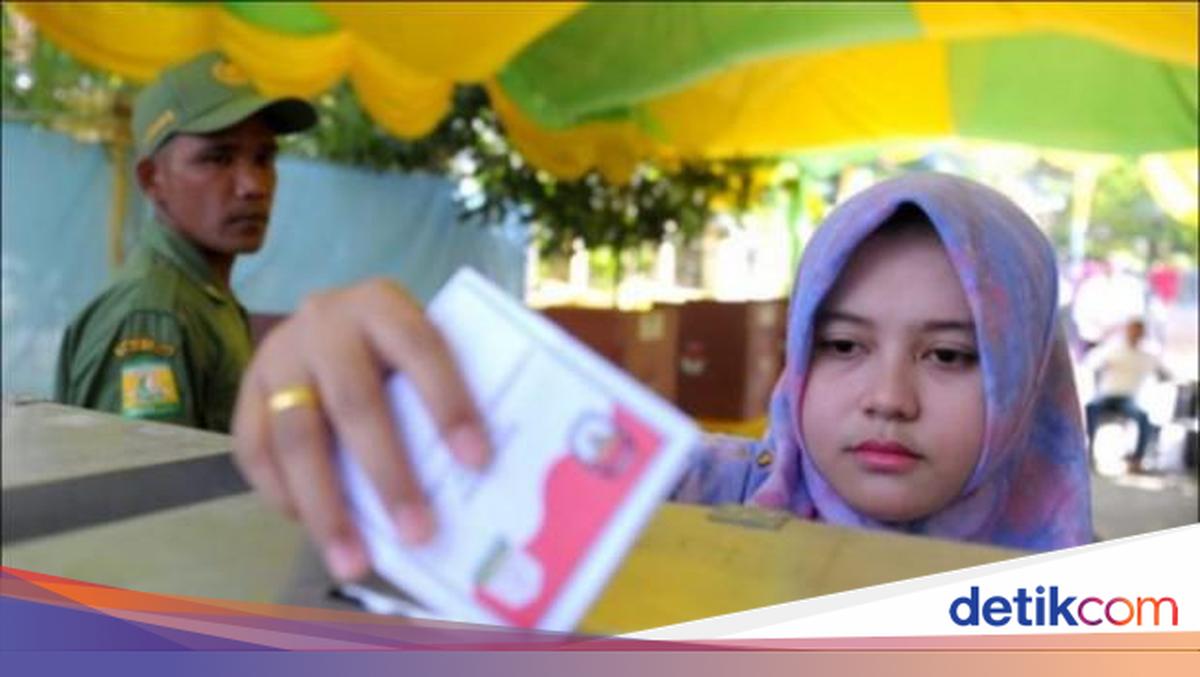
Discussions regarding the Election Bill (RUU Pemilu) have recently begun to stir again after previously experiencing stagnation. Previously, discussions on this issue were only heard faintly from certain university corners and several election monitoring communities.
However, amidst this movement, there is a vital issue that has nearly escaped public attention: the 30% affirmative issue for women’s representation. This is a long-standing issue that has been voiced and guarded since the beginning of the Reformation era, and began to be accommodated during the 2004 Election through Law No. 12 of 2003 concerning Elections.
So far, the loudest issue in the public arena has been the parliamentary threshold. This coincides with various proposals regarding the parliamentary threshold percentage from several political parties, both within and outside parliament.
Certainly, the parliamentary threshold is an important issue as it concerns not only quantity but also the quality of representation, political stability, and legitimacy—several political problems that are substantial to every election implementation.
However, it would be inappropriate for the threshold issue to immediately drown out other important matters, including the issue of women’s representation.
The 30% women’s representation issue ahead of the 2029 Election is now focused on realisation, certainty, and firmness in enforcement. For instance, various proposals have emerged regarding the wording in every clause of the 30% affirmative provision in the Election Bill, suggesting that instead of using the word “considering,” the word “mandatory” should be used.
With the word “mandatory,” it is hoped that there will be both certainty and firmness, so that any party—including political parties—that is negligent deserves appropriate sanctions.
Matters regarding the certainty and firmness of this affirmative action have received special attention from the Constitutional Court (MK) following judicial reviews filed by several civil society groups.
One such instance is Constitutional Court Decision Number 128/PUU-XXIV/2026 regarding sanctions for political parties that fail to nominate at least 30% women in electoral districts for the DPR and DPRD elections.
As a legal and political consequence, this Constitutional Court decision must be accommodated in the 2029 Election Bill. This is in addition to other MK decisions, such as Decision Number 135/PUU-XXII/2024 regarding the separation of National and Regional Elections, Decision Number 116/PUU-XXI/2023 regarding the 4% parliamentary threshold which must be amended for the 2029 Election, and Decision Number 62/PUU-XXII/2024 regarding the removal of the presidential threshold provision.
Affirmative Action Based on Input and Process
The Constitutional Court decision regarding disqualification sanctions could be a significant step in ensuring the alignment of the 30% women’s representation policy, which has tended to be merely an administrative formality or “half-hearted affirmative action” in practice.
This can be explained from both normative and empirical aspects, assuming that so far, affirmative action for women’s representation has only existed at the level of input and process, without touching the level of election results or output.
Normatively, this level of input and process can be seen at least in the provisions regarding the selection team for KPU members, election organisers (KPU and Bawaslu), political party management, and candidacy.
Affirmative action in the selection team membership is stipulated in Article 22 Paragraph (1) of Law Number 7 of 2017 concerning Elections, which states that “The President shall form a selection team consisting of a maximum of 11 members, considering at least 30% (thirty percent) women’s representation.”
Affirmative action for the membership of election organisers is found in Article 10 Paragraph (7) and Article 92 Paragraph (11). Meanwhile, affirmative action for legislative candidacy is found in Article 245, which states that “the list of prospective candidates as referred to in Article 243 shall include at least 30% (thirty percent) women’s representation.”
Moving Towards Result-Based Affirmative Action
Empirically, the 30% women’s representation in selection teams, election organisers, and political party management has been relatively fulfilled. However, women’s representation in parliament has never been met, let alone exceeded.
In the 2024 Election, for example, women’s representation in parliament only reached 22.4% (130 out of 580 members of the DPR RI). While there was an increase compared to the 2019 Election (20.87%), the rate of increase has slowed compared to the rise from the 2014 Election (17.32%) to the 2019 Election (20.87%), which reached 3.55%.
This can be understood given that the affirmative policy is still based on input and process. Conversely, this condition would be difficult to justify if the affirmative policy were based on results.
With result-based affirmative action, there would be no leniency by election organisers or law enforcement regarding election results that fail to meet the 30% women’s representation in parliament. This quota must be fulfilled before the election results are finalised, as it is a legal mandate.
Based on the premise of result-based affirmative action, the issue of women’s representation raised throughout the discussion of the Election Bill should no longer be limited to realisation in election organisers and candidacy, but should extend to the composition of parliamentary seats.
This step is important as it requires political will and good will from all parties, rather than being half-hearted. One way is to include a 30% women’s representation clause in the section regarding the finalisation of election results in the Election Bill.
An example of such a clause would be: “The KPU must nationally finalise the results of the DPR RI, DPD RI, as well as Provincial and Regency/City DPRD elections, ensuring they mandatorily include at least 30% (thirty percent) women’s representation.”
Space for Fulfilment
What if the election results do not meet the 30% women’s representation? Space is provided…
Source: jawawa.id (https://jawawa.id/newsitem/election-bill-and-the-crossroads-of-womens-representation-in-parliament-1791201714)
Originally published by detikcom (https://news.detik.com/kolom/d-8693472/ruu-pemilu-dan-simpang-jalan-keterwakilan-perempuan-di-parlemen), translated from Indonesian