
El Niño Threatens India, with Food and Economic Crises Looming
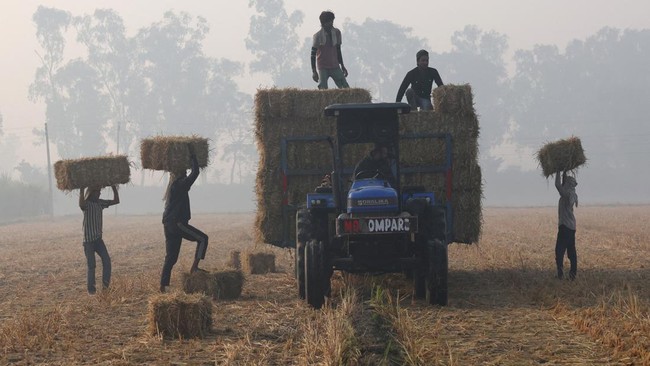
Jakarta, CNBC Indonesia — El Niño is beginning to put pressure on Indian agriculture, with rainfall declining and water reserves for the next planting season limited. The threat comes as geopolitical conflicts push up energy costs, disrupt fertiliser supplies and increase the risk of higher food prices.
The pressure is also a concern for Asia, particularly India. Harvest disruptions in a producing country can affect importing countries through higher prices and reduced supplies on international markets.
El Niño strengthens, putting pressure on agriculture
The UK Met Office said in a report on 22 September 2026 that sea surface temperatures in the central equatorial Pacific had exceeded levels recorded during previous El Niño events. The phenomenon is still developing towards a peak at the end of the year.
El Niño occurs when sea surface temperatures in the central and eastern equatorial Pacific rise above normal. This shifts atmospheric circulation and rainfall patterns, leaving some areas hotter and drier.
For agriculture, reduced rainfall can hamper planting, lower soil moisture and limit irrigation water. The effects may continue into the next planting season if reservoirs do not receive sufficient additional water.
Low rainfall leaves Indian reservoirs short of water
India received its lowest rainfall in more than a decade during June–September 2026, according to CNBC International. Nomura said several areas in Maharashtra, Andhra Pradesh, Punjab and Haryana were experiencing extreme drought conditions.
At the end of September, reservoir water reserves were still about 28% below full capacity, according to a Nomura report. This poses additional risks for winter crops, which need water after the monsoon ends.
HDFC Mutual Fund noted in a 6 October analysis that rainfall was about 13% below normal. Nevertheless, the area planted for the kharif season — India’s main planting season, which depends on monsoon rainfall — was only 1.4% lower than a year earlier, after July rains helped make up for planting delays. The area planted with rice fell more sharply, by 3.7%.
Water shortages are also unevenly distributed. HDFC reported that reservoirs in the south were only about 52% full relative to their effective storage capacity, while conditions in central and western India were better.
Indian Foreign Minister Subrahmanyam Jaishankar warned that the combination of El Niño and fertiliser shortages caused by geopolitical conflict could trigger a major food crisis in the coming months, CNBC International reported.
From harvests to inflation and consumption
Agriculture accounts for about 17% of India’s economy but supports the livelihoods of around 46.1% of its workforce. Harvest disruptions could therefore reduce household incomes and spending.
Rural markets also account for nearly 40% of fast-moving consumer goods (FMCG) sales, according to Nielsen Consumer data cited by CNBC International. Weaker purchasing power in these areas poses a risk to companies including Hindustan Unilever, Colgate-Palmolive, Nestlé and carmaker Maruti Suzuki.
Hanna Luchnikava-Schorsch, head of Asia-Pacific economics at S&P Global Market Intelligence, expects India’s rural economy to slow significantly in 2026 and 2027 as pressure on harvests weighs on farmers’ incomes.
Price pressures are already evident. India’s consumer inflation reached 4.82% year on year in August, while food inflation stood at 5.95%. The Indian Ministry of Finance has also warned that high oil prices and supply disruptions could add to inflationary pressures.
On Wednesday, 7 October 2026, the Reserve Bank of India raised its benchmark interest rate by 25 basis points to 5.5%. The central bank also lifted its inflation forecast for the current financial year to 5.2%, from 5% previously.
Even so, India’s economy retains some sources of support. The RBI still forecasts economic growth of 7.1% for the current financial year. HDFC also noted that expanded irrigation and large food reserves could help cushion the effects of low rainfall.
Threat spreads to countries across Asia
“Food security risks in South and South-east Asia are expected to increase, raising the potential for unrest and political instability in some of the most vulnerable economies,” Verisk Maplecroft said in a report on 16 September 2026.
More than 75% of countries in South and South-east Asia are classified as facing high to very high food security risks. This makes the region increasingly vulnerable to rising food prices amid extreme weather and fertiliser supply disruptions.
The report’s chart shows that several major Asian rice exporters, including India, Thailand and Pakistan, face significant pressure on water resources. This makes agricultural production more vulnerable when El Niño disrupts rainfall patterns.
The risks also extend to Indonesia and Malaysia, the world’s leading palm oil producers. Hot weather and pressure on water availability could disrupt palm oil production, while food-importing countries face the risk of higher prices if international supplies tighten.
FEWS NET reported that June–September rainfall in several parts of Pakistan was far below average. The shortfall is expected to weigh on kharif production and agricultural labourers’ incomes. However, the prospect of better rainfall in the next season could help some production recover.
Food prices depend on harvests and policy
The impact on food markets will also depend on trade policy. According to FEWS NET, India supplies an average of about 40% of global rice exports, meaning changes to its export policy can move international prices.
The USDA continues to forecast high Indian rice exports, supported by large stocks. This means lower production will not automatically lead to export restrictions.
For Indonesia, harvest developments and the policies of rice suppliers warrant close attention, alongside the availability of water for domestic production. Disruptions to overseas supplies could add to pressure if domestic production is also affected by dry weather.
The effects may emerge after the rainy season ends. Food security pressures often peak during the following lean season, when harvests and household incomes have already fallen.
Source: jawawa.id (https://jawawa.id/newsitem/el-nino-threatens-india-with-food-and-economic-crises-looming-1791449899)
Originally published by CNBC Indonesia (https://www.cnbcindonesia.com/research/20261008091210-128-774342/el-nino-mengancam-india-krisis-pangan-ekonomi-di-depan-mata), translated from Indonesian