
El Niño Threatens Harvests in West Bandung, Farmers Advised Not to Force Rice Planting
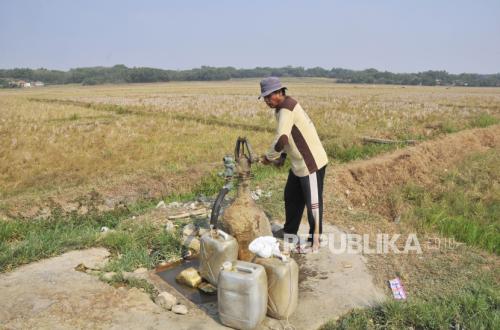
The potential for a prolonged dry season due to the El Niño phenomenon, as predicted by the Meteorology, Climatology and Geophysics Agency (BMKG), threatens harvest yields in West Bandung Regency (KBB), West Java. A similar situation occurred in 2023, when grain production in West Bandung fell by around 5 to 7 per cent from the annual target due to drought.
Head of the KBB Food Security and Agriculture Office, Lukmanul Hakim, stated that if the intensity of this year’s drought increases to an extreme category, the decline in grain production could reach 10 to 15 per cent, especially in rain-fed rice field areas.
“The biggest losses usually occur due to harvest failure or puso on rain-fed land. Meanwhile, on land that can still be harvested, the quality of the yield tends to decline due to an increase in empty grains,” Lukmanul said when confirmed on Saturday (13/6/2026).
However, to date, West Bandung’s grain production is still showing positive results. During the period from January to May 2026, grain production was recorded at 112,351 tonnes of Harvested Dry Grain (GKP). This amount is equivalent to 96,645 tonnes of Milled Dry Grain (GKG) or around 60,615 tonnes of rice, representing 49 per cent of the 2026 grain production target.
“The potential agricultural land affected by drought reaches 2,302 hectares. This land generally consists of rain-fed rice fields, areas without irrigation networks, and damaged irrigation areas,” he explained.
Lukmanul said his office has begun preparing various anticipatory measures to face the prolonged dry season potentially triggered by the El Niño phenomenon. One of the efforts being made is strengthening agricultural irrigation infrastructure and distributing pump assistance to maintain the productivity of agricultural land.
According to him, the strengthening of irrigation infrastructure is carried out by optimising the use of water pump machines in areas that still have water sources. In addition, the government is maximising the function of pump irrigation, groundwater irrigation networks, pipe irrigation, as well as primary, secondary, and tertiary irrigation networks.
On the cultivation side, farmers are encouraged to implement water-efficient agricultural techniques through adjustments to the planting season, the use of drought-resistant plant varieties such as Inpago rice and various types of secondary crops, the application of the System of Rice Intensification (SRI) method, the use of mulch, and crop diversification.
“Institutional strengthening is also carried out through synergy between farmer groups and Field Agricultural Extension Officers (PPL), Plant Pest Organism Controllers (POPT), as well as assistance from the TNI and Polri,” Lukmanul added.
Source: jawawa.id (https://jawawa.id/newsitem/el-nino-threatens-harvests-in-west-bandung-farmers-advised-not-to-force-rice-planting-1781355110)
Originally published by Republika (https://rejabar.republika.co.id/berita/tgkktu487/el-nino-ancam-hasil-panen-di-bandung-barat-petani-diimbau-tak-paksakan-tanam-padi), translated from Indonesian