
El Niño Threatens Chillies and Shallots; Agriculture Ministry Prepares Response
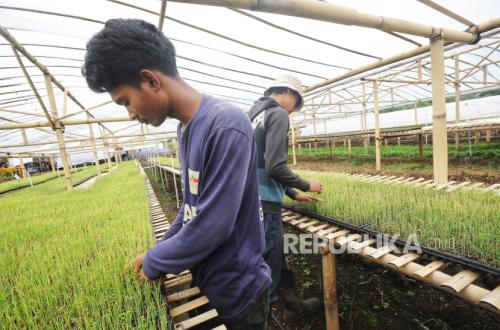
JAKARTA — The Ministry of Agriculture is preparing a series of precautionary measures in response to the threat of a prolonged drought caused by the El Niño phenomenon, which is projected to last until April 2027. The mitigation strategy focuses on protecting horticultural production, particularly chillies and shallots, to maintain supplies and prevent food price volatility from placing a burden on the public.
Freddy Lumban Gaol, Director of Downstream Horticultural Products at the ministry’s Directorate General of Horticulture, said the government had integrated maps of drought-prone areas with data on the country’s horticultural production centres. The mapping would form the basis for prioritising responses, anticipating production disruptions and maintaining supplies of strategic commodities across regions.
Freddy said the government was strengthening coordination to move commodities from areas with a production surplus to those facing limited supplies. This would be accompanied by efforts to strengthen production zones, develop diverse and nutritious home-garden food, and provide cultivation support better adapted to climate change.
One concrete measure under preparation is the distribution of water pumps to farmers in drought-prone areas. The programme is being coordinated with the Directorate General of Agricultural Infrastructure and Facilities (PSP) to help maintain water availability on farmland affected by declining rainfall.
“These mitigation measures are being reinforced through coordination with chilli champions’ associations and shallot associations, as well as by promoting agricultural insurance to farmers,” Freddy said in a statement on Wednesday (4 November 2026). He explained that involving producer groups was essential to ensure precautionary measures reached production centres at risk of climate disruption.
Freddy said successful drought mitigation required the sustained involvement of government, businesses, academics and farmer groups. Practical experience from the seed, fertiliser and pesticide industries is expected to be combined with scientific research to produce technical recommendations suited to farmers’ needs.
El Niño could disrupt horticultural production
Dedi Ruswandi, a professor at Padjadjaran University, warned that changing climate patterns could increase the agricultural sector’s vulnerability, particularly in horticulture, which requires intensive water management. He said El Niño, described as having reached the “very strong” category in October 2026, could continue into early 2027, making it necessary for the government and farmers to strengthen preparations.
Dedi said the conditions were expected to prolong dry periods in several areas, particularly Java, Bali, West Nusa Tenggara and East Nusa Tenggara. A shift in the start of the rainy season could also affect planting schedules, irrigation water availability and the productivity of crops sensitive to heat and humidity stress.
In addition to El Niño, Dedi highlighted the impact of global warming on the growing risk of extreme weather events. He cited projections that extreme El Niño events could become more frequent, increasing from about once every 20 years to once every 10 years. Agricultural planning, he said, therefore needed to take greater account of climate uncertainty.
According to Dedi, the main problem in dealing with previous El Niño events was not simply a lack of information about changing weather, but a lack of early action. Available early warnings had not always been translated into technical decisions that farmers could quickly implement to reduce the risk of crop damage.
He said climate information from the Meteorology, Climatology and Geophysics Agency (BMKG) needed to be linked more effectively to agricultural production planning. Farmers could use it to decide when to plant, choose suitable varieties, manage water requirements and prepare crop protection against pests and diseases.
Horticultural commodities such as chillies, tomatoes and shallots are vulnerable to drought because of their growth characteristics and water requirements. Some have relatively shallow root systems, meaning that declining soil moisture can quickly affect growth and yield formation.
Dedi explained that high temperatures could also disrupt flowering and fruit formation, including by causing flower drop. Prolonged dry conditions could increase pressure from certain sap-sucking pests that carry viral diseases, including yellowing disease in chilli plants.
Disruption to horticultural production warrants attention because commodities such as chillies and shallots are important to household consumption and food price formation. Fluctuating harvests and limited supplies from production centres could affect prices paid by consumers, especially if disruptions occur simultaneously in several regions.
Develop drought-tolerant seeds and flexible planting calendars
In response to these risks, Dedi called for a shift in plant-breeding programmes away from a sole focus on high yields and towards the ability to maintain stable production in different environmental conditions. Varieties better adapted to climate stress, he said, could help farmers reduce the risk of lower yields during droughts and periods of high temperatures.
One recommended approach is to develop varieties resistant to several types of stress at once, or with “multiple resistance”. Dedi also emphasised the importance of horizontal resistance, a plant-resistance mechanism involving several genetic factors that can provide broader protection against particular diseases.
The government and agricultural stakeholders should also strengthen drought-risk mapping based on the characteristics of production areas. Dedi recommended using Geographic Information Systems (GIS) down to sub-district level so that planting calendars could be adjusted more dynamically in response to changing climate conditions.
The mapping is expected to help farmers identify more suitable planting periods, determine irrigation needs and select crops according to environmental risks. More detailed information would allow mitigation measures to be designed for each area rather than applying a uniform approach across all horticultural centres.
Dedi also recommended multiple cropping, including intercropping chillies and shallots. Crop diversification could spread farming risks, since a production disruption affecting one commodity would not necessarily have the same impact on another.
“El Niño mitigation must become a constant factor in national food planning. Food security is not built during a crisis, but between crises,” Dedi said. He stressed that readiness for climate change needed to be built through stronger production systems, technology development and preventive measures taken before supply disruptions occur.
Source: jawawa.id (https://jawawa.id/newsitem/el-nino-threatens-chillies-and-shallots-agriculture-ministry-prepares-response-1793879556)
Originally published by Republika (https://ekonomi.republika.co.id/berita/to09jz451/el-nino-ancam-cabai-dan-bawang-kementan-bersiap), translated from Indonesian