
El Nino Strengthens, Testing Indonesia's Food Security
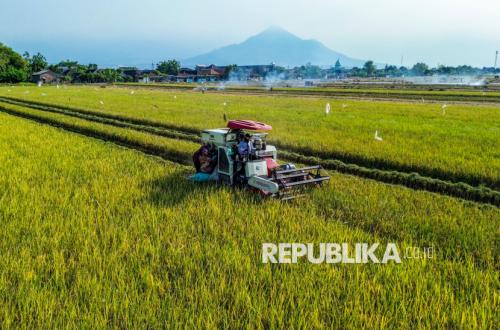
IPB University Professor of Agriculture Dwi Andreas Santosa has urged the government to strengthen mitigation efforts against the impact of El Nino on national food production in the second half of 2026. He estimates that rice production could decline by around 3 to 5 percent if the drought conditions caused by El Nino persist.
"There is potential for a decline in production for several commodities," Andreas said during an online discussion held by the Center of Reform on Economics (CORE) Indonesia in Jakarta on Friday (14/8/2026).
According to Andreas, rice and corn are two commodities that require special attention. Both are highly dependent on water availability, while El Nino has the potential to reduce rainfall and extend dry periods in several food production centres.
"I believe there will be a production decline of approximately 3 to 5 percent for rice. In addition, corn production is also likely to decrease because corn also needs water," Andreas stated.
The warning aligns with climate developments reported by the Meteorology, Climatology, and Geophysics Agency (BMKG). Monitoring by BMKG at the end of July 2026 indicated that sea surface temperature anomalies in the Nino 3.4 region had reached levels signifying a strong El Nino. An update from BMKG in early August even recorded that the intensity of El Nino had reached a very strong category.
BMKG previously forecasted that El Nino would persist until at least the first quarter of 2027, with peak intensity exceeding the strong category. The risk of drought is also potentially exacerbated by a positive Indian Ocean Dipole (IOD) from September to December 2026.
Most parts of Indonesia are expected to face a drier and longer dry season compared to normal conditions. BMKG recorded that 437 Seasonal Zones, or about 48.77 percent of Indonesia’s land area, have the potential to experience a longer dry season duration. High-category rainfall is only expected to gradually appear starting in October-November 2026.
Andreas noted that this situation differs from 2025, which was relatively favourable for the agricultural sector. The wetter climate conditions last year allowed farmers to maintain planting activities for a longer period.
"We are facing an unfavourable situation, namely the El Nino phenomenon, whereas last year in 2025 we were blessed with a climate phenomenon that was beneficial for agriculture, which we call La Nina, so we could plant throughout the year," said the Research Associate at CORE Indonesia.
Andreas added that the impact of water shortages not only threatens to suppress crop productivity but could also alter farmers’ decisions regarding which commodities to plant. Corn farmers, for instance, usually utilise the second planting season after the rice harvest.