
El Niño Set to Claim New Victim: Vietnam's Coffee
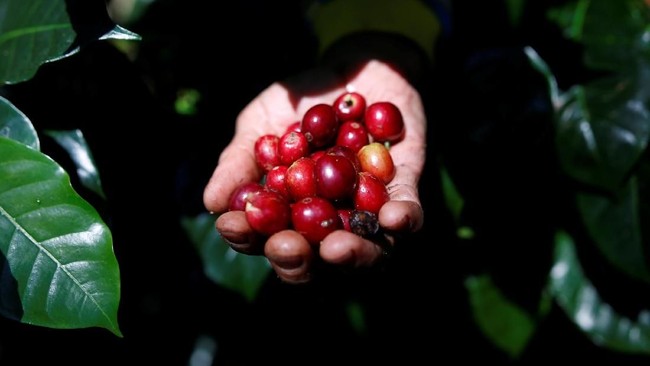
Jakarta, CNBC Indonesia - El Niño, predicted to be the strongest in 75 years, is already worrying farmers, including coffee growers in Vietnam. Vietnam’s National Hydro-Meteorological Forecasting Centre, under the Ministry of Agriculture and Environment, estimates El Niño will continue to strengthen through the second half of 2026 and potentially persist into early 2027.
“El Niño has officially formed in the central equatorial Pacific region and is expected to continue strengthening through the second half of 2026, potentially into early 2027,” the National Hydro-Meteorological Forecasting Centre stated at a press conference for Vietnam’s Ministry of Agriculture and Environment, as quoted by VNE Express on Sunday (21/6/2026).
The agency revealed that sea surface temperatures in the Niño 3.4 region rose to 0.5 degrees Celsius above average in May 2026 and around 0.7 degrees Celsius in early June 2026, confirming the event has occurred. The agency also estimates a 60-65% probability of a very strong El Niño, up from 20% in April 2026 and 37% in May 2026.
“An event of that strength would be comparable to the 2015-2016 El Niño, and possibly stronger,” said Mai Van Khiem, Director of the National Hydro-Meteorological Forecasting Centre, as reported by VNE Express. He said the event is considered one of the strongest since 1950, or equivalent to the major El Niños of 1982-1983 and 1997-1998.
The agency added that the economic impact of the El Niño phenomenon is already being felt directly by communities in Vietnam’s Central Highlands. It warned that the region faces a shortage of irrigation water for industrial crops, especially coffee, during the 2026-2027 dry season.
Vietnam is the world’s largest supplier of robusta. The US Department of Agriculture reports that the coffee bean, which forms the base of most instant coffee blends, espresso, and robusta, accounts for about 95% of the country’s coffee production. Robusta reached multi-decade highs in 2024 and early 2025 after drought devastated crops in competing countries, with London futures prices exceeding US$5,800 per ton. Prices then fell to around US$3,470 in April 2026, as traders anticipated a record Brazilian coffee harvest and the first global surplus in four years. Severe drought in Vietnam’s coffee-growing regions would undermine those expectations. Germany, Vietnam’s largest coffee buyer in the European Union, and coffee processors worldwide will feel the impact of any supply pressure.
Beyond coffee, a very strong El Niño will bring above-average temperatures, fewer cold spells, and widespread rainfall deficits, especially in the central region, Central Highlands, and south. Average temperatures in the final months of 2026 are expected to be 0.5 to 1.5 degrees Celsius higher than the long-term average, with some areas even 1 to 2 degrees Celsius higher from October to December. Rainfall could decrease by 25-50%, most sharply along the south-central coast, increasing the risk of drought, water shortages, and saltwater intrusion in the Mekong Delta through early 2027.
“El Niño not only increases the risk of heat, drought, water shortages, and saltwater intrusion, but also brings heavy rain, flash floods, landslides, and powerful storms,” said Dang Thanh Mai of the National Hydro-Meteorological Agency.
This year’s El Niño has the potential to be one of the strongest in 75 years, with sea temperature rises that could surpass historical records. The phenomenon is expected to increase global temperatures while triggering extreme weather such as drought, floods, heatwaves, and forest fires in various parts of the world. Southern Africa, the Sahel region, Central America, the Caribbean, and parts of Asia are the most vulnerable regions. The risk is compounded because many countries are currently also facing food crises, geopolitical conflicts, and fertiliser supply disruptions due to the war in the Middle East.
Hundreds of years ago, Peruvian fishermen noticed that every few years, anchovies in the equatorial Pacific Ocean suddenly disappeared. Because the phenomenon occurred around Christmas, they named it after El Niño Jesus—“the Christ Child.” Today, the phenomenon known as El Niño is recognised as a recurring climate pattern that affects weather worldwide. On 11 June, the US National Oceanic and Atmospheric Administration (NOAA) announced that a new El Niño had begun. And this time, its impact could be enormous.
El Niño is triggered by changes in wind patterns over the equatorial Pacific that draw warmer-than-usual surface water masses into the region. The strength of El Niño is measured by how much sea water temperatures rise. A rise of more than 2°C above the long-term average is already categorised as a strong El Niño. Most global climate forecast models predict sea surface temperatures will rise more than 2.5°C throughout the remainder of this year into the first few months of 2027, potentially exceeding 3°C. If this occurs, it would be the strongest in 75 years of modern observational records. The previous record was held by the 1982-1983 El Niño, with a sea temperature rise reaching 2.5°C.
The vastness of the Pacific Ocean and the interconnectedness of global weather systems mean every El Niño triggers a large-scale redistribution of heat and moisture worldwide. One of its main impacts is rising global temperatures. El Niño is not caused by climate change, but the two reinforce each other. The strong El Niño of 1997-1998 made 1998 the hottest year ever recorded at the time, with average temperatures nearly 1°C above pre-industrial levels. That record was subsequently broken.