
El Nino Remains Strong, West Java BMKG Mitigates Potential Drought and Forest Fires
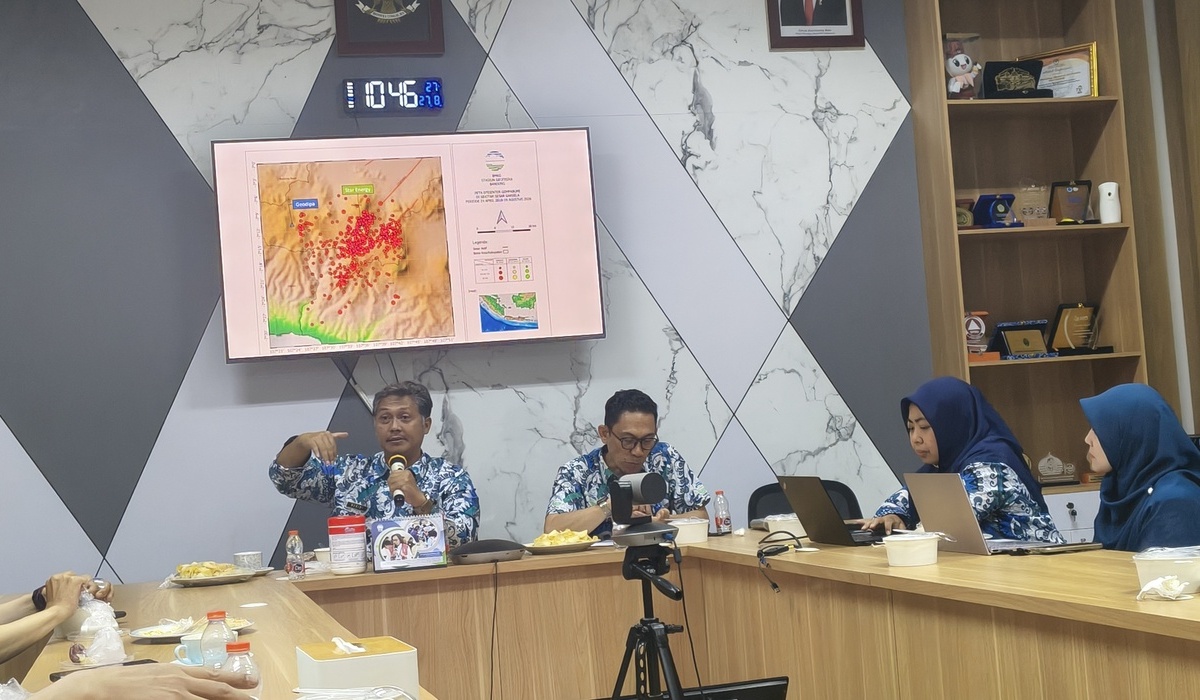
The Meteorology, Climatology and Geophysics Agency (BMKG) West Java Climatology Station has issued an early warning for the public to increase vigilance against potential disasters at the peak of the 2026 dry season. This year’s El Nino phenomenon is predicted to reach very strong intensity, with characteristics resembling the climate conditions of 1998.
Head of the Bandung Class I Geophysics Station, Suaidi Ahadi, explained that based on monitoring of sea surface temperature anomalies in the Nino 3.4 region, this very strong El Nino intensity was detected in the June-August-September 2026 period. These extreme conditions are expected to continue until the September-October-November period.
“This very strong El Nino is the same as the 1998 event, almost identical. The peak level is estimated to occur in early September and October,” said Suaidi in his statement on Thursday (27/8).
Although El Nino status is at a very strong level, Suaidi noted that this phenomenon does not automatically cause all regions of Indonesia to experience total, uninterrupted drought. Atmospheric dynamics still allow for the supply of water vapour that triggers local convective cloud growth in several locations in West Java.
“El Nino does not mean heat all the time. Rain can still occur, depending on the water masses carried from the south, the Indian Ocean, Indo-Australia, or from the north. It also depends on the westerly or easterly wind season,” he explained.
Therefore, BMKG urges the public to continue utilising the potential rain that still falls by collecting water as a reserve when entering a drier period. Local governments are also asked to be prepared to provide logistical assistance for areas that begin to be affected by drought and forest and land fires.
As a concrete step, Suaidi highlighted the ongoing efforts to distribute clean water assistance, one of which is in Bogor Regency. To date, clean water distribution to residents has reportedly reached approximately 6 million litres and is predicted to continue increasing as the dry season progresses.
In addition to water availability issues, BMKG emphasised the importance of preventing forest and land fire triggers. The public is strictly prohibited from carrying out land or waste burning activities carelessly, considering that dry vegetation conditions are highly flammable.
“We urge the public not to burn land and waste. In several areas yesterday, traces of land burning were visible. Please do not do that,” Suaidi stressed.
Regarding the discourse on implementing Weather Modification Technology to trigger artificial rain, Suaidi revealed that this step cannot be executed in the near future. This is due to the minimal availability of potential clouds in the skies over West Java.
“The cloud potential is still less than 30 percent, so weather modification is not yet possible. We will wait for the clouds to gather, then weather modification can be carried out,” he concluded.