
El Niño Rages, Indonesia's Largest Rice-Producing Regions Besieged by Drought
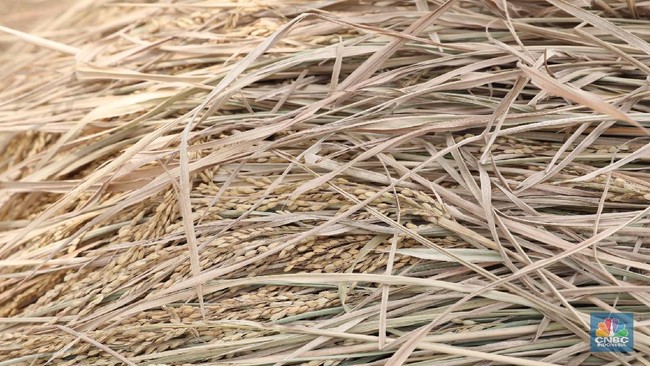
A strong El Niño phenomenon continues to shadow Indonesia as we approach the end of September 2026. This condition is causing the dry season to persist longer in many regions, increasing the risk of drought in several areas that serve as national food production centres.
The Meteorology, Climatology, and Geophysics Agency (BMKG) noted that the average three-month ENSO index for the July-August-September (JAS) period stands at +2.63, indicating a very strong El Niño. Meanwhile, sea surface temperature anomalies in the Nino3.4 region reached +2.97 in the second ten-day period of September, higher than the +2.83 recorded in August.
The impact is clearly visible in rainfall levels. During the second ten-day period of September, 87.53% of Indonesia’s territory experienced low rainfall, while 86.62% recorded below-normal rainfall levels. Dry conditions have persisted for months in several regions. BMKG recorded extreme ‘days without rain’ (HTH) of more than 60 days dominating parts of Central to East Java, Bali, West Nusa Tenggara (NTB), and East Nusa Tenggara (NTT). Similar conditions are occurring in parts of southern Sumatra, southern Kalimantan, and southern and southeastern Sulawesi.
In August alone, 1,563 out of 4,998 observation points, or 31.27%, experienced long-term extreme HTH. The longest record at that time reached 121 days in Bantul, DI Yogyakarta. Latest BMKG data shows that HTH in Bantul has reached 131 days, or more than four months, in September.
October remains dry, with the rainy season delayed. Regarding anomalies, the situation is even more striking. BMKG estimates that 83.92% of Indonesia’s territory will receive below-normal rainfall in October. In November, although the proportion of below-normal rain will decrease, it will still reach 64.50%. Conditions are only expected to improve significantly in December, when 48.59% of the territory is predicted to be in normal conditions and 32.97% above normal.
This means that the increase in rainfall towards the end of the year does not automatically eliminate risks at the start of the planting season. Furthermore, BMKG predicts that the start of the 2026/2027 rainy season will be delayed in 529 Seasonal Zones (ZOM), equivalent to 61.08% of Indonesia’s landmass. Most regions will only enter the rainy season in November and December. The duration of the rainy season is also expected to be shorter than normal in 482 ZOM, or 51.90% of Indonesia’s landmass.
BMKG explained that the combination of a very strong El Niño and a positive Indian Ocean Dipole (IOD) reduces moisture supply to Indonesia, thereby extending the dry period. For October, the probability of rainfall of less than 50 mm per month remains high in parts of South Sumatra and Bangka Belitung, most of Java, most of NTB and NTT, southern Kalimantan, Gorontalo, and parts of Sulawesi to Maluku. In November, the risk area will shrink but still include parts of East Java, NTB, NTT, South Sulawesi, and Southeast Sulawesi.
A ‘Warning’ status has entered food production centres. BMKG’s early warning map for meteorological drought in the third ten-day period of September shows ‘Warning’ (Awas) status spread across various regions, from DI Yogyakarta to several regencies/cities in West Java, Central Java, East Java, NTB, NTT, South Kalimantan, Central Kalimantan, Gorontalo, Bangka Belitung Islands, and Maluku.
Overall, there are 197 areas under ‘Warning’ status, 6t7 under ‘Alert’ (Siaga), 31 under ‘Watch’ (Waspada), and 222 areas without warnings. This distribution is critical to monitor because many ‘Warning’ areas are also strong agricultural bases. West Java, Central Java, and East Java are known as the primary rice centres, while NTB and Gorontalo also play important roles in rice and maize production. South and Central Kalimantan also serve as food production bases in the Kalimantan region.
These conditions make the drought risk relevant not only from a weather perspective but also to the prospects of agricultural production in the coming months. The risk becomes more significant when looking at the large contribution of several ‘Warning’ regions to national food production. BPS data shows that Indonesia’s rice production is still concentrated in several large provinces, particularly on Java Island.
In 2025, East Java was the largest national rice producer with a production of approximately 10.44 million tons of GKG (Dry Milled Grain), followed by West Java at 10.23 million tons and Central Java at 9.30 million tons. These three provinces continue to dominate in January-October 2026, although Central Java’s position rose to second place with a production of 8.59 million tons, slightly above West Java’s 8.57 million tons. This is relevant because all three provinces have several regencies/cities under BMKG’s meteorological drought ‘Warning’ status. In other words, some of the nation’s largest rice production centres currently overlap with areas facing drought pressure.
Outside Java, other major producers also need scrutiny. West Nusa Tenggara (NTB), which is on the ‘Warning’ list, ranked eighth in national rice production for January-October 2026 with approximately 1.66 million tons of GKG. However, ‘Warning’ status does not mean that all production in a province is automatically affected. BMKG warnings are issued at the regency/city level, and the impact on production still depends on field locations, irrigation availability, planting phases, and the duration of dry conditions.
What must be noted is the increasing overlap between drought-prone areas and food production centres, especially if dry conditions persist into the next planting period. The drought risk does not only touch rice production centres; several ‘Warning’ areas are also bases for maize, horticulture, and plantation production.
Source: jawawa.id (https://jawawa.id/newsitem/el-nino-rages-indonesias-largest-rice-producing-regions-besieged-by-drought-1790589400)
Originally published by CNBC Indonesia (https://www.cnbcindonesia.com/research/20260928094509-128-771423/el-nino-ngamuk-wilayah-penghasil-padi-terbesar-ri-dikepung-kekeringan), translated from Indonesian