
El Niño Intensifies, World Braces for Major Disaster
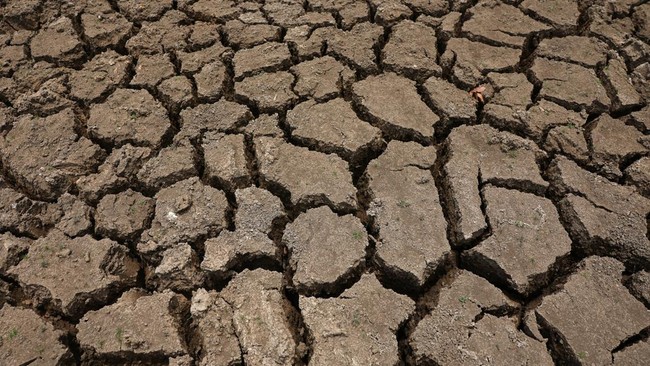
El Niño is increasingly demonstrating its strength. In its latest update on 3 September 2026, the World Meteorological Organization (WMO) stated that El Niño has formed strongly and is expected to continue increasing into a very strong category in the coming months.
The probability of El Niño persisting until February 2027 reaches almost 100%, marking the first time the WMO has provided a projection with such a high level of confidence. Sea surface temperatures in the tropical Pacific, the centre of El Niño, continue to rise, with weekly anomalies in the Niño 3.4 region reaching approximately 2.2°C to 2.6°C above average from late July to mid-August.
The WMO warns that a very strong El Niño can significantly alter rainfall and temperature patterns across various parts of the world. The impact is not uniform; some regions face extreme rain and flooding, while others risk rainfall deficits, droughts, and declining river levels.
Crucially, rivers are more than just water sources. In many parts of the world, rivers are the lifelines of trade, used to transport agricultural commodities, energy, and industrial goods from production centres to ports.
El Niño Could Cause Logistics Routes to ‘Dry Up’
As rainfall decreases, river discharge and depth also drop. Consequently, ships cannot carry full loads because the bottom of the vessel risks touching the riverbed.
As a result, the amount of goods per trip must be reduced, shipments must be split across more vessels, or diverted to trucks and trains, which are generally more expensive. In extreme conditions, some sections may become impassable.
Maritime law firm Hill Dickinson warns that low water conditions can limit vessel access and cargo capacity, increase queues, force route changes, and add to logistics costs and the risk of trade contract delays. These risks are particularly significant as several rivers sensitive to El Niño are vital arteries for economic activity.
1. Magdalena River, Colombia
The Magdalena is a prime example in 2026. Colombian environmental authorities noted in July that the water level of the Magdalena River at Yondó was approximately 25% below the historical average, while regional rainfall dropped by about 30% compared to the patterns of the last two decades.
Local authorities explicitly stated that El Niño’s influence has intensified this decline. The government of Barrancabermeja also included the drop in the Magdalena’s water level as one of the El Niño risks that could disrupt river transport and navigation. This is vital as the Magdalena is Colombia’s main transport route to the Caribbean region. Previous El Niño experiences showed that the Colombian government had to undertake dredging to maintain navigation channels when the Magdalena and Cauca levels dropped.
2. Mekong River, Southeast Asia
The next risk is closer to Indonesia. The Mekong River Commission (MRC) has found a strong link between El Niño episodes and droughts in the Mekong region. The 2015-2016 drought, for instance, coincided with one of the strongest El Niño episodes. MRC studies also show that other El Niño years are consistent with several major drought periods in the Lower Mekong Basin.
The implications extend beyond clean water. The Mekong supports the transport of goods, agriculture, fisheries, and hydropower in Southeast Asia. The MRC warns that low flow can make several parts of the river difficult or even impossible to navigate, while droughts also disrupt agriculture, fisheries, and electricity production. Thus, Mekong droughts can act through multiple channels simultaneously: food production decreases while distribution becomes more difficult.
3. Amazon River, Americas
The Amazon also warrants attention. Historically, strong El Niño can suppress rainfall in parts of the Amazon. For 2026-2027, researchers from Peru’s meteorological service, Senamhi, have warned that a very strong El Niño could cause rainfall deficits in the Peruvian Amazon.
The economic impact of low water in the Amazon has been observed previously. The World Bank notes that the river network is a lifeline and primary transport route for much of the Amazon region. When water levels are low, ports become inaccessible, harvests can be stranded, and communities are cut off from markets. The effect on costs is also significant; the World Bank noted that droughts caused river transport rates in the Amazon to surge by more than 150% in 2024. With limited road networks in many areas, replacing river transport is no easy task.
Dry Rivers, Slowing the Global Economy?
River droughts caused by El Niño can transform from a weather issue into an economic problem when waterways are used to transport commodities and goods. Hill Dickinson notes that falling water levels can limit vessel access and cargo capacity, forcing ships to reduce loads, wait longer, or seek more expensive alternative routes.
The impact then ripples through the supply chain. Shipment delays can increase logistics costs, extend transit times, trigger port congestion, and lead to the risk of contract penalties. For food and energy, such disruptions can also increase price volatility.
The experience of the Panama Canal during the 2023-2024 El Niño demonstrates the scale. Drought caused the number of ships able to transit daily to be slashed from 36 to around 25, even though that route handles approximately 5% of world trade. This means that if similar disruptions occur in several key routes simultaneously, the pressure on trade and global growth could intensify.
The Impact is Already Visible in 2026
These risks are not merely theoretical. In August 2026, the water level of the Rhine River at the Kaub point dropped to below…