
El Nino, Household Economy, and Land as the Key
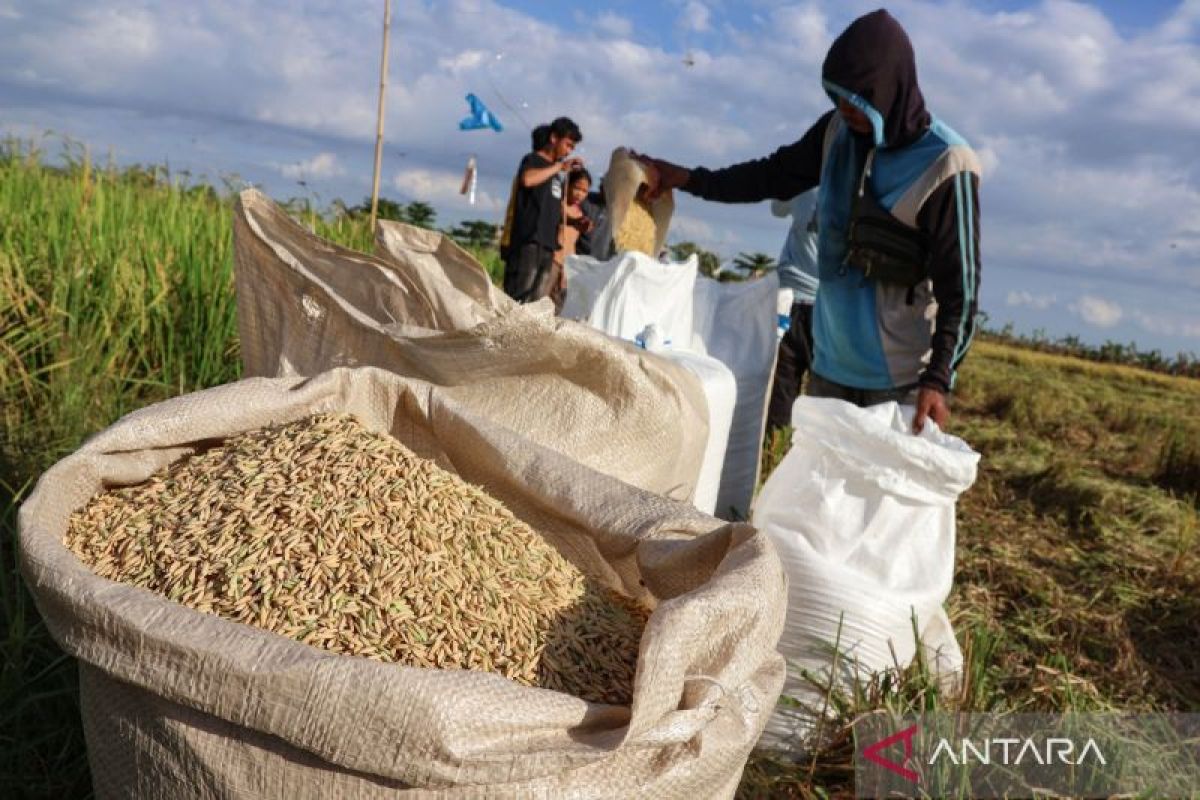
Indonesia’s policies are once again facing a climate warning that is not an ordinary seasonal disruption. El Nino is not just a meteorological term, but a risk signal for agriculture, food, water, and land fires, ultimately impacting the economy and the income of farming households.
Currently, 36-37 per cent of household economies in Indonesia, or around 27 million farming households, are at risk of disruption if state policies are not appropriate. One in three households in Indonesia is a farming household whose economy is vulnerable to disruption.
When El Nino occurs, parts of Indonesia will experience a drier and longer dry season. The peak of the dry season is expected to occur from August to September 2026. The impacts include disrupted agricultural production, decreased river flow, increased fire risk, and greater pressure on water resources.
El Nino is a natural climate phenomenon originating in the tropical Pacific Ocean. Under normal conditions, trade winds push warm water masses westward, towards Indonesia and the western Pacific. This warm water aids cloud formation and rainfall in the Indonesian maritime region.
However, during El Nino, the warming of the sea surface shifts to the central and eastern Pacific. The atmospheric circulation also changes, causing the centre of rainfall formation to shift away from parts of Indonesia.
As a result, many areas in Indonesia can experience a longer and more intense dry season. The impact is not uniform across all islands, but southern regions of Indonesia, such as Java, Bali, Nusa Tenggara, parts of Sumatra, Kalimantan, Sulawesi, and Papua, are often more vulnerable to reduced rainfall during the dry season.
In the agricultural context, this means rice planting can be delayed, irrigation needs increase, water reserves decline, and the risk of crop failure grows.
The world is getting hotter
The current El Nino is not occurring in a stable climate. It is happening in a world already made hotter by climate change. Global warming caused by greenhouse gas emissions has increased atmospheric, ocean, and land temperatures.
This warming alters the character of drought. Higher temperatures accelerate evaporation, dry out soil faster, increase crop water requirements, magnify heat stress, and make fires easier to ignite.
For Indonesia, the risks are compound. El Nino tends to reduce rainfall in many areas, while climate change increases temperatures and water pressure.
In other words, farmers are not only facing ‘less rain’, but also soil that dries out faster, crops that are more easily stressed, and planting seasons that are increasingly difficult to predict. Climate projections indicate that Indonesia will become hotter, with many regions expected to experience a temperature rise of around 1–2°C by the middle of this century.
Changes in rainfall are also not straightforward. Some regions may become drier, especially in the south, while other areas may experience a tendency towards wetter conditions or more extreme rainfall.
Thus, Indonesia’s future is not simply ‘hotter’. The challenge is more complex: more erratic rainfall, stronger extreme events, and a mismatch between when water is available and when agriculture needs it.
Family economy
Agriculture is the sector where this pressure is most quickly visible. Rice is highly dependent on predictable rainfall, irrigation availability, and the precise start of the planting season. Corn, horticulture, plantations, and livestock are also vulnerable to heat, drought, pests, diseases, and water limitations.
During El Nino, the planting season can be delayed, yields decline, irrigation needs increase, fertiliser efficiency weakens, and food prices become a politically sensitive issue that can drive inflation, particularly through essential and volatile commodities like rice and chilli.
This threat is not just about crop failure. What is at stake is the stability of the entire food system and the household economy.
When production is disrupted, farmers’ incomes fall, consumers face higher prices, the government is pushed to implement imports or emergency programmes, and the pressure to open new land increases again.
Indonesia is in a difficult position: as a country highly vulnerable to climate change, a country with significant emissions from the land sector, and a country striving to strengthen food self-sufficiency.
Land is at the centre of all three issues.