
El Niño Dry Season Holds Economic Potential for Fisheries and Salt Sectors
The Meteorology, Climatology, and Geophysics Agency (BMKG) has stated that the dry conditions triggered by the strong El Niño climate anomaly phenomenon mid-year still hold economic potential and opportunities that can be optimised in the national downstream sector.
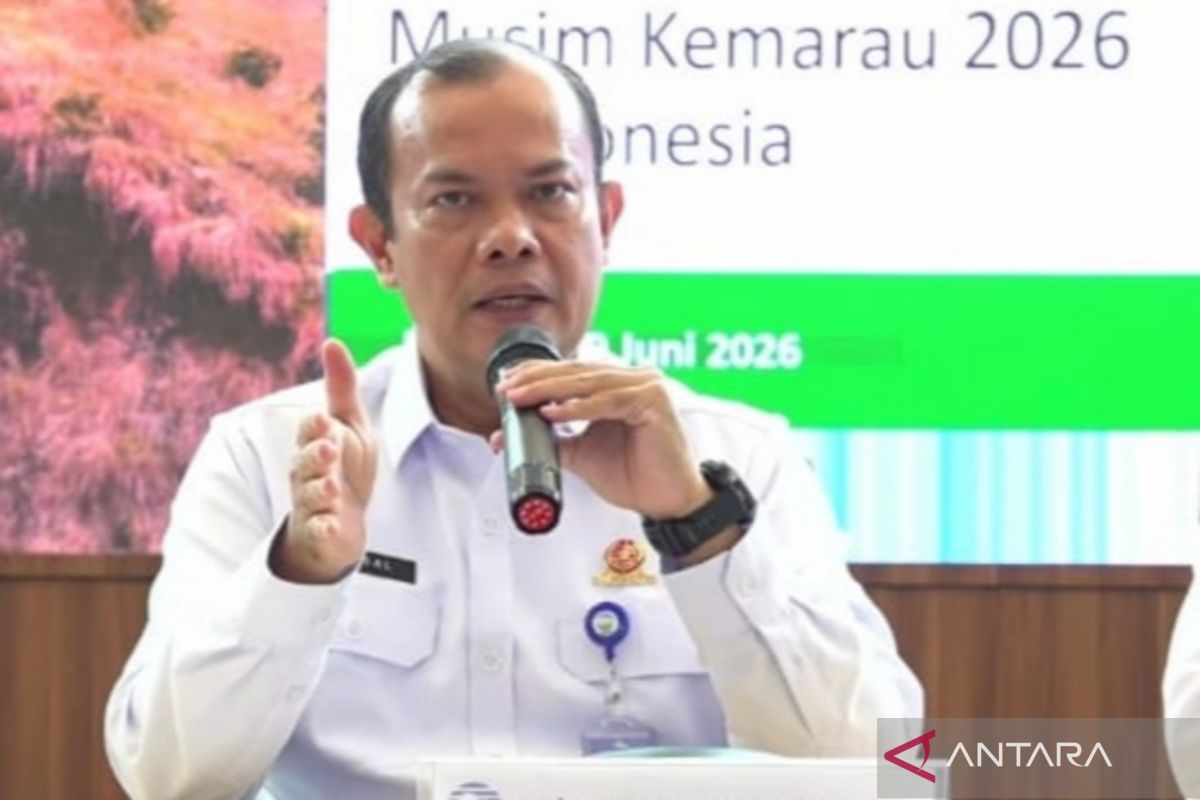
BMKG Head Teuku Faisal Fathani, during a press conference in Jakarta on Wednesday, said that the impact of the drought could be utilised positively to boost the productivity of salt pond commodities and the capture fisheries sector.
“The dry conditions caused by a strong El Niño still hold economic opportunities that can be optimised in the downstream sector, such as increasing salt pond production and optimising fish catches due to the upwelling phenomenon,” he said.
He explained that, in addition to benefiting national salt production due to minimal rainfall, the characteristics of this dry season climate also trigger the upwelling phenomenon—the rise of nutrient-rich seawater to the surface—which can significantly increase fishermen’s catches.
While holding potential economic benefits in the downstream sector, Teuku Faisal warned that updated climate predictions record a 62 per cent chance of strong-category El Niño intensity and a 98 per cent chance of moderate-category intensity starting mid-year.
The impact of this global climate anomaly is projected to result in accumulated rainfall in 482 seasonal zones (ZOM), covering 56.18 per cent of Indonesia’s land area, falling into the below-normal category or being much drier than usual.
The duration of this year’s dry season is also predicted to last longer than normal in 437 seasonal zones (48.77 per cent of land), with the peak of the drought expected to hit 369 seasonal zones this coming August.
He mentioned that such conditions demand more responsive risk management from local governments, particularly in securing public utility supplies, such as dam water capacity for the operation of Hydroelectric Power Plants (PLTA).
Furthermore, early action must also target the environmental sector through the preparation of rapid response mechanisms to anticipate deteriorating air quality, which has the potential to trigger a surge in Acute Respiratory Infection (ISPA) cases.
For the disaster and forestry sectors, BMKG requested the strengthening of preparedness commands at the local level to prevent forest and land fires (karhutla) during the peak of the dry season.
Therefore, BMKG hopes that the updated information on dry season predictions can serve as an authentic guide for stakeholders to balance disaster risk mitigation strategies with the optimisation of economic opportunities arising during the dry period.
Source: jawawa.id (https://jawawa.id/newsitem/el-nino-dry-season-holds-economic-potential-for-fisheries-and-salt-sectors-1781071168)
Originally published by Antara (Indonesian) (https://www.antaranews.com/berita/5601935/kemarau-el-nino-simpan-potensi-ekonomi-sektor-perikanan-dan-garam), translated from Indonesian