
El Niño Drives Pidie Farmers in Aceh to Switch to Shallot Cultivation
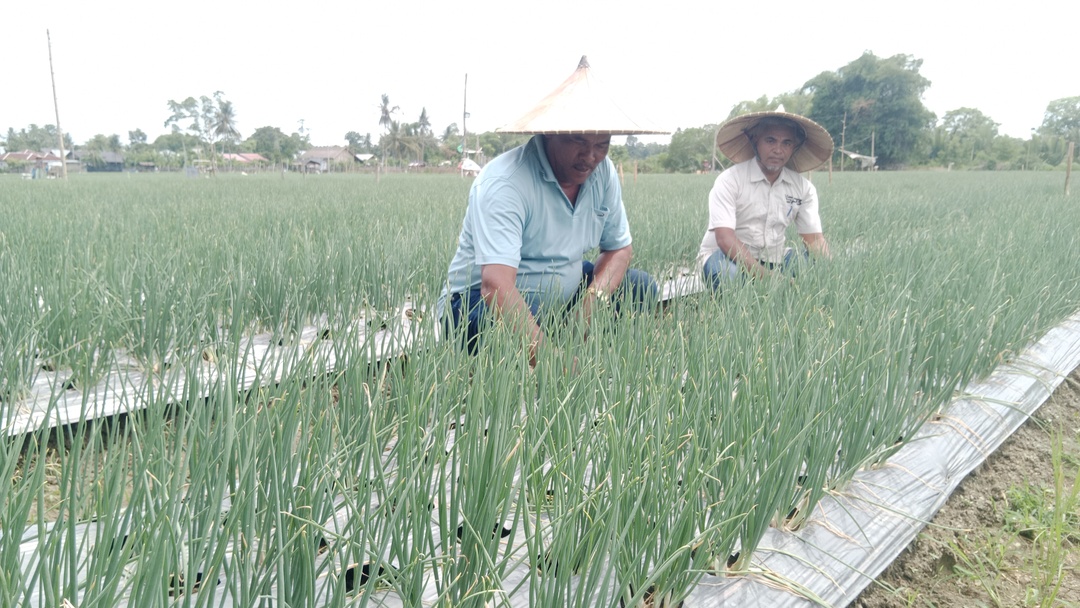
The El Nino phenomenon has haunted various regions across Indonesia. Extremely hot temperatures and an extraordinary rainfall crisis have become a threat to farmland.
However, in parts of Aceh Province, a number of farmers have responded to El Nino wisely and quite amicably. Despite a water crisis and even scarcity, the farmers’ spirit has never waned.
In Pidie Regency, for instance, in response to El Nino and the prolonged dry season, residents have enthusiastically switched from rice to shallots. Growing shallots has become increasingly popular among local residents.
In Simpang Tiga district, for example, shallot fields that covered around 50 hectares in previous years have now expanded to approximately 200 hectares. This is because planting shallots during the dry season yields increasingly promising harvests.
Especially amid the current El Nino season. Compared with rice, which requires plenty of water, shallots are more drought-resistant and need only to be watered once or twice a day.
“Besides the very promising price, shallots are also more resistant to drought. The harvest yield for shallots here ranges from a ratio of 1 to 17 up to 25. One kilogram of shallot seed planted can produce 17 to 25 times that amount,” said Muhammad bin Abubakar, Imum Mukim (customary leader of several villages) of Gigieng, Simpang Tiga district, Pidie.
Mustamar Arifina, head of the Programme and Finance Sub-division of Simpang Tiga district, told Media Indonesia on Wednesday (29/7) that the 200 hectares of shallot fields are spread across 52 villages, divided among four mukim (customary territories) in Simpang Tiga.
“Residents are increasingly fond of growing shallots because, apart from the high price, the harvest period is also shorter,” said Mustamar.
Source: jawawa.id (https://jawawa.id/newsitem/el-nino-drives-pidie-farmers-in-aceh-to-switch-to-shallot-cultivation-1785412289)
Originally published by Media Indonesia (https://mediaindonesia.com/nusantara/916532/el-nino-petani-di-pidie-aceh-makin-tertarik-menanam-bawang-merah), translated from Indonesian