
El Nino Drains Saguling Reservoir, Hydroelectric Power Production Still Safe
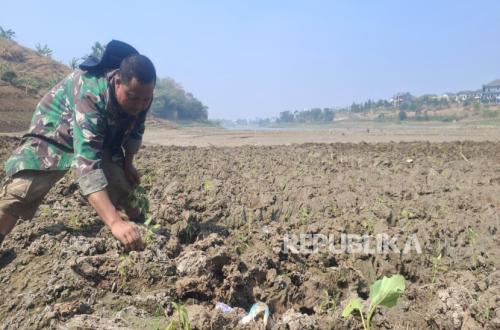
The prolonged dry season exacerbated by the El Nino phenomenon has impacted the water inflow into the Saguling Reservoir in West Bandung Regency, West Java. Nevertheless, electricity production from the dam managed by PT PLN Indonesia Power is still running normally.
Civil Manager of Saguling Hydroelectric Power Plant, Praja Mukti Ediatmaja, revealed that the water inflow into the Saguling Reservoir has decreased considerably compared to the peak of the rainy season. During the rainy season, the inflow can reach 155-200 cubic metres per second. However, during August 2026 it only ranged from 10 to 18 cubic metres per second.
“Water inflow ranges between 10-18 m3/second for August, while the peak of the rainy season can reach 155-200 m3/second,” said Praja when confirmed on Friday (21/8/2026).
Despite the drastic decline, the reservoir water level is currently still within normal operating limits. During the dry season, the upper limit of the Saguling Reservoir water level is at 640 metres above sea level, while the lower limit is 636 metres above sea level. The current water level position is still between the safe operating limits for the power plant.
“However, the current Saguling Reservoir water level is still at the normal operating limit, namely 638 metres above sea level,” said Praja.
Although the water supply has decreased, this condition has not significantly disrupted the operations of the Saguling Hydroelectric Power Plant. Electricity production from Saguling serves to support the peak load of the Java-Bali system while also acting as a system frequency regulator through load frequency control.
According to Praja, the operation of power plants within PLN is carried out based on a dispatch system by PLN Load Control Centre. Plant operations consider the merit order as well as the availability of primary energy, including water for hydroelectric plants, coal, gas, and geothermal steam.
“Thus, the Saguling Hydroelectric Power Plant, in its dry season operating pattern, can still meet the dispatch from PLN Load Control Centre,” he said.
In facing the potential prolonged dry season, PLN Indonesia Power is not working alone in managing the water availability of the Saguling Reservoir. The Saguling Hydroelectric Power Plant management coordinates through the Citarum Cascade Weir Operation Coordination Team, a forum involving BBWS Citarum as coordinator, PLN Indonesia Power, PLN Nusantara Power, Perum Jasa Tirta II, and BMKG.
Praja said coordination is carried out routinely every month to regulate water distribution from the Saguling Reservoir to Jatiluhur.
“This Citarum Cascade Weir Operation Coordination Team forum is routinely held monthly so that the distribution of water outflow from the Saguling Reservoir to Jatiluhur is always coordinated and regulated to meet irrigation, electricity, drinking water and other needs,” he explained.
Through this coordination, the water level condition is continuously simulated to ensure water availability is sufficient for various needs until the dry season ends. As one of the anticipatory measures against drought, Weather Modification Technology has also been carried out.
Praja mentioned that the initial phase of Weather Modification Technology implementation took place from 30 July to 5 August 2026, using an aircraft belonging to the Indonesian National Armed Forces with Husein Sastranegara Air Force Base as the operational base. However, the results were not yet optimal because the potential for rain cloud growth during that period was relatively limited.
“The initial phase of Weather Modification Technology was carried out from 30 July to 5 August 2026, using a TNI aircraft and using Husein Air Force Base as the operational base. Because the cloud potential that occurred during that period was also not significant, the rain that occurred was also not optimal,” he revealed.
Meanwhile, the emergence of land due to the receding water of the Saguling Reservoir has been utilised by a number of residents to open temporary agricultural land. PLN Indonesia Power Saguling Unit has urged the public not to use the dried-up reservoir area for agricultural activities.
Praja explained that the use of dry areas or sedimented areas as agricultural land has the potential to exacerbate reservoir siltation.
“Of course, the use of dry/sedimented areas as agricultural land can cause siltation, so PLN Indonesia Power urges residents not to plant seasonal crops in that area,” said Praja.
Source: jawawa.id (https://jawawa.id/newsitem/el-nino-drains-saguling-reservoir-hydroelectric-power-production-still-safe-1787309652)
Originally published by Republika (https://esgnow.republika.co.id/berita/tk4741416/el-nino-kuras-waduk-saguling-produksi-listrik-plta-disebut-masih-aman), translated from Indonesian