
El Niño and AI for Mitigating a Food Crisis
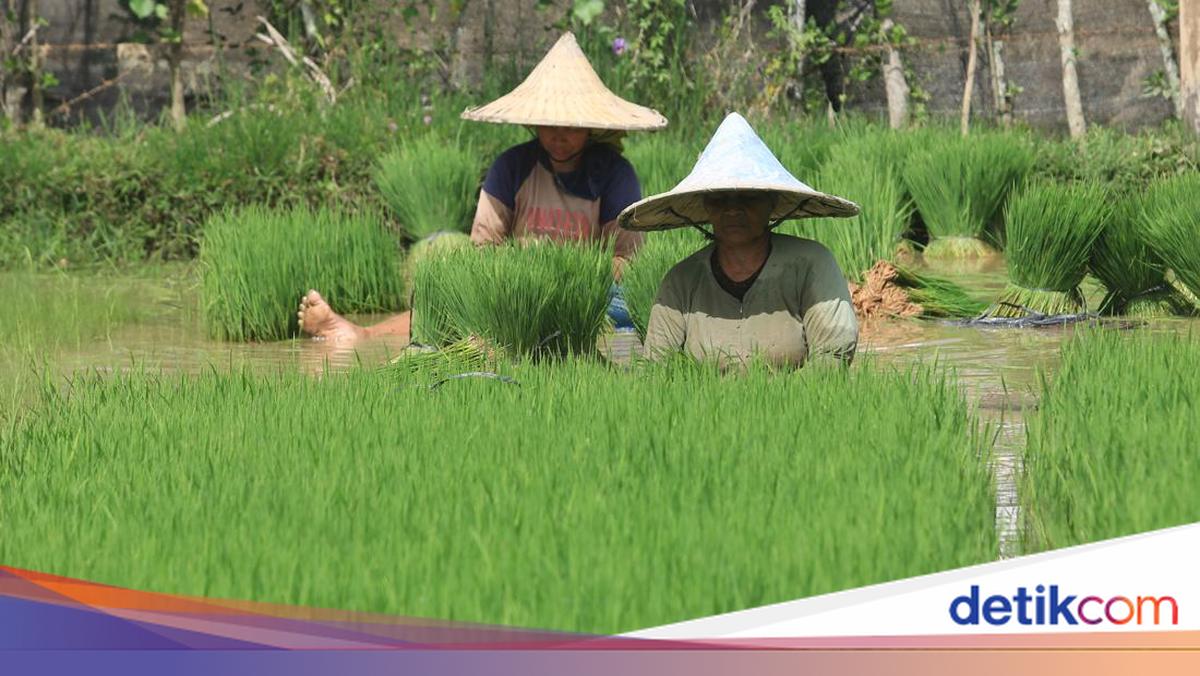
October 2026 brings a serious warning for Indonesia. The Meteorology, Climatology and Geophysics Agency (BMKG) expects El Niño to be very strong, while the start of the 2026/2027 rainy season is expected to be delayed across most of the country.
Drought has also worsened forest and land fires. Reuters reported that satellite data from Nusantara Atlas showed the cumulative area burned had reached 1.92 million hectares by the end of September 2026.
In September 2026, the National Economic Council also reported that volatile food inflation had risen to 5.03 per cent year on year. On 20 October, students and civil society groups demonstrated in Jakarta and other areas.
They highlighted forest fires, the weakening rupiah and falling share prices. These events do not prove that El Niño necessarily causes political instability. However, they are a reminder that climate, food, economic and public-confidence risks may be interconnected and need to be addressed in an integrated way. History also offers lessons.
Learning from history
In the run-up to the 1965 political crisis, Indonesia faced high inflation, food shortages and economic hardship. Research into drought in Java between 1960 and 1965 found links with El Niño-Southern Oscillation (ENSO) and the Indian Ocean Dipole (Syahidah, Suwarman and Brawijaya, 2026). However, ideological conflict, power struggles and military dynamics were fundamental factors in the political crisis. El Niño cannot be regarded as its sole cause.
The Malari incident of 15 January 1974 offers a different lesson. Student demonstrations drew attention to corruption, inequality, prices and the dominance of foreign capital. Historical ENSO records from the National Oceanic and Atmospheric Administration (NOAA) show that Indonesia was in a La Niña period in 1974, not an El Niño one. Malari does not prove that El Niño triggers political unrest; rather, it is a point of comparison showing that economic pressure and social discontent can develop into political crises through different mechanisms.
The link between climate disruption and food is clearer in 1997-1998. El Niño drought put pressure on agricultural production as the Asian financial crisis weakened the rupiah, drove up prices and eroded purchasing power. Indonesia’s rice production in 1998 was estimated at just 45.3 million tonnes, its lowest level since 1991 (FAO, 1998). Food pressures worsened hardship ahead of President Soeharto’s resignation on 21 May 1998. The financial crisis, corruption and demands for reform were also major factors.
Predicting and anticipating crises with AI
Indonesia does not have to wait for the next crisis. Artificial intelligence (AI) can help the government move from responding after a crisis to anticipating it before its impacts spread.
An initial foundation is already in place. In August 2025, BMKG announced that it was using AI to improve the accuracy of rainfall forecasts. The next step is to connect climate predictions with food and economic policy.
First, AI can combine weather forecasts, satellite imagery, soil moisture, planting calendars and productivity data to estimate the risk of crop failure. This information can help farmers and the government adjust planting times, manage irrigation and select suitable crop varieties.
Second, integrating data on production, prices, stocks and distribution can identify areas at risk of supply shortages or price spikes. The government could prepare food reserves earlier, facilitate distribution between regions and plan imports in a measured way.
Third, AI analysis of food prices and socio-economic indicators could help identify vulnerable households. The findings could underpin faster social assistance, access to affordable food and measures to protect people’s nutritional adequacy.
Indonesia needs to develop an AI-based food early-warning system linking BMKG, the National Food Agency, the Ministry of Agriculture, Statistics Indonesia, Bulog and local governments. Forecasts must be followed by clear response protocols. Data quality, privacy protection, model evaluation and human oversight must also be assured.
Food security as a foundation for national resilience
The events of 1965, Malari in 1974 and the 1998 Reformasi show that political stability cannot be separated from economic conditions and social justice. However, the government can reduce the risk of crises through responsive, transparent and evidence-based policies.
AI will not stop El Niño or guarantee political stability. But, used appropriately, it can help Indonesia detect risks earlier, keep food affordable and prevent disruptions to food production from developing into a wider crisis.
Food security is not only about how much food is produced, but also how prepared the state is to guarantee its availability and affordability when a crisis hits. Indonesia needs to build a food system capable not only of responding to crises, but also of anticipating them through artificial intelligence.