
Ekofeminism in MKR: The Power of Women in the Land of Lords
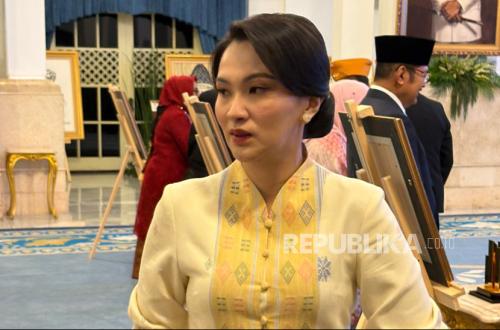
It has been nearly a decade since the land of Moloku Kie Raha (MKR)—the social and cultural identity of North Maluku Province—entered a new era of political leadership with the election of Sherly Tjoanda as Governor of North Maluku. What is the connection between ekofeminism and MKR? A series of social, political, and environmental events in North Maluku, including the phenomenon of island disasters, have piqued the author’s interest in the ‘Ekofeminism MKR’ phenomenon.
Kabinet Ekoteologi II: Social (and Political) Facts
The terminology ‘Kabinet Ekoteologi’ was proposed by the author when appreciating the leadership of North Maluku from 2014-2019 (AGK-Manthab). This Kabinet Ekoteologi is the fruit of the political awareness struggle of North Maluku’s society, with all its dynamics. The blend of leadership from da’wah workers and environmental devotees (nature—social) can become a new spirit for bureaucratic reform in the land of MKR.
A sense of déjà vu from that Kabinet Ekoteologi emerges in the era of Governor Sherly Tjoanda and her deputy, Hi. Sarbin Sehe. With different variations, the current Kabinet Ekoteologi is a combination of bureaucrats, religious figures, and natural resource business actors, notwithstanding the controversies. Interestingly, the elected leader from the current Kabinet Ekoteologi is a mother, a woman.
Without intending to delve into the dynamics of the regional elections, the author opines that Kabinet Ekoteologi II is not only a political fact but also a social one. According to Emile Durkheim (1858-1917), social facts are all ways of acting, thinking, and feeling that are outside the individual (external) and possess coercive power that binds the individual. If attributed to the French sociologist’s view, Kabinet Ekoteologi II is a product of both material social facts (laws, government decisions) and non-material ones, related to unwritten ethics and intersubjective in nature (awareness of maintaining social harmony in North Maluku, marimoi ngone futuru).
Ekofeminism and Women’s Leadership
Ekofeminism serves as a bridge connecting environmental issues and women’s issues. According to Sachiko Murata in The Tao of Islam (Mizan, 1999), there is a close relationship between women and the earth, so she states: ‘nature as mother and wife, and the womb of women as nature or earth’. Vandana Shiva (1993), an Indian physician, states there are similarities between patriarchal domination over women and nature.
In the past year, North Maluku has entered a new chapter in women’s leadership, marked by the election of the first female governor, Sherly Tjoanda. Also elected are several women as regional heads (Taliabu Island and Sula Islands), government institutions, or legislative bodies. This includes the election of the Rector of UMMU and several female deans at Unkhair. Most recently, the Golkar Party in North Maluku has again chosen a woman as party chair. In several non-governmental organisations (NGOs) in North Maluku, they are also led by women, such as WALHI North Maluku and the Dukono River Basin Coordination Forum. These NGOs do not include small communities managed by nationally accomplished women, such as Teras Baca Umi in Sasa, Ternate.
The emergence of these women on the leadership stage has not been as easy or inexpensive as one might imagine. Some of them have surfaced after experiencing various life dynamics and struggles, both individually (psychological) and communally (socio-cultural). In sociological studies, the social status they have now obtained (as leaders) can be said to be an achievement and the result of struggle (achieved status). For example, Sherly Tjoanda has survived three layers of hegemonic challenges: gender, ethnicity, and religion. This is also a socio-cultural achievement and an indicator of the greatness of spirit of North Maluku’s people. However, not a few of them have obtained that status due to ‘inheritance’ factors, descent (ascribed status) with the phenomenon of ‘political dynasties’ in regencies/cities.
In relation to ekofeminism, the leadership of these women is intertwined with the condition (and fate) of North Maluku’s natural resources. There are two choices in the hands of these women leaders regarding resources: as guardians (preservers) or ‘butchers’ (exploiters). The choice to be true preservers aligns with women’s nature, that women are creators of civilisation (Soekarno, Sarinah, 1947). Moreover, ekofeminism is not merely advocacy for (preservation of) the environment and women’s empowerment per se. However, the leadership of these women is expected to bring a spirit of advocacy for the universe and vulnerable groups in general, besides women.
The role of these women leaders is expected to save the potential of North Maluku’s natural resources and seek solutions to their management problems. It should also give birth to various policies and positive actions that benefit the ummah (citizens) and the world (earth) of MKR. Ecological crises, natural disaster problems, and potential disintegration (social conflict) are hoped to be resolved with a gentle touch and optimisation of Yin–Yang potential (femininity-masculinity) in the midst of island communities.
Women leaders are expected to unravel issues of forest ecosystem preservation, exploration of natural resources (mining, agriculture, fisheries), climate change mitigation and adaptation, up to building harmonious societies.
Gender Earthquake: Between the Queen of Sheba and Princess Kisra
If women leaders who venture into the public sphere, including female emancipation fighters, cannot colour society in North Maluku, then the gender bias phenomenon will increasingly become a social burden for them. That women should not enter politics, only focus on the domestic sphere, to the view that women are merely ‘spare ribs’ of men. This is a major homework for these women leaders! Namely, to demonstrate their capacity and capability as subjects of national development as well as agents of social change in the land of the Archipelago (Unitary Republic of Indonesia). They are not ‘merely’ complements, let alone objects and ‘victims’ of societal dynamics.
Last month, in the mass media, we were informed of a female regent who rarely