
Eight mirrorless camera recommendations for beginners: which one should you choose?
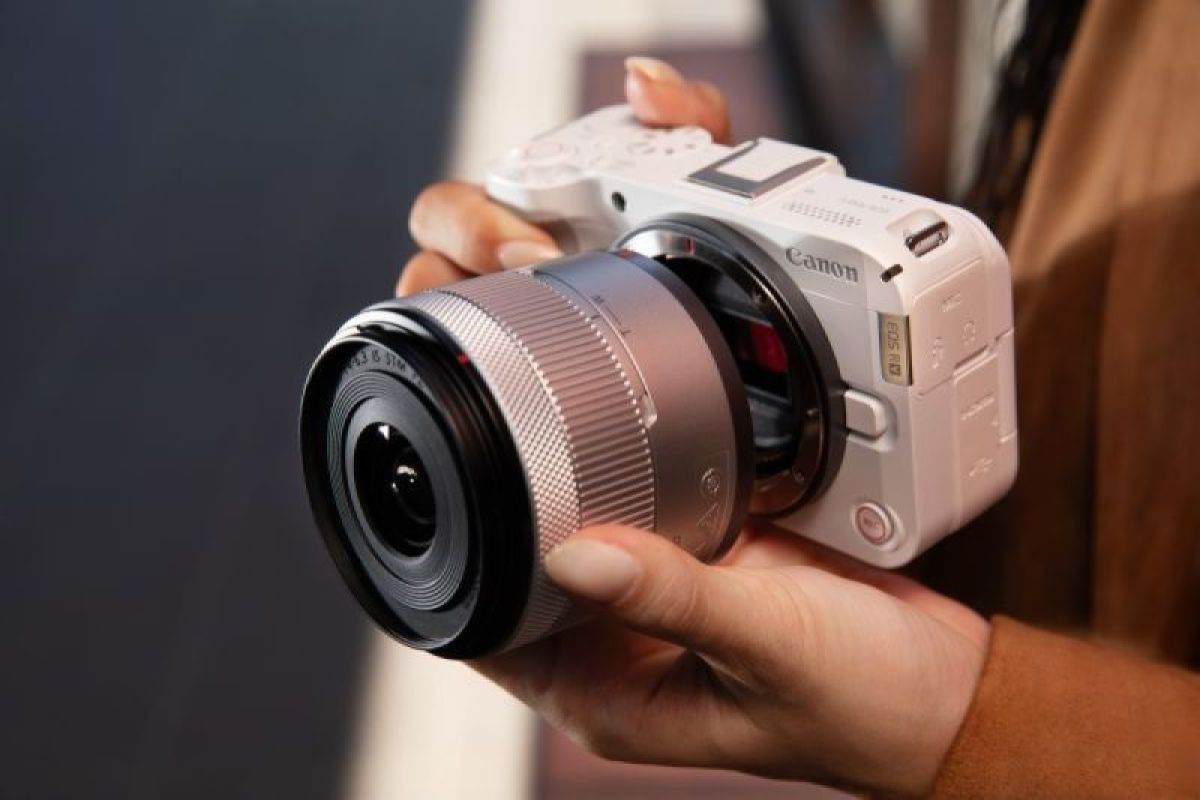
Jakarta (ANTARA) – Learning photography does not mean you have to start with a professional camera costing tens of millions of rupiah. Many mirrorless cameras are now designed with compact bodies, easier-to-understand menus and automatic features that help users take good pictures while gradually learning about aperture, shutter speed and ISO.
For beginners, a camera with interchangeable lenses is also an appealing choice. You can use the supplied lens to learn the basics, then try lenses with different characteristics to suit your needs, from portraiture and landscapes to street and sports photography.
As of October 2026, several cameras remain appealing as a first model. The options come not only from Canon and Sony, but also Fujifilm, Nikon, OM System and Panasonic. Here are eight recommendations.
- Canon EOS R50
The Canon EOS R50 is a user-friendly option for those moving from a mobile phone to a mirrorless camera.
It has a 24.2-megapixel APS-C sensor and a DIGIC X processor. Canon has also equipped it with Dual Pixel CMOS AF II, which helps the camera recognise and track subjects.
The EOS R50 also has a fully articulating touchscreen and supports 4K 30p video recording oversampled from 6K.
With a relatively light body, the EOS R50 is suitable for learning everyday photography, such as taking pictures of friends, family, food and travel, as well as street photography. Canon’s RF and RF-S lens ecosystem also offers room to grow as users’ skills improve.
- Fujifilm X-M5
For those who want to learn photography while enjoying distinctive colour rendering, the Fujifilm X-M5 is worth considering.
It uses a 26.1-megapixel APS-C X-Trans CMOS 4 sensor and an X-Processor 5. It weighs around 355g, including the battery and memory card, making it relatively easy to carry when travelling.
One of Fujifilm’s attractions is Film Simulation. This feature lets users achieve a range of colour styles straight out of the camera, without always having to edit their pictures afterwards.
The X-M5 also supports 14-bit RAW, allowing users to begin learning more advanced photo processing with applications such as Lightroom or other RAW-editing software.
For those also interested in video, the camera can record up to 6.2K at 30p and 4K at 60p.
One point to bear in mind is that the X-M5 has no electronic viewfinder, so users must compose shots using the rear screen. This may not be a problem for some beginners, but photographers accustomed to a viewfinder may need time to adjust.
- Nikon Z50II
The Nikon Z50II is suitable for beginners seeking a first camera that they will not feel the need to upgrade from too soon.
It uses a 20.9-megapixel DX or APS-C sensor. Nikon has also equipped it with an electronic viewfinder with approximately 2.36 million dots and a 3.2-inch vari-angle touchscreen.
The viewfinder is an advantage for beginners who want to learn photography in a more conventional way. Users can practise composition through the viewfinder while seeing the effects of light and exposure directly.
The Z50II can also shoot at up to 11 frames per second in full-resolution RAW. This is useful for sports or photographing fast-moving animals.
Nikon provides several shooting modes, including aperture priority, shutter priority and manual. The camera can therefore accompany users from simply pressing the shutter button to learning photography settings in depth.
Nikon describes the Z50II as beginner-friendly and says it offers a range of features to support the creative process.
- Sony ZV-E10 II
For beginners interested not only in photography but also in content creation, the Sony ZV-E10 II is an appealing option.
The camera uses a 26-megapixel APS-C sensor and a Fast Hybrid AF system. Sony provides up to 759 phase-detection autofocus points for stills and up to 495 for video.
It can also record 4K video at up to 60p in 10-bit. Its screen can assist with shooting from a range of angles.
Although associated with vlogging, the ZV-E10 II is an interchangeable-lens camera and can also be used to learn photography.
Another advantage is its large-capacity battery, which Sony says can produce around 610 shots, based on CIPA testing when using the screen.
The camera is suitable for beginners planning to become both photographers and content creators: its still-photo capabilities are serious, while its video features are comprehensive.
- Canon EOS R100
If budget is the main consideration, the Canon EOS R100 is still worth a look.
It uses a 24.1-megapixel APS-C sensor and a DIGIC 8 processor. The sensor is much larger than those found in most mobile phones, allowing users to begin learning about differences in depth of field, bokeh and the look produced by a larger sensor.
The EOS R100 uses the RF mount, giving users access to Canon’s range of RF and RF-S lenses.
Its electronic viewfinder is an advantage for beginners who want to learn photography by composing shots in the conventional way.
Its drawbacks are simpler video features and a more basic screen than those of the EOS R50. The screen is also not touch-sensitive.
However, if the main aim is to learn photography rather than make video content, the EOS R100 remains a sensible first-camera option.
- Nikon Z30
The Nikon Z30 is an appealing choice for beginners who want a small camera to take everywhere.
The body weighs around 350g. Nikon has equipped it with a 20.9-megapixel DX sensor and a three-inch vari-angle screen.
The Z30 also has an autofocus system with face and eye detection to help with photographing people and animals.
For video, it can record 4K at 30p and Full HD at up to 120p. Nikon has also made it compatible with the growing range of NIKKOR Z lenses.
One drawback for beginner photographers is the lack of an electronic viewfinder, meaning users must rely on the rear screen to compose their shots.
Even so, its compact size and simple operation make the Z30 appealing for travel, family photography and everyday content.
- OM-D E-M10 Mark IV
For those seeking a compact camera with in-body image stabilisation, the OM-D E-M10 Mark IV remains an appealing option.
It uses a 20.3-megapixel Micro Four Thirds sensor and has five-axis image stabilisation offering compensation of up to 4.5 stops.
This feature is useful when taking handheld pictures in less-than-bright conditions. The camera can help reduce the effects of shake, making it easier to keep images sharp.
The E-M10 Mark IV also has an electronic viewfinder, a tilting touchscreen and continuous shooting at up to 8.7 frames per second with single autofocus.
For beginners, it is appealing because it offers various shooting modes and 16 Art Filters, allowing users to experiment with image styles without having to master photo editing straight away.
OM System also positions it as a compact, versatile camera for everyday photography.
- Panasonic Lumix G100D
The Panasonic Lumix G100D is suitable for beginners looking for a small camera for both photography and video.
It uses a 20.3-megapixel Micro Four Thirds sensor and the Micro Four Thirds lens system. The sensor is smaller than APS-C, but the system benefits from a broad choice of lenses and relatively compact equipment.
The G100D can also capture images in RAW format, allowing users to start learning about editing and understand how raw files differ from JPEGs.
For people who enjoy making travel content, the camera is also appealing because of its compact design and screen, which supports shooting from different angles.
It is not the newest camera on the list, but that may make it an interesting alternative if found at a lower price, particularly for beginners who want to put some of their budget towards an additional lens.
There is no single camera that is right for everyone. The choice should reflect the kind of photography you want to learn.
For beginners seeking an all-rounder that is easy to use, the Canon EOS R50 is a safe choice. The Fujifilm X-M5 is appealing to users who prioritise colour, a compact design and photographic experimentation.
For those who want to learn with a viewfinder and take a more serious approach to photography, the Nikon Z50II is worth considering. The Sony ZV-E10 II is more appealing to users who also want to vlog or make video content.
The Canon EOS R100 suits those who want to start at a lower cost. The Nikon Z30 appeals to users who prioritise a compact body, while the OM-D E-M10 Mark IV has the advantage of in-body image stabilisation.
The lens is just as important. Do not spend your entire budget on the camera body only to have no money left for a lens or supporting accessories.
For beginners, a kit lens such as a 15–45mm, 16–50mm or 18–45mm is sufficient for learning the basics of photography. Once you understand composition, aperture, focal length and lens characteristics, you can consider buying an additional lens.
Ultimately, the best camera for learning photography is not necessarily the one with the highest specifications. A camera that is comfortable to carry, easy to use and encourages its owner to take pictures regularly is far more useful.
Photography skills do not develop simply by owning an expensive camera. The more often you take pictures, try different settings and work out why an image looks good or less appealing, the faster your skills will improve.
Source: jawawa.id (https://jawawa.id/newsitem/eight-mirrorless-camera-recommendations-for-beginners-which-one-should-you-choose-1791946335)
Originally published by Antara (Indonesian) (https://www.antaranews.com/berita/5784953/8-rekomendasi-kamera-mirrorless-untuk-pemula-pilih-yang-mana), translated from Indonesian