
Eight Jakarta Agreements to Oversee Accelerated Development in Papua
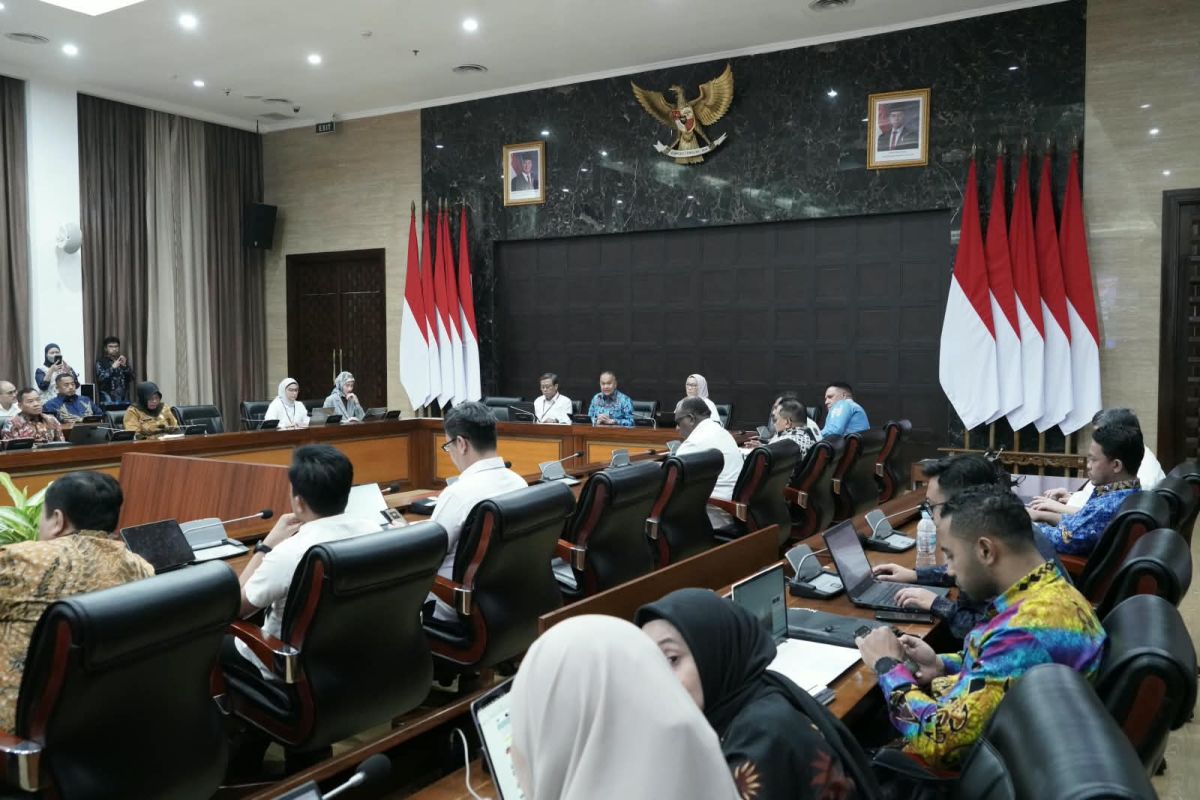
Jakarta (ANTARA) - The Executive Committee for the Acceleration of Papua Special Autability Development is overseeing the follow-up of the eight Jakarta Agreements to align programmes across ministries and agencies to accelerate development in the Land of Papua.
The Chairman of the Executive Committee for the Acceleration of Papua Special Autonomy Development, Velix Vernando Wanggai, stated in a written statement in Jakarta on Sunday that the agreements are the result of the Synchronisation Meeting for the Planning and Implementation of the Papua Development Acceleration Action Plan, held at the State Secretariat Office on Thursday (1/10).
“Accelerating development in Papua requires strong orchestration. It is not just about ensuring every programme runs, but also ensuring all development interventions are interconnected, address the needs of the Papuan people, and produce real impacts consistent with the Papuan context. I always emphasise a ‘Papuan Policy that Feels Papuan’,” he said.
According to Velix, synchronisation is necessary to bring together development targets, the division of roles between agencies, resource support, as well as monitoring and evaluation mechanisms into a unified implementation.
As a follow-up to the Jakarta Agreements, the Ministry of National Development Planning/Bappenas will hold meetings with ministries and agencies to ensure the commitment of central government programmes and budgets to the Papua region, based on the Papua Development Acceleration Action Plan 2025-2029.
Furthermore, the government is discussing basic services in villages and the handling of displaced persons.
The meeting also agreed on the need for a specific affirmative approach that considers geographical conditions, regional cost of living, local needs, and local wisdom in addressing various issues in Papua.
Four coordinating ministries presented strategic Papua development agendas during the meeting: the Coordinating Ministry for Food, the Coordinating Ministry for Infrastructure and Regional Development, the Coordinating Ministry for Community Empowerment, and the Coordinating Ministry for Political and Security Affairs.
The Coordinating Ministry for Infrastructure and Regional Development discussed, among other things, following up on the aspirations of regional heads regarding the construction of the Maybrat-Teluk Bintuni road, integrated transportation across Papua, and the development of economic corridors along the Trans-Papua highway.
Meanwhile, the Coordinating Ministry for Community Empowerment discussed the development of an economic empowerment ecosystem for indigenous Papuans, particularly the younger generation, including the optimisation of creative centres in several cities in Papua.
From a political and security perspective, development in Papua is directed through a humanistic welfare and security approach by strengthening the integration of ministerial and agency programmes alongside the TNI (Indonesian National Armed Forces) and Polri (Indonesian National Police).
The Coordinating Ministry for Political and Security Affairs is also integrating recovery, rehabilitation, and reconstruction efforts in Jayawijaya, Highland Papua, with the National Disaster Management Agency (BNPB) as the primary sector, supported by relevant ministries, agencies, and stakeholders.
The Papua Executive Committee will subsequently oversee the follow-up to the Timika Agreement on 12 May 2026, the Jayapura Agreement on 19 September 2026, and the Jakarta Agreement on 1 October 2026.