
Eight Defendants in LPEI Corruption Case Allegedly Caused State Losses of Nearly One Trillion Rupiah
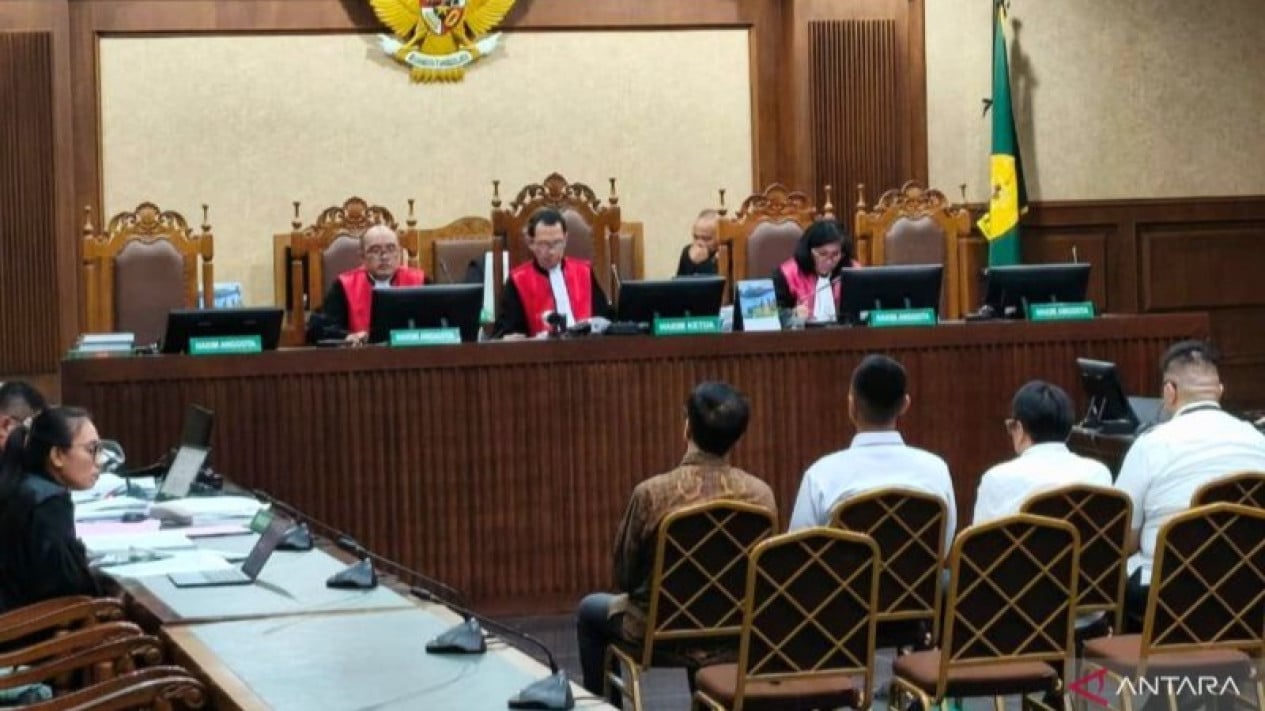
Jakarta — Eight defendants in an alleged corruption case involving national export financing at the Indonesia Export Import Bank (LPEI) for the period 2015-2020 are suspected of causing state financial losses of Rp992.82 billion.
Public Prosecutor Arif Darmawan Wiratama from the Attorney General’s Office stated that the defendants participated in several interconnected criminal acts, which are viewed as a continuous unlawful series of actions. “These unlawful acts enriched defendants Handoko Limaho and Liu Raymond, thereby harming state finances or the national economy,” the prosecutor stated during the indictment reading at the Corruption Court of the Central Jakarta District Court on Monday.
The eight defendants include Andi Maulana Adjie, Head of the Sharia Financing Division Department at LPEX (2011-2017); Intan Apriadi, Head of the Sharia Financing Division I Department (2007-2016); Komaruzzaman, Head of the Sharia Financing Division II Department (2011-2016); and Gamaginta, Head of the Sharia Financing Division I Department (2017-2018). Also implicated are Dwi Wahyudi, Managing Director I of LPEI (2009-2018); Ryan Wahyudi, Sharia Financing Relation Manager (2015-2018); Liu Raymond, Director of PT Tebo Indah (TI); and Handoko Limaho, the ultimate beneficial owner of PT TI and PT Pratama Agro Sawit.
The defendants are charged with violating Articles 603 or 604 in conjunction with Article 20 letter c of the National Criminal Code, as well as Article 8 of Law Number 31 of 1999, as amended by Law Number 20 of 2001 concerning the Eradication of Corruption Crimes.
The indictment was first read for four defendants—Handoko, Ryan, Dwi, and Liu—followed by the reading for Andi, Intan, Gamaginta, and Komaruzzaman. The prosecution revealed that the unlawful acts began when Handoko, acting alongside Liu, applied for financing facilities. However, the applications included feasibility studies and asset valuation reports from a Public Appraisal Services Office (KJPP) that misrepresented the actual area of planted oil palm land. Furthermore, Handoko and Liu allegedly utilised fiduciary deeds for inventory and accounts receivable that did not align with audited financial statements, and sought the disbursement of financing facilities using fictitious invoices and contracts as supporting documentation.