
Eight Companies Commit Rp12.6 Trillion Investment in Pati, Waste-to-Energy Project Largest
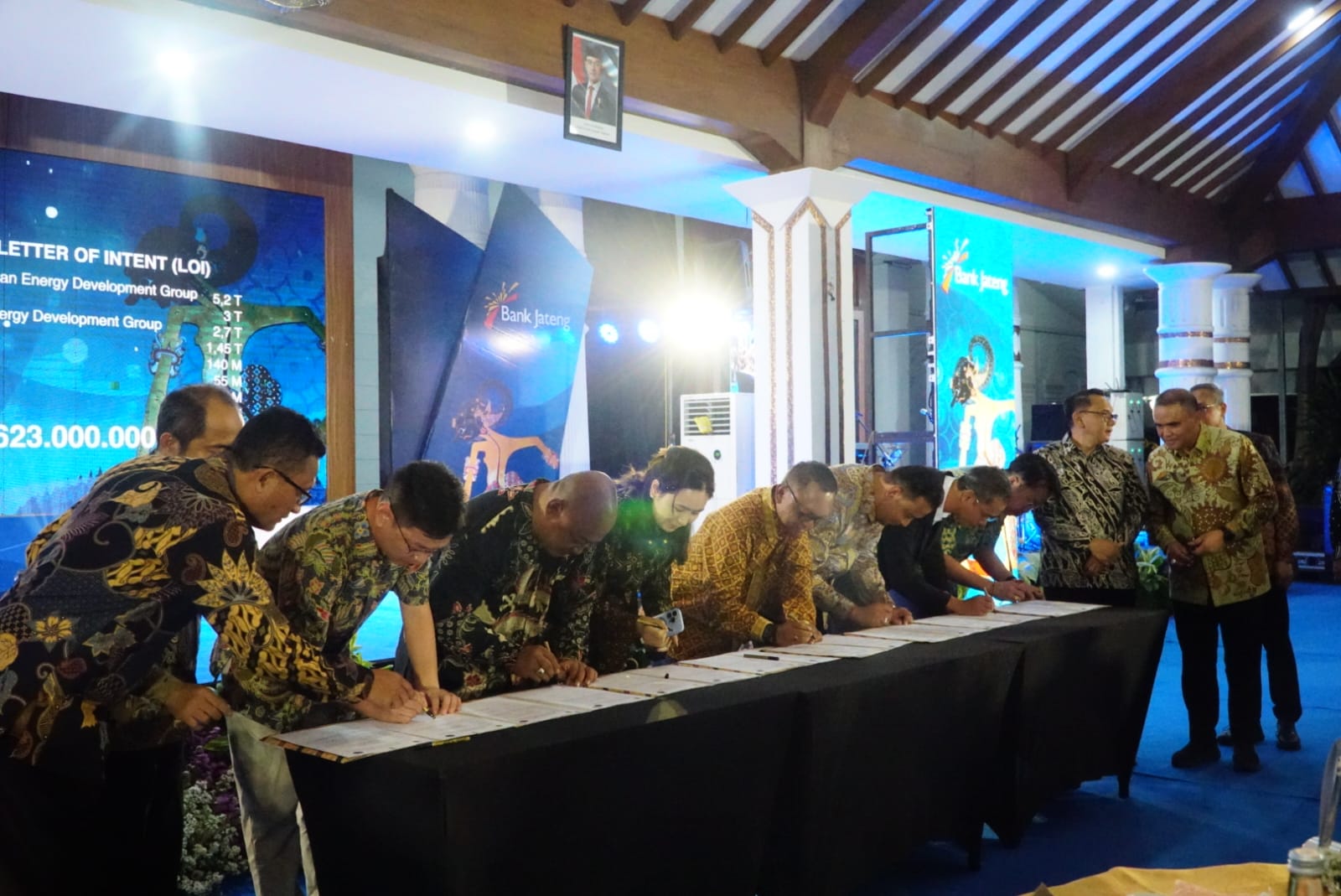
Pati has secured investment commitments of approximately Rp12.6 trillion from eight companies for business development slated for 2027. These commitments were formalised through the signing of Letters of Intent (LoI) during the Pati Business Forum 2026 held at the Pati Regency Pendopo on Monday night (28/9/2026).
The proposed investments span several sectors, including waste-to-energy, solar power plants, ports and fisheries, textiles, street lighting, and leather goods manufacturing.
The Acting Regent of Pati, Risma Ardhi Chandra, stated that the significant value of the LoIs demonstrates that Pati remains an attractive destination for investors. The forum served as a platform to bring the government together with business players and prospective investors.
“The total LoIs we are signing with eight companies amount to around Rp1lar Rp12.6 trillion. This is an extraordinary achievement. Investment continues to flow robustly into Pati Regency,” said Chandra.
The waste-to-energy sector represents one of the largest investments. Chandra noted that waste management is a major issue in Pati, with daily waste generation reaching approximately 697 tonnes.
“Out of the Rp12.6 trillion, the highest investment value is in the waste-to-energy field. Pati produces over 500 tonnes of waste every day. This is a very significant problem,” he added.
The waste-to-energy project is planned to be undertaken by PT Sinergi Enviro Solution and PT Sichuan Energy Development, with an investment value of approximately Rp5.2 trillion. This investment will focus on building facilities to convert waste into electricity.
Additionally, PT Synergy Infra Hijau, alongside PT Sichuan Energy Development Group, has committed approximately Rp2.7 trillion to the solar power plant sector.
In other sectors, PT Sino Textile Group is preparing an investment of around Rp3 trillion. Meanwhile, PT Lensa Patria Energi plans to invest approximately Rp1.45 trillion for the development of ports and the fisheries sector, including the construction of cold storage and fish processing industries.
Chandra noted that Pati’s fishery potential is vast and ripe for development into value-added industries.
“Pati has immense fishery potential. There are approximately 800 registered vessels over 30 GT, and around 2,500 vessels under 30 GT. This is potential that investors can develop,” Chandra remarked.
Further commitments come from several other companies with smaller-scale investments. PT Sinergi Infra Hijau is preparing around Rp140 billion for street lighting, followed by PT Quanda Industrial at approximately Rp55 billion, PT Putrajaya Sakti Samudera at around Rp50 billion, and PT RBJ Outdoor Products at approximately Rp28 billion for the leather goods industry.
The influx of these investments is expected to create new employment opportunities for the people of Pati. Chandra mentioned that local workers already constitute a large portion of the workforce in several foreign direct investment (FDI) companies operating in the region.
“These companies will not only require female labour; men will certainly be absorbed into the workforce by 2027,” he explained.
Pati Government Prepares Investment Support
The Pati Regency Government has expressed its readiness to facilitate investors, particularly regarding licensing processes and resolving investment obstacles. This support will be provided through the Public Service Mall (Mal Pelayanan Publik) and the Investment Acceleration Task Force.
“We will oversee the licensing to make it easier for you to invest in Pati Regency. If there are difficulties regarding permits, you can come directly to the Pati Regency Pendopo. We are ready to serve,” Chandra asserted.
Beyond the projects that have expressed commitment via LoIs, the Pati Government is still opening opportunities for industrial area development. Chandra noted that the total industrial area across various regions in Pati reaches approximately 5,600 hectares.
“There is still so much more we can attract for investment in Pati Regency,” he said.
The government is also encouraging investments that utilise local commodity potential. Key potential sectors include the salt industry, agricultural processing, and the development of renewable energy based on corn and cassava.
Chandra stated that developing these sectors could strengthen industrial supply chains while supporting food and energy independence. Pati possesses two sugar factories and produces corn, cassava, and sugarcane, all of which are ripe for further development.
“We need industries that can grow in Pati. This includes the salt industry and industries that support energy independence, such as bioethanol,” he said.
The Pati Business Forum 2026 also served as a meeting point for the Pati Regency Government with banks, business associations, and both domestic and international investors. Chandra expressed his appreciation to Bank Jateng and business players for opening opportunities for investment cooperation in Pati.
The event was attended by the Assistant for Economy and Development of the Central Java Provincial Secretary, representatives from neighbouring regencies, the Acting Head of DPMPTSP Central Java, the Pati Regency Forkopimda, the Director of Compliance and Risk Management of Bank Jateng, officials from the Pati Regency Government, the Leader of Bank Jateng Pati Coordinator Branch, and leaders from Kadin, Apindo, HIPMI, and various business associations.
Several domestic and international investors and business players were also present, including representatives from PT Sichuan Energy Development, PT Sinergi Enviro Solution, and other business groups.
Source: jawawa.id (https://jawawa.id/newsitem/eight-companies-commit-rp12-6-trillion-investment-in-pati-waste-to-energy-project-largest-1790783477)
Originally published by lingkar.co (https://lingkar.co/berita/delapan-perusahaan-komitmen-investasi-rp126-triliun-di-pati-waste-to), translated from Indonesian