
EIGER Nature Restores Degraded Land in Puncak Bogor, Walhi West Java Responds
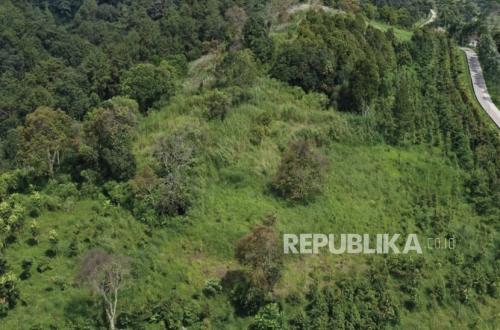
The Indonesian Forum for the Environment (Walhi) West Java has assessed that the efforts to restore degraded land and maintain conservation in the Puncak, Megamendung area of Bogor Regency, conducted by EIGER Nature, are appropriate steps to strengthen the region’s ecology.
The restoration of degraded land is being carried out on a 73.23-hectare area belonging to PT Perkebunan Nusantara (PTPN) I Regional 2, which has been planted with over 120,000 trees, 8 million shrubs, and resilient groundcover plants. Biodiversity monitoring is also being conducted within the Utilisation Zone of the Gunung Gede Pangrango National Park (TNGGP) covering 235.66 hectares, alongside sustainable water and environmental management.
“For a long time, we have seen EIGER Nature as a company that maintains its commitment. We also see that EIGER is very open to receiving suggestions, input, and even criticism. It is rare to find a company that can position itself in such a manner,” said the Executive Director of Walhi West Java, Wahyudin Iwang, when confirmed on Wednesday.
His organisation has conducted environmental monitoring and analysis in the EIGER Nature area, which presents a new face of eco-tourism development—an economic activity designed to honour the environment. Walhi also performed direct checks on the completeness of permits and environmental documents. The results indicated that all requirements have been met and are in line with the development process ongoing since 2018, covering spatial planning permits, environmental approvals, site plans, and building permits.
“We came here to see directly whether the input, suggestions, views, and criticisms we previously provided have been implemented,” he added.
Nevertheless, Walhi West Java reminded that environmental preservation must be carried out sustainably. According to Iwang, EIGER Nature is still in the early stages of its journey. However, if managed consistently by involving experts, academics, and civil society organisations, the area has the potential to become a pilot project for other businesses developing nature-based activities.
“If this continues seriously and continues to involve teams of experts, academics, and NGOs, this could become a pilot project or a learning model for other entrepreneurs running nature-based activities,” he said.
The President Director of EIGER Nature, Imanuel Wirajaya, stated that the eco-tourism project is built through a collaborative process involving various parties, where openness to criticism is a core part of the ‘pentahelix’ collaboration concept they uphold.
“We want to open a space so that input and criticism are not only conveyed but can also be seen directly in the field—what has been done, what is good and should be maintained, and what needs to be improved or enhanced,” said Imanuel.
Imanuel noted that protecting nature is a shared journey. EIGER Nature is developed using the ‘3E’ eco-tourism approach: ecology, ethnology, and economy. Rather than causing damage, this eco-tourism model invites visitors to enjoy holidays while simultaneously helping to preserve the environment and support the local economy.
This approach balances nature conservation, culture, and community with economic benefits as the foundation of the destination. Imanuel emphasised that EIGER Nature aims to ensure that tourism activities can coexist with nature conservation, cultural preservation, education, and community empowerment, while providing an engaging and meaningful experience.
“We believe that protecting nature is a shared journey. Through openness, criticism, science, and collaboration, we can create meaningful nature experiences for humans while bringing good to nature and future generations,” he concluded.
Source: jawawa.id (https://jawawa.id/newsitem/eiger-nature-restores-degraded-land-in-puncak-bogor-walhi-west-java-responds-1791424515)
Originally published by Republika (https://rejabar.republika.co.id/berita/tmkdqd430/eiger-nature-restorasi-lahan-kritis-di-puncak-bogor-ini-kata-walhi-jabar), translated from Indonesian