
Eid Transport 2026 Successful, Collaboration Key to Success
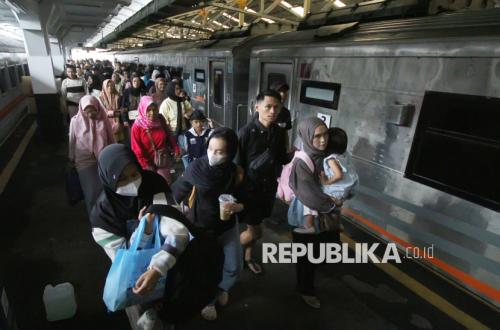
REPUBLIKA.CO.ID, JAKARTA — The implementation of the 2026 Eid transport operations demonstrated positive achievements across various modes of transportation, from trains to sea crossings. The surge in mobility of millions of people during the homecoming and return periods was managed relatively well, supported by cross-sectoral synergy and thorough planning.
PT KAI Regional Operations (Daop) 2 Bandung recorded nearly one million passenger movements over the 22-day Eid transport period. From 11 March to 1 April 2026, there were 441,610 departing customers and 430,569 arriving customers in the Daop 2 Bandung region.
Bandung Station and Kiaracondong Station became the two main hubs with the highest mobility levels. Bandung Station served 122,972 departures and 122,350 arrivals, while Kiaracondong Station recorded 89,946 departures and 75,037 arrivals.
In addition, several regional stations in West Java also experienced significant surges. Tasikmalaya Station, Cianjur, Cipatat, Banjar, and Purwakarta stations were among the top seven busiest points during the Eid transport period. This high mobility serves as an indicator of increasing public trust in train services, which are deemed safe, on time, and comfortable.
To maintain smooth operations, KAI Daop 2 Bandung implemented various anticipatory measures, from adding personnel to strict track supervision. Cross-sectoral coordination was also strengthened to avoid passenger build-ups, especially during peak homecoming and return hours.
In the ferry sector, PT ASDP Indonesia Ferry (Persero) also recorded positive performance. ASDP President Director Heru Widodo stated that the success of managing the 2026 Eid transport was inseparable from close collaboration with various parties, including the Ministry of Transportation, TNI/Polri, KSOP, and BPTD.
ASDP applied measured strategies at several major ports such as Merak, Bakauheni, Ketapang, and Gilimanuk. Fleet optimisation was carried out dynamically, supported by the Arrive-Unload-Depart (TBB) operational pattern to accelerate service flow, as well as strengthening buffer zones and personnel at critical points.
A single tariff policy accompanied by discount stimuli also had a significant impact. Up to 31 March 2026, the realisation of stimulus absorption reached Rp30.05 billion or 84.52 percent of the target, with the beneficiary rate reaching 116.92 percent.
Digitalisation through the Ferizy platform became an important factor in regulating vehicle and passenger flow. The integrated reservation system proved capable of reducing queues and creating more orderly journeys during the peak mobility period.
Nationally, the total passengers across 15 monitored routes reached 4,722,213 people, an increase of 6.6 percent compared to the previous year. Meanwhile, the number of vehicles reached 1,215,273 units, up 8 percent from the same period last year.