
Eid al-Adha and the Psychology of Social Recognition
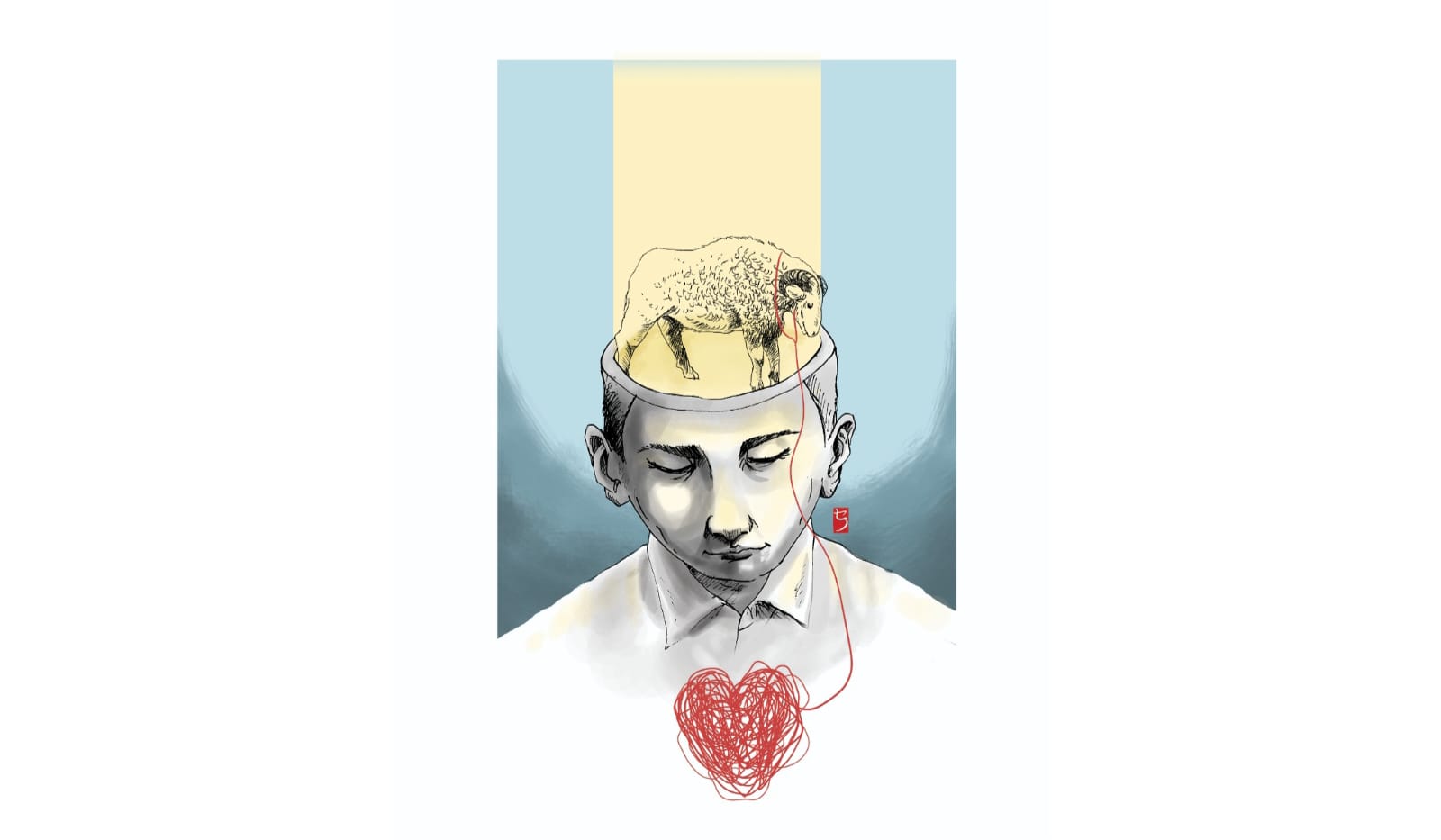
Pilgrims are advised to reduce activities outside the tents in Arafah. In an era where virtual social media demands constant status updates for image-building, research by psychologist Professor Rory O’Connor suggests that humanity’s greatest suffering often stems not from financial or health issues, but from internal psychological factors—specifically, the preoccupation with others’ opinions demanding social perfection. Excessive concern over others’ perceptions can lead to suicide, which Maslow’s hierarchy identifies as a need for social recognition. This article briefly explores this phenomenon through the lens of Eid al-Adha.
SINCERITY/NOT SHOWING OFF
Central to Eid al-Adha and the Hajj period (9-13 Zulhijjah) is tauhid maqshudiyyah—the belief and attitude of taking Allah as the sole source of motivation and purpose, not worldly gain, and embracing servitude to Allah as life’s meaning (possessing spiritual intelligence that brings inner peace). This means acting with sincerity, free from concern for others’ opinions, and not seeking social validation as a motive.
Sincerity involves maintaining a pure heart solely to seek Allah’s pleasure, not anything else. During Eid al-Adha and Hajj, a sincere person does not fret over lack of human recognition or dwell on others’ thoughts, as sincerity means absence of riya’—other motives—and riya’ in Islam is considered hidden shirk (subtle idolatry).
What matters to the sincere is Allah’s recognition—the record of good deeds by His angels—which is sufficient. Any human acknowledgment is merely a byproduct of sincerity. Thus, Eid al-Adha and Hajj liberate individuals from the shackles of seeking social validation through social media.
Thus, in the Quran, when one sacrifices during Eid al-Adha and the three days of Tashriq—whether a goat or cow—only the piety of the performer reaches Allah (Quran 22:37), not the meat, which is distributed to humans. This reflects the sincerity of the performer, as exemplified by Prophets Ibrahim and Habil, the first sacrificers, since piety is the hallmark of all prophets, as seen in Quran 33:39.
Hence, they are granted the gift of sincerity through their efforts (Quran 15:39-40).
During the Hajj before and after Eid al-Adha, the motivation for Allah (tawhid and sincerity) is further emphasised. The verse commanding Hajj differs from other acts of worship like prayer and fasting, beginning with ‘Walillaahi’ (For Allah), making Hajj obligatory for humans (Quran 3:97). This is because Hajj is an arduous act requiring significant financial cost, with many losing their lives in the process.
Of course, tawhid and sincerity are also present in the takbir during 9-13 Zulhijjah, the talbiyah recitation during Hajj; the ritual of stoning the jamarat three times to free oneself from Satan and evil desires; and the recitations during tawaf (tasbih, tahmid, tahlil, takbir, and hauqalah). All these are performed before and after Eid al-Adha (9-13 Zulhijjah).
DANGERS OF SOCIAL RECOGNITION
In religious terms, the motive of social recognition—the psychology of worrying about others’ perceptions—is riya’. Riya’ derives from ‘ra’â-yarâ’, meaning ‘to see’. It is a mental state where one acts, works, or lives to be seen by others for worldly motives—wealth, power, love, or respect (social recognition). Riya’ is the antithesis of the sincerity and pure heart described above.
Since sincerity is essential, riya’—the opposite of sincerity—carries many dangers. First, deeds performed with riya’ earn no reward in the hereafter. Even scholars, philanthropists, and those diligent in ritual worship who claim they act for Allah will find their deeds rejected.
Allah says: ‘You have already received your reward in this world through being called charitable for social recognition, or to be honoured and gain worldly glory as scholars, and to be called devout worshippers.’
Second, it fosters other negative traits, as riya’ is a characteristic of hypocrites (Quran 2:9-10). They act one way in words but another in their hearts. There is no unity between their heart, tongue, and actions (lacking integrity). They speak for Allah but do not truly mean it, as seen in Quran 107 (Al-Ma’un).
That surah states hypocrites, besides showing off in prayer, refuse to share with orphans and the poor and do not help beyond material means. They will develop arrogance (’ujub), a desire for fame (sum’ah), and pride (takabur)—feeling superior to others—like Qabil, the son of Adam whose offering was rejected.
They also lack social integration, like the hypocrites who withdrew from the Battle of Uhud, weakening the Prophet’s forces. This shows envy (hiqd) towards the Prophet and jealousy (hasud) of others’ blessings. Even Qabil’s experience led him to murder. Hence, divine guidance cannot reach their hearts as they disobey religion and commit oppression (Quran 2:258, 5:107).
Third, they experience spiritual exhaustion and cannot be happy. This is because insincere individuals, who seek recognition in life (both religious and social), expect others to provide wealth, power, and love. Yet humans are generally unreliable and untrustworthy.
Ingratitude and even betrayal are common human traits. People generally only stay close to someone when