
Eid al-Adha 1447 H/2026 to Fall on Wednesday, May 27th
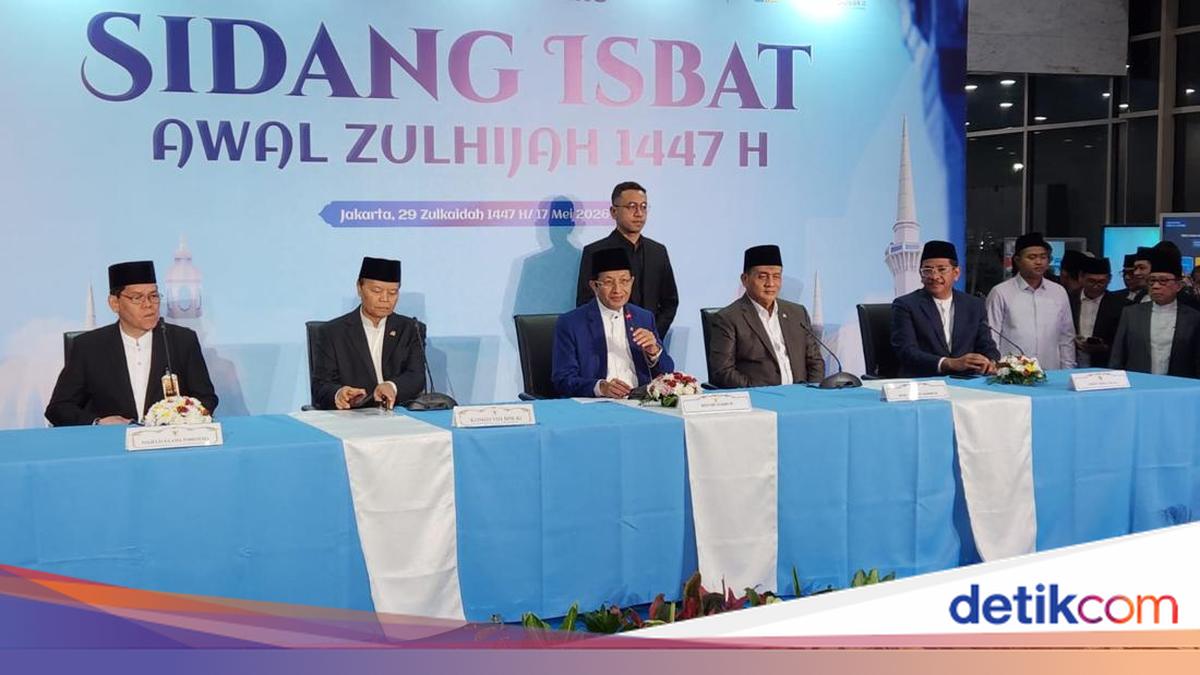
The Ministry of Religious Affairs (Kemenag) has determined that Eid al-Adha 1447 H/2026 will fall on Wednesday, May 27th, 2026. This was based on the decision made during the Isbat hearing held on Sunday, May 17th, 2026.
“Based on the results of the calculations and reports regarding the sighting of the new moon, it has been agreed that the date of 1 Dzulhijjah 1447 Hijri will fall on Monday, May 18th, 2026. Consequently, Eid al-Adha, which is the 10th day of Dzulhijjah, will fall on Wednesday, May 27th, 2026,” said Minister of Religious Affairs (Menag) Nasaruddin Umar through a live broadcast on Bimas Islam TV on Sunday.
As reported by detikNews, the Isbat hearing was attended by representatives from various Islamic organizations. The hearing was conducted in three stages: a presentation on the position of the new moon by the Ministry of Religious Affairs’ Hisab Rukyat Team, a closed-door meeting to determine the date with leaders of Islamic organizations and related institutions, and a press conference announcing the results.
The Ministry of Religious Affairs’ Hisab Rukyat Team, led by Cecep Nurwendaya, previously stated that the position of the new moon throughout Indonesia had met the criteria. The elongation of the new moon in the Indonesian region also met the requirements.
“The position of the new moon throughout the territory of the Republic of Indonesia has met the minimum crescent height criterion of 3 degrees and the minimum elongation criterion of 6.4 degrees, so that according to calculations, the date of 1 Zulhijjah 1447 H falls on Monday Kliwon, May 18th, 2026,” said Cecep during a seminar on the position of the new moon.
“Therefore, the position of the new moon at the beginning of Zulhijjah 1447 H on this day of observation is theoretically very likely to be visible,” he added.
The determination of the beginning of Zulhijah is carried out by integrating the hisab method (astronomical calculations) and rukyat (lunar observations). These two approaches complement each other in producing a comprehensive decision.