
Egypt Responds to Indonesia's Single-Door Palm Oil Export Policy via DSI
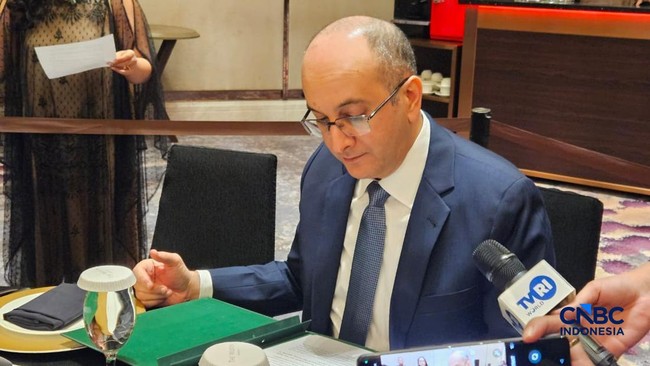
Egypt has responded to Indonesia’s single-door export policy for palm oil through Danantara Sumberdaya Indonesia (DSI), stating it respects the move while stressing the importance of maintaining supply stability and smooth trade flows to the Land of the Pyramids.
Egyptian Ambassador to Indonesia, Yasser Hassan Farag Elshemy, said palm oil is one of the main components of bilateral trade between Indonesia and Egypt, valued at US$1.2 billion per year, equivalent to approximately Rp21.48 trillion (at an exchange rate of Rp17,900 per US dollar).
“We are following with great attention the latest developments regarding Danantara Indonesia and the single-door export system,” Elshemy said during the commemoration of the 74th National Day of the Arab Republic of Egypt in Jakarta on Wednesday (24/6/2026).
According to him, Egypt understands that the Indonesian government is implementing this policy as part of efforts to strengthen governance of strategic natural resource exports. The measure is also aimed at enhancing transparency, simplifying the billing system, and bolstering state revenue.
“We fully respect and support any initiatives that serve the interests of the Indonesian people and economy. Egypt respects and trusts the Indonesian government’s objectives in managing its national economic policies,” Elshemy stated.
Nevertheless, Elshemy emphasised that Egypt’s primary focus as an importer of Indonesian palm oil is ensuring uninterrupted supply. He expressed optimism that close communication between the two nations would keep trade flowing without obstacles.
“From our side, the most important thing is the stability of trade flows. We are confident that through close communication with our Indonesian partners, both parties can ensure that trade in palm oil and other commodities continues to run smoothly and mutually beneficially,” he said.
Beyond the palm oil issue, Elshemy noted that Indonesia-Egypt relations have entered a new chapter following the elevation of bilateral ties to a strategic partnership in April 2025. The agreement covers various sectors, including trade, investment, education, people-to-people exchanges, defence, and culture.
He also conveyed that Egypt and Indonesia are currently discussing several efforts to deepen economic cooperation, including free trade arrangements through both bilateral channels and within the framework of the D-8 free trade agreement.
In addition to economic ties, Egypt hopes to strengthen relations with Indonesia through the education sector. Currently, around 20,000 Indonesian students are pursuing their studies in Egypt. The Egyptian government is also opening wider opportunities for Indonesian students to study medicine, engineering, dentistry, and pharmacy, not just religious education at Al-Azhar University.