
Egg Prices for Eid 2026 Guaranteed Stable, Here's the Agriculture Ministry's Strategy!
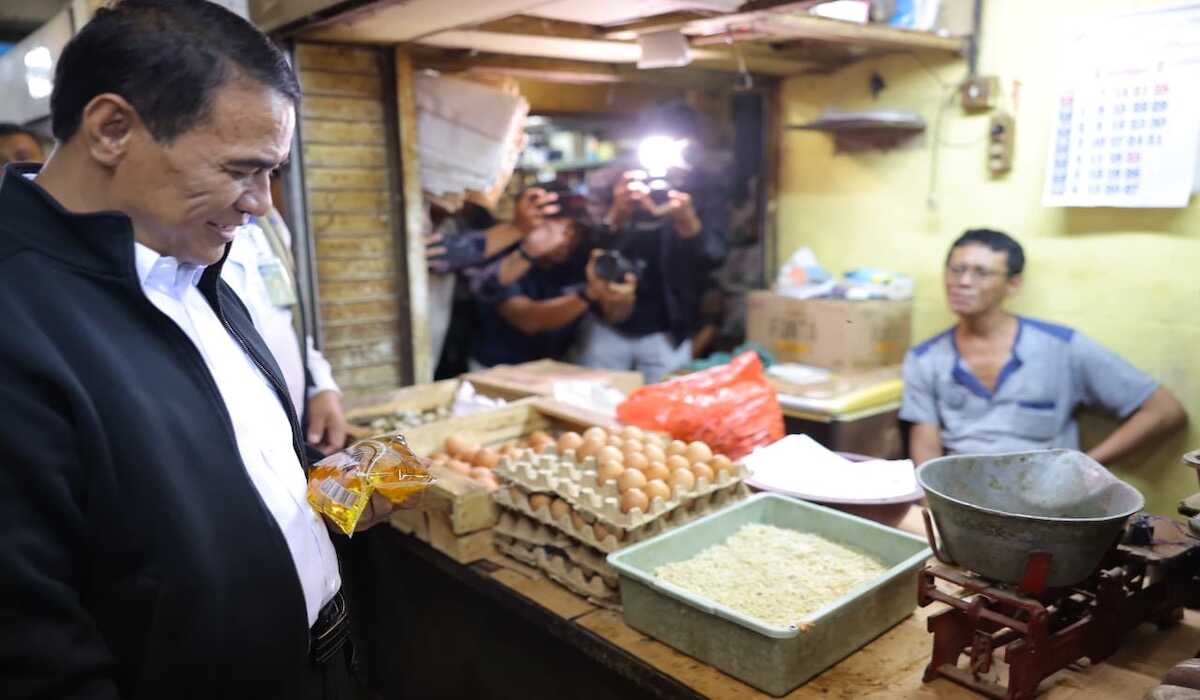
The Indonesian Agriculture Ministry (Kementan) is ensuring that chicken egg prices remain controlled throughout Ramadan until the approach of Eid al-Fitr 2026 through strengthened coordination with national poultry industry players. This strategic measure is being implemented to guarantee stable supply and protect the public from unreasonable price increases.
As is well known, demand for eggs typically experiences significant increases with household and food industry needs during Ramadan. Without strict controls, such conditions could drive up prices at the consumer level, which could trigger food inflation.
The Director of Downstream Livestock Products under the Directorate General of Livestock and Animal Health (PKH), Makmun, has emphasised the importance of synergy to keep prices within reasonable bounds and ensure distribution flows smoothly from producers to markets. “We at the Agriculture Ministry continue to conduct field checks. I hope we can work together to maintain this stability until Eid,” Makmun said in a written statement.
From the upstream side, the Director of Animal Feed at PKH, Tri Melasari, has ensured the availability of livestock feed in safe condition. Feed prices are currently relatively stable and have not experienced significant increases exceeding reasonable limits. Although some regions have reported slight price adjustments, Tri affirmed that these prices remain below the government-set Maximum Retail Price (HET).
The stability of production costs directly impacts farmers’ ability to keep egg prices at the consumer level affordable. The Chairperson of the National Layer Farmers Association (PLN), Musbar Mesdi, has reminded of the importance of compliance with national poultry management regulations. However, he has also conveyed the message that government policy should remain fair to small-scale farmers. “Regulations must be able to protect independent smallholder farmers so they can survive amid competitive industry dynamics,” Musbar said.
In similar fashion, the Chairperson of the Berkah Telur Blitar Cooperative (BTB), Yesi Yuni Astuti, has expressed hope that the government will accelerate distribution of the Corn SPHP programme (Food Supply and Price Stabilisation). “Please, sir, let the Corn SPHP be released quickly so it can help stabilise our feed costs in the producing regions,” she said.
The Coordinator of the Food Price Stabilisation Substance Group at the National Food Authority (Bapanas), Jan Piter Sinaga, has noted that compliance with the Maximum Indicator Price (HIT) and HET is key to maintaining market equilibrium. Bapanas, together with related agencies, will continue to conduct surveillance to prevent speculation practices that burden consumers, whilst ensuring the distribution chain from farmers to traditional markets and modern retail runs without hindrance.
Through this cross-sectoral coordination, the government has affirmed its presence in protecting consumer rights to obtain strategic food at fair prices, whilst maintaining the sustainability of national farmers’ enterprises. Although prices are being monitored as stable, the government will continue to conduct regular inspections during Ramadan to monitor price movements.
Based on national food balance sheet projection data, raw chilli commodity is projected to experience a surplus of 54,000 tonnes in February 2026. The increase in red raw chilli prices has been driven by reduced supply from Kepahiang Regency, whilst premium rice is priced at IDR16,000/kg and medium rice at IDR13,750/kg. The Agriculture Ministry is also ensuring the availability of various chilli types in West Java Province in very safe condition for the needs approaching Ramadan and Eid al-Fitr 2026. The Agriculture Ministry is targeting the distribution of 4 million doses of FMD vaccine nationally throughout 2026.