
Egg Prices at Farm Level Plunge: What Is Driving the Decline?
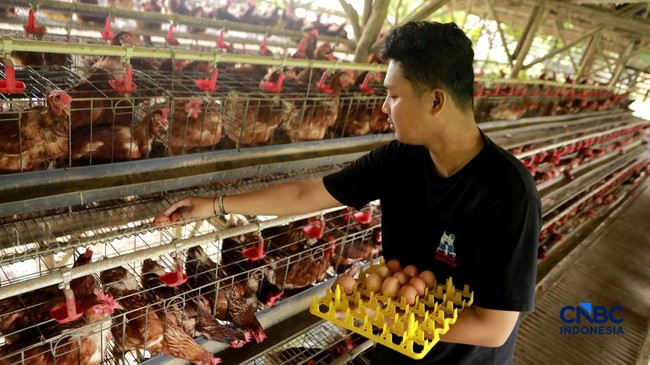
Egg farmers are complaining that egg prices have plummeted again in recent times. An oversupply situation has caused prices at the producer level to fall significantly below the government-set Reference Purchase Price (HAP) of Rp26,500 per kilogram (kg).
The General Chairman of the National Layer Poultry Farmers Association (Pinsar Petelur Nasional), Yudianto Yosgiarso, stated that the drop in egg prices has placed heavy pressure on farmers across various regions. He noted that farmers have been striving to maintain national egg self-sufficiency.
“We have been working to fight for egg self-sufficiency in Indonesia, but our prices continue to fall,” Yudianto said during a press conference at the Ministry of Agriculture office in Jakarta on Tuesday.
He revealed that prices in several production centres had even dropped to nearly Rp21,000 per kg. This figure is considered far below the price required for farmers to maintain business sustainability.
“The drop has reached Rp21,500 per kg in East Java, and around Rp22,500 per kg in Central Java. In West Java and specifically Jakarta, it is around Rp22,500 to Rp23,000 per kg,” he said.
This is despite the fact that the Cost of Production (HPP) for chicken eggs at the farmer level averages around Rp24,000 per kg.
According to Yudianto, the situation is extremely burdensome for farmers. The pressure is intensified by rising production costs, particularly due to the increase in feed prices influenced by the global situation and the movement of the rupiah exchange rate against the US dollar.
“This is very heavy and hits us hard, especially with current geopolitical issues where the dollar exchange rate is soaring, causing feed prices to explode,” he explained.
Yudianto emphasised that the primary cause of the current decline in egg prices is the abundance of supply in the market.
“Clearly, this is because we are experiencing an oversupply,” he clarified.
Amidst this pressure, Pinsar welcomes several steps decided by the Minister of Agriculture and Head of the National Food Agency (Bapanas), Amran Sulaiman, to support egg prices at the producer level.
Yudianto expressed appreciation for the government’s decision, which is seen as helping to ensure the continuity of poultry farming businesses.
“We thank the Minister of Agriculture, who is also the Head of the National Food Agency, for deciding several important matters today. This will greatly assist in the survival of farmers,” said Yudianto.
One of the measures taken by the government is to reinforce the prohibition of purchasing eggs below the reference price of Rp26,500 per kg. He noted that this policy has been communicated to various parties, including the National Police Food Task Force.
“Therefore, we urge everyone, including traders and modern retail entrepreneurs, to assist us and comply with what the Minister has stated. Regarding this letter, which has been copied to the Food Task Force, starting today, there should be no more purchases of eggs below the reference price of Rp26,500 per kg,” he said.
He also requested that farmers across Indonesia immediately report any instances where egg purchases below the government-set reference price are still found.
“We convey to all farmers across Indonesia that if, after today, there are still pressures or purchases of eggs below the price of Rp26,500 per kg, they can report it immediately to the Head of the National Food Agency (Amran Sulaiman). This will be very helpful to us,” he added.
Furthermore, Yudianto revealed that the government, through the National Nutrition Agency (BGN), will also increase the absorption of eggs from farmers. If previously absorption occurred once a week, it will now be increased to three times a week.
“We also thank the Minister for this initiative; the BGN will increase egg absorption from farmers from once a week to three times a week, whereas it was only once recently,” he said.
Farmers hope that these various measures will promptly raise egg prices at the producer level and alleviate the pressures they have faced due to supply surpluses and high production costs.