
Egg Farmers Appeal to Parliament as Rising Feed Costs and Low Prices Threaten Livelihoods
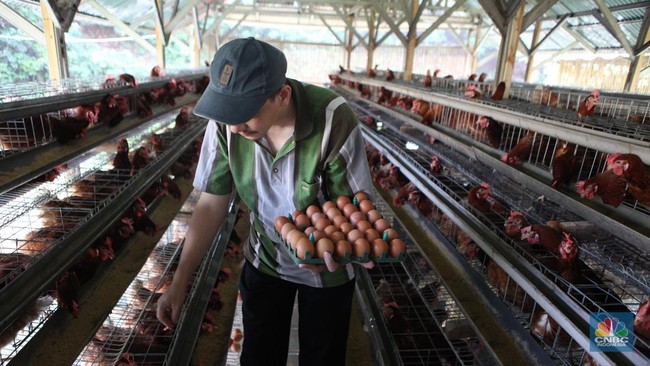
Egg farmers have appealed to the Indonesian House of Representatives (DPR RI) due to increasing difficulties in maintaining their businesses caused by high feed costs and low egg selling prices. Some farmers have reportedly been unable to afford feed, leading them to empty their poultry pens.
This situation was conveyed by Suwardi, Chairman of the People’s Poultry Association (Pinsar) for the Central Java region, during a public hearing with Commission IV of the DPR RI on Wednesday (7/10/2026). Suwardi stated that the pressure on farmers has been mounting since April 2026, driven by rising production costs while egg prices remain far below the government’s established maximum purchase price (HAP).
“For us, since April 20lar 2026 until today, production costs and production yields are very unbalanced,” Suwardi said during the meeting.
According to him, one of the greatest issues is the high price and limited availability of maize. Maize is the primary raw material for poultry feed, accounting for up to 50% of the composition. “Because maize prices are high and availability is very limited, we are at a loss. For us small-scale farmers, the 50% maize portion cannot be replaced by anything,” he said.
He explained that the price of dry shelled maize has reached approximately Rp7,500–Rp8,000 per kilogram. Meanwhile, the price of soybean meal, another essential feed ingredient, is also high, pushing concentrate prices in the market to between Rp9,000 and Rp9,500 per kg. Additionally, the price of rice bran, which previously ranged from Rp3,500–Rp4,000 per kg, has risen to around Rp6,000 per kg.
With a feed composition of 50% maize, 15% rice bran, and 35% concentrate, farmers calculate that feed costs have reached approximately Rp8,155 per kg. “If we calculate this today, with maize averaging almost Rp8,000, the feed price composition reaches Rp8,155 per kg,” he clarified.
Egg Prices Below Reference Price
Amidst rising production costs, Suwardi noted that egg prices at the farmer level remain far below government reference prices. Based on National Food Agency Regulation (Perbadan) Number 6 of 2024, the purchase price for eggs at the farmer level should be Rp26,500 per kg. However, since April 2026, the price received by farmers has averaged only Rp19,000–Rp20,000 per kg.
In fact, Suwardi mentioned that egg prices hit a low of Rp17,100 per kg in June 2026. Averaged over the last six months, the price received by farmers is only around Rp20,000–Rp21,000 per kg. This condition is estimated to cause losses of Rp5,000–Rp7,000 per kg daily, making it difficult for many farmers to sustain their flocks.
“We come here with heavy hearts. Because we are raising living creatures; if we do not provide feed, we are committing a sin,” Suwardi said. He even noted that some farmers have already emptied their pens because they can no longer afford feed.
Suwardi requested that the government ensure maize availability for small-scale farmers. He stated that farmers require at least 223,000 tonnes of maize for the period of October 2026 to February 2027. This need is particularly pressing due to the threat of a long dry season and El Niño over the next five months.
In addition to requesting a stable maize supply at fair prices, farmers also asked the government to absorb local egg production through various programmes, including food assistance. According to Suwardi, egg production is currently accumulating due to low demand and low selling prices, leaving some eggs unabsorbed by the market. “Hopefully, the National Food Agency (Bapanas) can use eggs for government food assistance,” he suggested.
Furthermore, they requested an evaluation of the import trade regulations for feed raw materials, specifically soybean meal and its derivatives, to reduce production costs. Farmers also urged that government programmes through Danantara should not take over the poultry farming activities currently conducted by small-scale farmers. Instead, Danantara is expected to assist in developing downstream industries, particularly in regions experiencing overproduction, such as East Java, Central Java, and Lampung.
“Return cultivation to the people. We are capable of cultivating and achieving self-sufficiency; it is just the distribution that is uneven,” Suwardi said. Farmers proposed the development of downstream industries, such as egg powder and chicken meat powder factories, to help absorb surplus production and reduce dependence on imports.
Facing Commission IV of the DPR RI, Suwardi hoped the government would provide immediate solutions so that small-scale farmers can survive. “If there is no solution, we cannot go home because we cannot feed our chickens. We do not have money in Jakarta. Is it possible that we, the farmers, must become beggars in Jakarta?” he concluded.
Source: jawawa.id (https://jawawa.id/newsitem/egg-farmers-appeal-to-parliament-as-rising-feed-costs-and-low-prices-threaten-livelihoods-1791366846)
Originally published by CNBC Indonesia (https://www.cnbcindonesia.com/news/20261007144751-4-774120/peternak-telur-ayam-ngadu-ke-dpr-hidup-lagi-susah-susahnya-karena-ini), translated from Indonesian