
Efforts to liberate Indonesia's children from the shackles of poverty
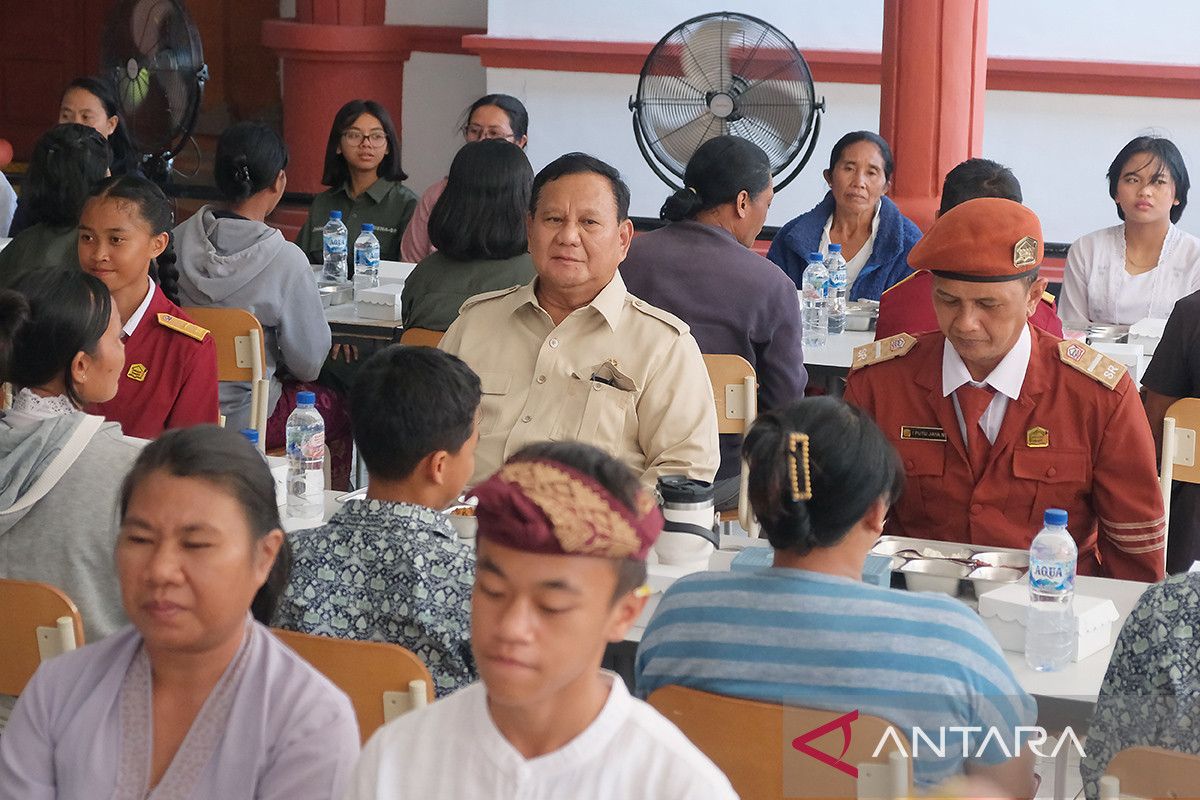
The track record of the first two years of the Prabowo-Gibran administration through ‘Sekolah Rakyat’ (People’s School) proves that equal access to education, guaranteed by the state, is capable of transforming helplessness into real empowerment.
Jakarta (ANTARA) - The presence of Sekolah Rakyat has now become one of the significant achievements of the Red and White Cabinet under the administration of President Prabowo Subianto and Vice President Gibran Rakabuming Raka.
Entering the second year of national leadership, this programme, which has been operating gradually since July 2025, has transformed from a mere pilot project into a solid, structured, and widespread educational network across various corners of Indonesia.
The peak of this programme’s acceleration was marked on 12 January 2026, when President Prabowo simultaneously inaugurated 166 pilot Sekolah Rakyat spread across 34 provinces and 131 regencies/cities. This initial step immediately provided decent educational access for 15,954 students from underprivileged families, supported by 2,218 teachers and 4,889 educational staff.
As of mid-2026, 93 permanent Sekolah Rakyat have officially been established and are actively operating. When combined with the pilot schools, there are now 182 Sekolah Rakyat accommodating more as than 44,000 students at the primary, junior high, and senior high school levels.
This achievement serves as a solid foundation to pursue the development target of 500 Sekolah Rakyat by 2029. The programme aims to embrace 4.16 million Indonesian children who are out of school or have dropped out due to economic constraints or geographical access, as recorded in the integrated data of the Central Bureau of Statistics (BPS).
The programme is designed effectively by overhauling the selection systems and curricula of conventional schools to uphold the principle of social justice. Sekolah Rakyat eliminates academic selection tests, which often marginalise underprivileged children due to unequal access to early learning facilities and the complexities of their growing environments.
In its place, an AI-based ‘DNA talent’ test is implemented to map the innate talents and natural potential of students. This scheme is commonly used by many expensive schools or additional tutoring institutions, making it accessible only to children from middle-to-upper-class families in large cities.
Results from mapping conducted by the Ministry of Social Affairs, alongside a prominent educational institution in Jakarta, involving over 15,000 Sekolah Rakyat students in the first year, show that 54.2 per cent of these underprivileged students excel in social talents. Meanwhile, 34.3 per cent excel in science, technology, engineering, and mathematics (STEM), and the remaining 11.5 per cent excel in languages.
The policy that makes Sekolah Rakyat unique is the combination of these potential mapping results with a ‘multi-entry multi-exit’ curriculum. Through this curriculum, students can enter and graduate dynamically, adjusting to age, academic ability, and personality development. This is crucial as the students come from highly diverse backgrounds. The hope is that students will be truly academically, physically, and mentally prepared when entering society.
Not only students, but teachers, educational staff, as well as dormitory wardens and mentors in Sekolah Rakyat are also thoroughly prepared. They are top-tier young talents who have passed a series of rigorous selection processes from provincial to national levels by the Ministry of Social Affairs, the Ministry of Primary and Secondary Education, and the Ministry of State Apparatus Empowerment and Bureaucratic Reform.
Within the dormitory environment, students are not only guided in academic subjects but are also equipped with vocational skills, competency certifications, digital financial literacy, culture, and mastery of foreign languages such as English, Arabic, Mandarin, Russian, and German.
From this, it is evident that the government is serious about preparing graduates of Sekolah Rakyat. They are being forged into highly competitive skilled workers, ready to enter both national and international labour markets, or to penetrate the intense competition of various prestigious universities.