
Efforts to Harmonise Perceptions of Panginyongan Culture in Banyumas
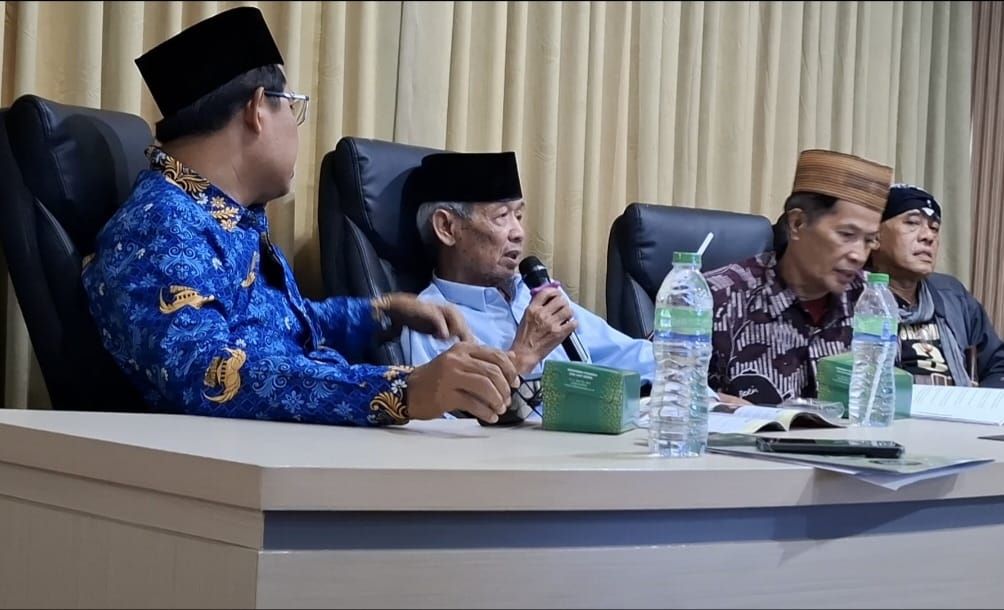
Efforts to strengthen regional or local identity are common across Indonesia in order to keep local identity alive and to contribute to Indonesia’s national identity. This was the aim of Universitas Negeri Prof. K.H. Saifuddin Zuhri (UIN Saizu) Purwokerto, Central Java, which hosted a Focus Group Discussion (FGD) Identitas Atribut Penginyongan Tahun 2026. The discussion took place in the Senate Meeting Room, Rectorate Building, Fourth Floor, on Wednesday, 20 May 2026.
Panginyongan culture is the social identity and character of the Banyumasan people (West Java) who uphold egalitarianism, openness, and honesty. The term Panginyongan derives from the words inyo, aku, or saya.
Participants were given the opportunity to view the Panginyongan Corner, a room containing various items that bear the Panginyongan identity. Items authentic to the Banyumasan region included batik, kitchen implements, bridal attire, blangkon, keris, wayang, and other items associated with Banyumasan culture. Participants attentively observed and listened to these emblematic objects.
The discussion, initiated by the Lembaga Penelitian dan Pengabdian kepada Masyarakat (LPPM) of UIN Saizu Purwokerto, and titled Identitas Atribut Penginyongan Tahun 2026, was held in the Senate Meeting Room, Rectorate Building, Fourth Floor.
PARTICIPANTS
The discussion featured writer Ahmad Tohari, author of Ronggeng Dukuh Paruk; Pantura cultural figure Atmo Tan Sidik and Ki Gobed Krusharto, Patron of the Paguyuban GORAMAS (Gotong Royong Warga Banyumas). Other participants included cultural figures, academics, and cultural activists from Banyumas and nearby areas such as Purbalingga, Tegal, and Brebes.
Ahmad Tohari, a Banyumas writer and cultural figure, remarked that Banyumas people have lived for centuries in agriculture. “In agriculture, the spirit of gotong royong is very strong and can be a cultural capital for Banyumas to sustain gotong royong,” he said.
Tohari added, “In its modern form, gotong royong means obedience to all rules and laws, paying taxes, and not causing trouble. All of this is beneficial for national interests.”
Pantura cultural figure Atmo Tan Sidik stated that the aim of the discussion is to raise awareness and align perceptions between the Banyumas regency culture and its surrounding areas, including Pantura regions such as Brebes and Tegal. “One example is the translation of the Qur’an into Banyumasan; to align perceptions, the City of Tegal has also replicated Banyumas’ approach by translating the Qur’an into Tegalan,” he explained.
Ki Gobed Krusharto, as the guardian of the Paguyuban GORAMAS, noted that Banyumas women who wear tapih cloth tightly symbolise that women must always guard modesty. “Meanwhile Banyumas men who wear headbands or blangkon demonstrate consistency in attitudes toward what is regarded as good within the community. Both tapih and headbands/blangkon contribute to the Indonesian cultural mosaic,” he said.
THE CALL FOR FURTHER DEEPENING
Banyumas artist Era Prima urged that in seeking a local identity, roots should be deeper and connected to ongoing developments, so there is continuity that can ultimately form a civilisation as the identity of a nation.
Rector Ridwan of UIN Saizu noted that the discussion aimed to harmonise perceptions of Panginyongan culture; while it may not yield a single unified concept due to each district having its own distinct culture. “At the very least, we can map which districts have substantial or dominant cultures that may be similar and agree to adopt them as Panginyongan culture,” Ridwan explained.
The discussion was interactive, with a range of questions and viewpoints from participants about efforts to safeguard the existence of Banyumasan culture in the modern era. Participants also shared experiences related to the development and preservation of local culture in their respective districts.
Source: jawawa.id (https://jawawa.id/newsitem/efforts-to-harmonise-perceptions-of-panginyongan-culture-in-banyumas-1779542125)
Originally published by Media Indonesia (https://mediaindonesia.com/nusantara/892774/upaya-menyatukan-persepsi-budaya-panginyongan-banyumas), translated from Indonesian