
Efficiency in Hajj Costs Is Not Just About Numbers
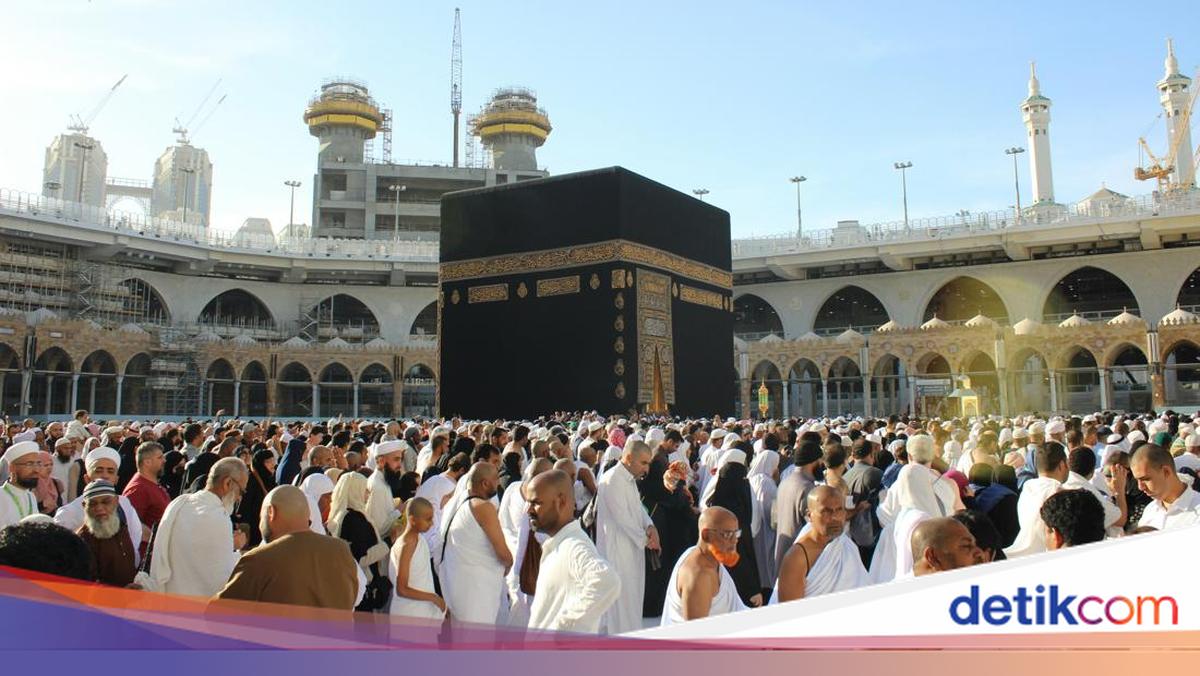
Although it feels expensive for most Indonesians, pilgrims no longer ask how much of the budget has been saved once they arrive in the Holy Land. The questions are now more practical: whether the tents are spacious and cool enough, whether the toilets are sufficiently clean, whether the buses arrive on time, or how to maintain good health throughout the Hajj rituals.
The hope of all pilgrims is that the series of worship is supported by adequate and easily accessible infrastructure and services.
That is why efficiency in Hajj costs must not be understood merely as cost-cutting. In organising a religious event as massive as the Hajj, misguided efficiency can result in a decline in service quality for pilgrims. Well-executed efficiency, on the other hand, is precisely the pathway to improving services.
Data on the 2026 Hajj Travel Costs (BPIH) illustrates the breadth of that policy space. The BPIH is set at approximately Rp87.409 million per pilgrim. Of that amount, the Hajj Travel Expenses (Bipih) borne by the pilgrim are around Rp54.194 million, or roughly 62 percent, while the value of benefits from the Hajj Financial Management Agency (BPKH) is around Rp33.216 million, or 38 percent. With a regular quota of about 203,000 pilgrims, the total cost of organising the regular Hajj is in the region of Rp17.78 trillion.
This means an efficiency of just 1 percent is equivalent to approximately Rp177.8 billion per Hajj season. Calculated per pilgrim, the value is around Rp874,000. An efficiency of 3 percent is worth about Rp533.3 billion, while a 5 percent efficiency approaches Rp888.8 billion. These figures are not insignificant. The question is, where should these benefits be directed?
The answer is back to the pilgrims.
For example, from an efficiency of Rp177.8 billion, if used with a risk-based approach, approximately Rp71 billion could be directed towards transport and managing pilgrim movement; Rp44 billion for health, cooling, and elderly services; Rp35 billion for sanitation, catering, and water; Rp17 billion for developing digital dashboards; and around Rp8 billion for operational reserves. This is only a simulation, but it demonstrates that efficiency can be translated into concrete services.
On the ground, its form can be very tangible. Savings on transport contracts can be transformed into additional crowd control officers, route signage, canopied queuing areas, and bus position monitoring. Catering efficiencies can be used to strengthen food temperature control, add water distribution points, or reduce distribution delays. Tent efficiencies can be converted into more uniform cooling, more appropriate rest mats, and faster technical responses when cooling fails.
This is what is often missing from discussions on Hajj costs. The public hears the word efficiency but does not always see the bridge between the savings figure and service quality. Yet without that bridge, efficiency remains merely an administrative term. The discussion then fails to address pilgrims’ needs.
Therefore, organising the Hajj requires a mechanism to ensure every economic benefit is recorded and returned to services. One important idea is the Service Improvement Ledger, a general ledger for recording service benefits. It is neither a new account nor a mechanism for pooling efficiency funds. This ledger records the source of the benefit, its value, contract basis, beneficiaries, form of conversion, and proof of realisation.
If a tent vendor fails to meet temperature or capacity standards, there must be a service credit. If a bus fails to meet its required trips or causes excessive queues, there must be a data-based penalty. If a catering contract yields cost reductions due to high volume, the benefit must be visible in improved menus, water distribution, or food safety controls.
In this way, oversight does not end at findings. Oversight must be able to compel systemic change.
Armuzna (the stages of Hajj at Arafah, Muzdalifah, and Mina) is the most critical phase of the Hajj. Factors such as temperature, space constraints, the mobility of the elderly, logistics availability, sanitation, and transport converge within a very narrow timeframe. A minor weakness can become a mass complaint, or even a safety risk. Therefore, every rupiah of efficiency must first be directed to the highest risk points: transport, health, cooling, sanitation, catering, information, and the protection of the elderly and high-risk pilgrims.
For this reason, we need to change our mindset when discussing Hajj costs. We need to ask not only ‘can Hajj costs decrease next year?’ but also ‘can service quality be improved without increasing costs?’
Ideally, efficiency in Hajj costs does not reduce the quality of service for pilgrims. Beyond eliminating waste, managing Hajj costs must also be able to strengthen purchasing power and maintain the sustainability of benefit value. Most importantly, the management of Hajj funds must ensure that the economic benefits are enjoyed as much as possible by its largest stakeholders: the Hajj pilgrims.