
Education Revitalisation: Government's Strategy to Forge a Superior Generation
The government is continuing to accelerate the transformation of national education through the Education Unit Revitalisation Programme, one of its strategic agendas for producing outstanding human resources towards Golden Indonesia 2045.
The programme does not merely target the improvement of school buildings, but is directed towards building a higher-quality, inclusive, and sustainable education ecosystem.
Minister of Primary and Secondary Education (Mendikdasmen) Abdul Mu’ti emphasised that revitalisation is not simply about constructing new buildings or repairing damaged ones, but rather a long-term investment in the quality of Indonesia’s human resources.
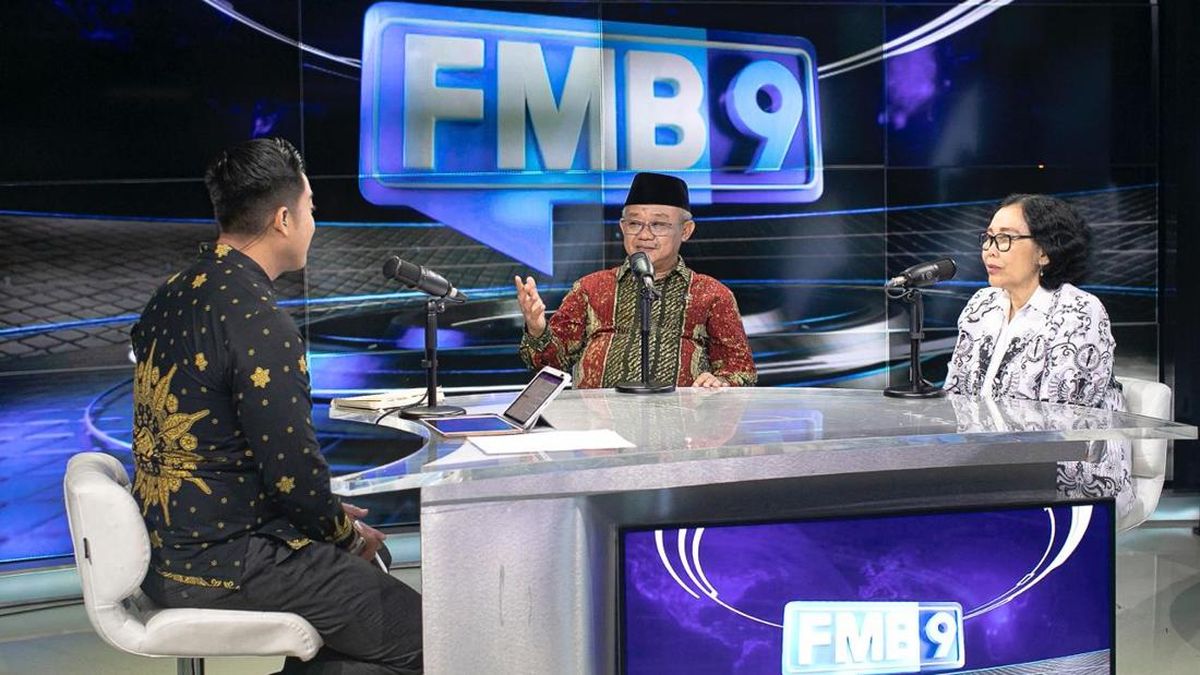
“Education is an investment. Education funding is not spending that simply disappears, but an investment to build an outstanding Indonesian generation,” said Abdul Mu’ti during the Forum Merdeka Barat (FMB) 9 Dialogue themed ‘Building Quality Schools and Meaningful Learning for All’ on Tuesday (7/7).
According to him, a clean, safe, and comfortable physical environment is believed to be capable of increasing students’ motivation to learn, which ultimately determines the quality of learning and the quality of the nation’s human resources.
“The results of educational development cannot be seen in one or two years. The impact will only be felt in the next 10 to 20 years. What we plant today will be harvested in 2045,” he said.
Therefore, the government is not only building physical infrastructure, but also strengthening four foundations of education transformation: improving teacher quality (pedagogical infrastructure), refining regulations (legal infrastructure), building a positive school culture (cultural infrastructure), and providing modern and adequate learning facilities.
In its implementation, the government has set priorities to ensure the revitalisation programme delivers the greatest benefit. Schools in disaster-affected areas, remote, underdeveloped, and outermost (3T) regions, as well as schools with severe levels of damage, are the main targets of construction.
“If these schools are not addressed immediately, the impact on the quality of education will persist for a very long time. We have learned from the Covid-19 pandemic, which caused learning loss, and we must not let those conditions continue,” he said.
He added that President Prabowo Subianto has targeted all schools in Indonesia to be revitalised in stages by 2028.
Beyond improving the quality of education, the programme also delivers economic benefits, as construction is carried out through a self-management mechanism involving local communities.
In addition, education transformation is being reinforced through the acceleration of school digitalisation. The government is distributing Interactive Flat Panels (IFP), training teachers to use learning technology, providing internet access, and supplying laptops as supporting devices for the teaching and learning process.
“We train the teachers, we help provide internet to schools that do not have it, and we help those without electricity with solar panels. So everything has been prepared so that it is genuinely utilised for learning,” he said.
Based on monitoring results in various regions, from Papua and East Nusa Tenggara to North Nias, the use of this technology has increased students’ enthusiasm for learning and the quality of classroom instruction.
On the other hand, the government is also strengthening early childhood education as part of the 13-year compulsory education policy. Through cooperation with the Ministry of Villages, the government is targeting at least one kindergarten in every village, while also improving early childhood education teachers’ competencies through the Recognition of Prior Learning (RPL) programme and expanding assistance under the Smart Indonesia Programme (PIP).
On this occasion, Abdul Mu’ti invited all elements of society to help maintain the results of the school revitalisation, as all construction is funded with public money.
“Let us look after the schools that have been revitalised. There must be no budget misuse and no misappropriation. Quality education can only be realised through synergy between schools, families, communities, and the media,” he said.
Building an Education Ecosystem
Meanwhile, the Chairperson of the PGRI Executive Board, Unifah Rosyidi, applauded the government’s move to treat education revitalisation as a long-term investment.
According to her, school construction must be accompanied by strengthening teacher quality so that the benefits are genuinely felt in the learning process.
“Revitalisation is not merely about beautifying schools, but about building a better education ecosystem. What matters most is how revitalisation impacts the quality of learning,” she said.
She also commended various government policies, from the acceleration of teacher certification, the RPL programme, to the direct disbursement of teacher professional allowances. According to her, all of these policies demonstrate the government’s seriousness in improving the quality of national education.
Unifah considered mentoring for school principals to also be an important element in ensuring the revitalisation is implemented in accordance with regulations.
In addition, improving teachers’ competencies through digital training, artificial intelligence (AI), coding, and a culture of sharing good practices among teachers must continue to be strengthened so that education transformation is sustained.
To ensure the programme runs accountably, the Ministry of Primary and Secondary Education applies the principles of good governance. Every school receiving assistance is provided with consultant support, oversight by the Inspectorate General, and joint monitoring with regional governments and communities.