
Education Receives Largest Allocation for Strategic Infrastructure Projects in 2027
The Directorate General of Strategic Infrastructure of the Ministry of Public Works is targeting 1,058 construction output units for 2_027. This figure represents an increase from the initial indicative ceiling target of 1,041 units.
The additional targets stem from 17 priority outputs added following an increase in the budget ceiling. These projects are spread across the education, economy, sports, health, and religious sectors.
“The budget ceiling increase of 1.037 trillion IDR is allocated for the addition of 17 priority outputs, namely: 4 units for Universities and Religious Higher Education, 3 units for Economic Infrastructure, 6 units for Sports Infrastructure, 2 units for Health Infrastructure, and 2 units for Religious Infrastructure, as well as management support to strengthen governance in the implementation of strategic infrastructure,” stated the Acting Director General of Strategic Infrastructure of the Ministry of Public Works, Kuswara, before Commission V of the House of Representatives (DPR RI) on Thursday.
The increase in the number of outputs occurred after the budget ceiling for the Directorate General of Strategic Infrastructure rose from the indicative figure. The total ceiling now reaches Rp32.57 trillion, with the bulk of the funds directed towards education programmes.
“The total output under the 2027 Budget Ceiling will be 1,058 units, an increase from the previous 1,041 units in the Indicative Ceiling,” said Kuswara.
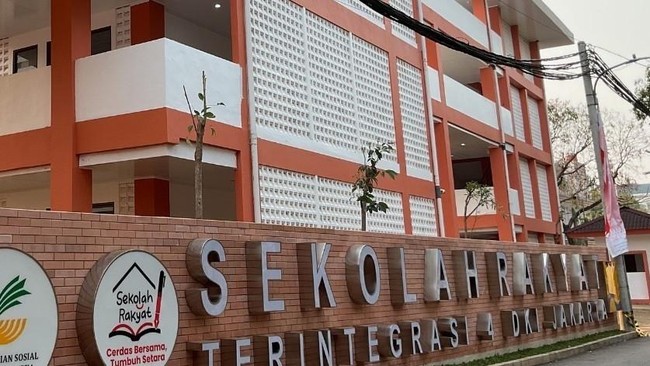
From the total target, the education sector is the largest recipient. The construction of ‘Sekolah Rakyat’ (People’s Schools) and the revitalisation of religious schools dominate the prepared budget.
“The 2027 Budget Ceiling for the Directorate General of Strategic Infrastructure, amounting to Rp32.57 trillion, will be utilised for Education Infrastructure at Rp29.44 trillion, with a target of 686 units,” Kuslara added.
Meanwhile, residential infrastructure has been allocated Rp2.674 trillion with a target of 372 units. This includes the construction of economic, sports, health, and religious facilities, as well as cultural heritage and other strategic infrastructure.
“Residential Infrastructure at Rp2.674 trillion for a target of 372 units, consisting of: Economic Infrastructure at Rp0.149 trillion for 6 units, Sports Infrastructure at Rp0.775 trillion for 7 units, Health Infrastructure at Rp0.31 trillion for 3 units, and Religious Infrastructure at Rp0.11 trillion for 3 units,” Kuswara explained.
Beyond physical projects, the government has also allocated a budget for supervision and control functions. Management support is prepared to ensure that project implementation in the field can be controlled alongside technical units and work sectors.
“Management Support amounting to Rp0.456 trillion, comprising Rp0.274 trillion for personnel expenditure, Rp0.107 trillion for operational expenditure, and Rp0.075 trillion for non-operational expenditure,” said Kuswara.
The increase in output is closely linked to activities already underway in 2026. A portion of these additions consists of committed projects that must be continued into the following fiscal year.
“The addition of priority outputs is largely for activities that are committed or are continuations from 2026. With this addition, the Directorate General of Strategic Infrastructure is committed to optimising budget allocation to support the accelerated provision and quality improvement of strategic infrastructure in accordance with national development priorities,” concluded Kuswara.