
Education Ministry to Strengthen Inclusive Education by Revitalising 836 Special Schools
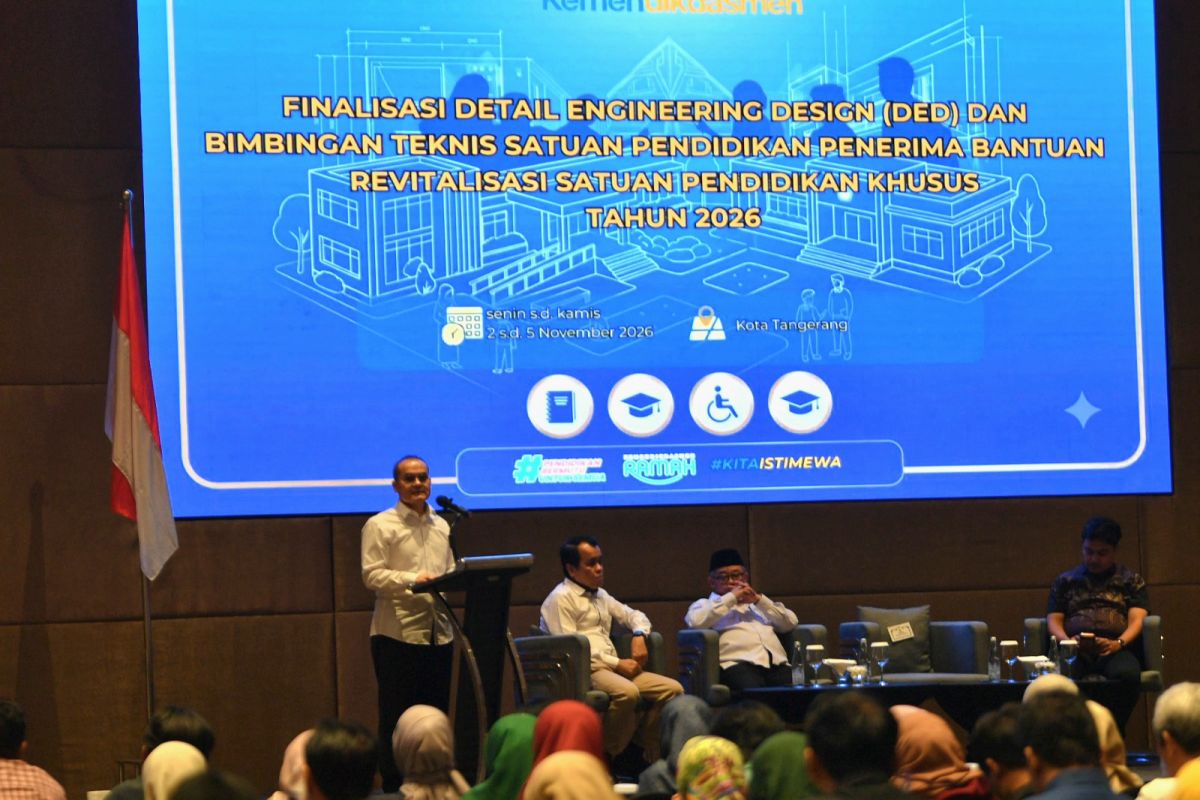
Jakarta (ANTARA) – The Ministry of Primary and Secondary Education (Kemendikdasmen) is strengthening inclusive education by revitalising 836 special schools (SLBs) this year, prioritising building safety, accessibility and learning facilities suited to the needs of students with disabilities.
Through the finalisation of technical construction designs and a technical guidance session in Tangerang, Banten Province, the ministry is encouraging every school to develop a revitalisation plan that not only improves its buildings but also supports learning, assistance and the development of students’ independence.
Primary and Secondary Education Minister Abdul Mu’ti said in a written statement in Central Jakarta on Wednesday that every child has the right to a proper education, including children with disabilities.
He said school buildings and facilities should therefore be adapted to students’ needs. “Revitalisation is not an end in itself, but a means of providing representative school buildings and excellent education,” Mu’ti said.
At the same event, the ministry’s Director General of Secondary and Special Education, Tatang Muttaqin, said the need to improve educational facilities remained substantial.
According to data from the ministry’s Basic Education Data system (Dapodik), which he cited, more than 900,000 classrooms are in moderate or severe disrepair and require attention.
Tatang said some schools also still needed new classrooms. “Behind these figures are millions of children waiting for safe, comfortable and suitable learning spaces, including children with special needs at SLBs,” he said.
He also urged school principals not to comply with requests that would divert the assistance from its intended purpose.
The programme is being monitored with the involvement of the Attorney General’s Office and the Ministry of Finance, including to ensure compliance with tax regulations.
Rhadeya Phawitra, acting head of Surade State Special School (SLBN Surade), said her school needed a multipurpose room, a school health unit (UKS) room and a skills-training room.
The ageing building and problems with its roof were affecting the comfort of learning activities. Unstable electrical wiring was also a concern because it could disrupt the use of electronic equipment, including an Interactive Flat Panel, or digital interactive board.
Access to buildings also determines whether students can take part in school activities. For pupils with mobility impairments, difficult routes can restrict their movement.
Accessible facilities enable wheelchair users to take part in activities outside the classroom and interact with their classmates more independently.
By tailoring plans to each school’s circumstances, the revitalisation programme is expected to provide facilities that can be used to their full potential.