
Education Ministry Submits Key Input for National Education System Bill
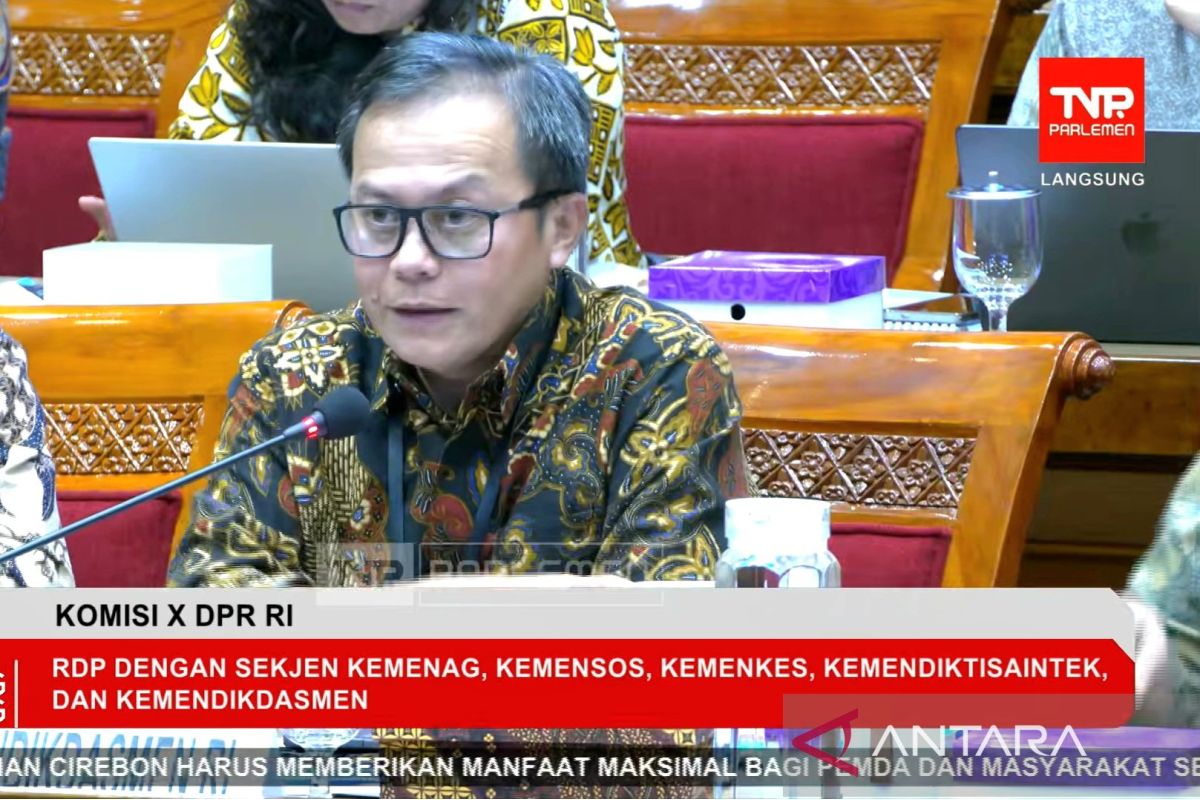
The Ministry of Primary and Secondary Education (Kemendikdasmen) has submitted a number of inputs regarding the management and provision of primary and secondary education within the draft National Education System Bill (RUU Sisdiknas).
“The main focus we wish to convey is how to build an education governance system that is more integrated and accountable, yet still respects the principle of educational decentralisation, as well as ensuring equitable quality of education across all regions of Indonesia,” said Toni Toharudin, Head of the Primary and Secondary Education Policy Agency (BKPDM) at Kemendikdasmen, during a hearing with Commission X of the House of Representatives in Jakarta on Tuesday.
One of the proposals is a clearer regulation regarding the status of educational units organised by ministries, agencies, or the central government within the national education system framework. He explained that such regulation is crucial to prevent overlapping authority, whilst ensuring all educational units remain within the same national quality system.
The ministry is also seeking to retain the three main dimensions of education system classification in the bill, namely pathways, levels, and types of education. He explained that education pathways consist of formal education, which is structured and tiered, and non-formal education pathways, which serve as an alternative or complement to formal education. Meanwhile, education levels consist of early childhood education, primary education, secondary education, and higher education. The types of education include general, vocational, religious, pesantren, and special education.
The core principle behind these proposals, he said, is to provide legal certainty regarding the structure of the national education system, whilst allowing flexibility for various forms of educational services developing within society.
Furthermore, the ministry proposed a concept of asymmetric decentralisation, which would allow the central government to temporarily take over part or all education management authority if a region fails to meet minimum service standards or experiences a significant lag in education quality. “The aim is not to reduce regional autonomy, but to serve as a corrective instrument so that the right of students to quality education services is guaranteed throughout Indonesia,” said Toni Toharudin.