
Education Ministry stresses the importance of research and critical thinking for students
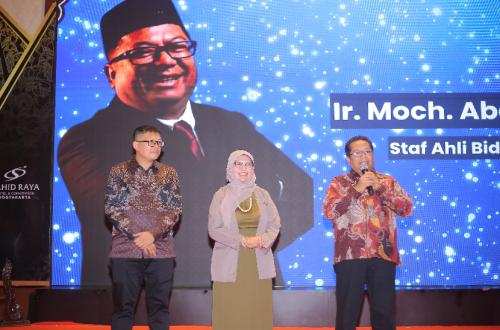
YOGYAKARTA — The ability to conduct research and think critically is considered increasingly important for students amid rapid technological development, including artificial intelligence (AI). Education must do more than equip learners with the skills to use technology; it must also develop their ability to verify information, analyse evidence and produce innovations that benefit society.
Muhamad Abduh, an expert staff member to the Minister of Primary and Secondary Education for Educational Technology, said strengthening a research culture from secondary school onwards could help students develop curiosity, creativity and problem-solving skills. Research activities also give learners the opportunity to test ideas and provide scientific accountability for their thinking, he said.
Abduh made the remarks at the closing of the 2026 Indonesian Student Research and Innovation Competition (KREASI) for senior secondary and equivalent schools in Yogyakarta. Held from 20 to 22 October 2026, the competition was attended by 388 research groups from across Indonesia, including students from the Indonesian School in Makkah.
Those 388 groups were among 650 teams that had submitted final research reports. Participants developed scientific projects in various fields, including mathematics, science, technology and the environment.
Abduh stressed that the development of artificial intelligence presented new challenges for education. “Students need to be able to assess the quality of information, test its accuracy against evidence, and consider the ethical aspects and social impact of using technology,” he said in a press release on Friday (23 October 2026).
Technology should be used to strengthen learning and help produce solutions to a range of problems, he said. Its use must not replace people’s ability to think critically and make responsible decisions.
The emphasis on research skills is in line with the Ministry of Primary and Secondary Education’s Quality Education for All programme. The competition also supports learning in science, technology, engineering and mathematics (STEM), under the theme “Dare to Try, Create with Creativity”.
KREASI 2026 was organised by Abak Academy with support from the Faculty of Mathematics and Natural Sciences (FMIPA) at Gadjah Mada University (UGM) and the National Research and Innovation Agency’s (BRIN) Population Research Centre. The collaboration is one effort to provide students with opportunities to develop research skills beyond regular classroom learning.
Abduh praised the involvement of non-governmental organisations, universities, researchers, teachers and parents in supporting student research. Cooperation among different parties was needed to broaden learning opportunities and help students develop their scientific potential, he said.
Abak Academy director and KREASI initiator Munasprianto Ramli said research competitions should mark the beginning of students’ journeys in developing their research abilities. “The research process needs to continue through learning, experimentation, evaluation and the improvement of scientific work,” he said.
Munasprianto also highlighted the importance of maintaining networks formed among participants during the competition. Bringing together students from different regions could create opportunities to exchange ideas, share experiences and build research collaborations in the future, he said.
Fajar Adi Kusumo, UGM FMIPA vice-dean for alumni, partnerships and innovation, said research success was not determined solely by winning medals. Continuing the research and ensuring its results benefit society were more important than competition achievements, he said.
According to Fajar, students should continue developing their research so it can address problems in their local communities. The experience of taking part in the competition was expected to prepare them to produce more developed and useful scientific work.
KREASI 2026 took place in several stages, from submitting research proposals and receiving online mentoring to completing and submitting final reports. Through the process, students gained experience in designing research, developing ideas, analysing findings and accounting for their work in accordance with scientific principles.
The judging panel included BRIN researchers, FMIPA UGM lecturers and researchers, and academics from several universities, including Syarif Hidayatullah State Islamic University Jakarta, Sunan Kalijaga State Islamic University Yogyakarta, Raden Mas Said State Islamic University Surakarta, Muhammadiyah University of Yogyakarta, and the Artificial Intelligence Centre Indonesia (AICI) at the University of Indonesia.
In the final results, MAN 4 Jakarta took first place overall, winning two gold and two silver medals. MAN 2 Kudus came second with two gold and one silver medal, while SMA Sabilillah Malang placed third with one gold and two silver medals.
The research competition is expected to encourage a stronger research culture among students. Continued support from the government, schools, universities, research institutions and families is needed to ensure students’ critical-thinking and innovation skills continue to develop after the competition ends.
Source: jawawa.id (https://jawawa.id/newsitem/education-ministry-stresses-the-importance-of-research-and-critical-thinking-for-students-1792799444)
Originally published by Republika (https://news.republika.co.id/berita/tnctcy416/kemendikdasmen-tekankan-pentingnya-riset-dan-berpikir-kritis-bagi-siswa), translated from Indonesian