
Education Ministry provides psychosocial support for students after NTT earthquake
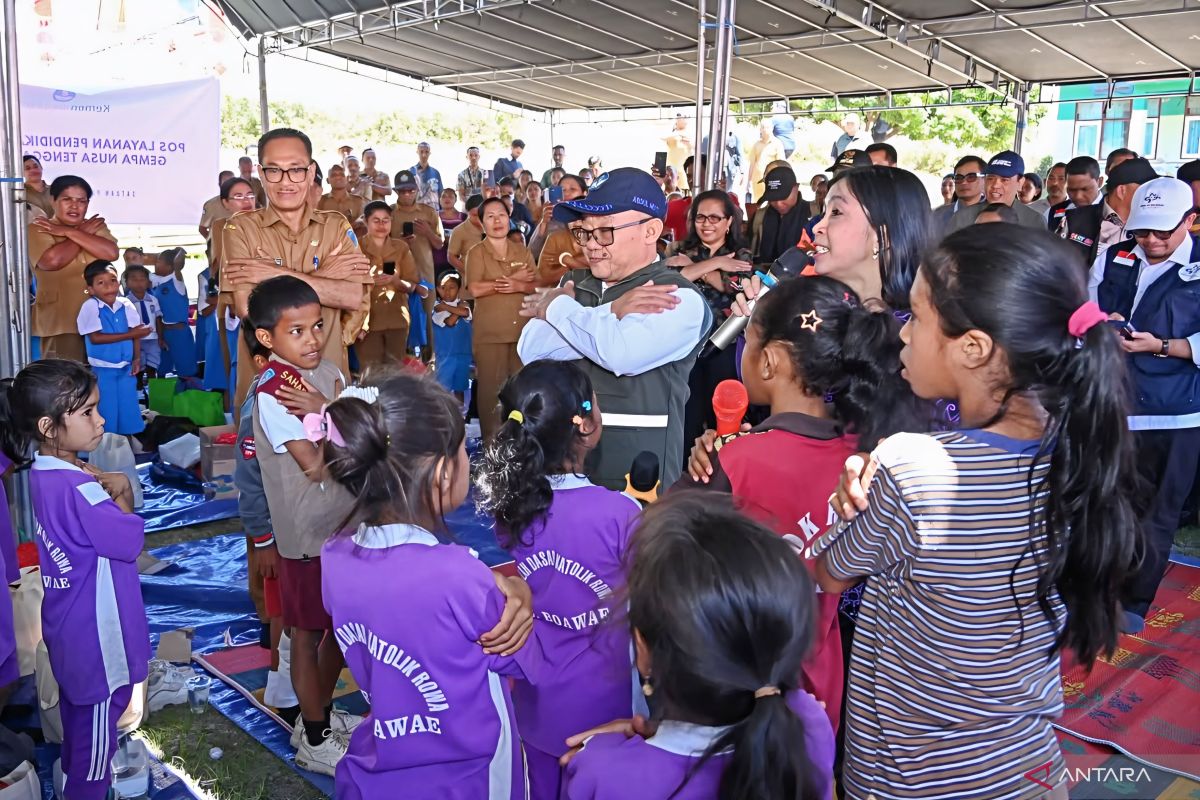
Jakarta (ANTARA) - The Ministry of Primary and Secondary Education (Kemendikdasmen) is continuing recovery efforts following the earthquake that struck several areas of East Nusa Tenggara (NTT) Province, including providing psychosocial support for affected students and teachers.
Minister of Primary and Secondary Education Abdul Mu’ti said in a written statement in Jakarta on Wednesday that post-disaster recovery involves not only repairing educational facilities and infrastructure but also restoring the mental condition of students and teachers.
“For mental recovery, there are two things we are doing. First, colleagues from the HIMPSI team are working with us to provide encouragement. The children are made cheerful and happy,” said Mu’ti.
He added that assistance is also being provided by several social organisations and universities that have come to help communities affected by the earthquake.
On the same occasion, the Head of the Disaster Programme Division of the Indonesian Psychology Association’s Disaster Volunteer Corps (KRESNA HIMPSI), Yuria Ekalitani, explained that based on a rapid assessment conducted in Ngada and Nagekeo Regencies, a number of students were still found to be experiencing anxiety and fear due to aftershocks.
“We still found that most students feel anxious and afraid because of aftershocks. Some also have difficulty sleeping, are afraid to enter their homes, do not want to close doors for fear of aftershocks, have difficulty concentrating, and several other psychological impacts,” said Yuria.
In providing assistance to students, HIMPSI organised Tenda Gembira (Happy Tent) activities through structured play. Children were also introduced to emotional stabilisation techniques to help them manage the fear and anxiety that emerged after experiencing the disaster.
The activities included direct outreach to affected teachers as well as psychosocial assessments to examine their condition after the earthquake.
“To be better trained, teachers need to receive training to provide psychosocial support services to students,” she said.
One student affected by the earthquake in Ngada, Felix Axelleon Naweng, who participated in the psychosocial support activities, said he now feels calmer when recounting his experience during the earthquake.
“Yes, it has had an effect. After the activity, I am more focused and calm when talking about the earthquake,” he said.