
Education Ministry Maps Indonesian Language Proficiency via Adaptive UKBI
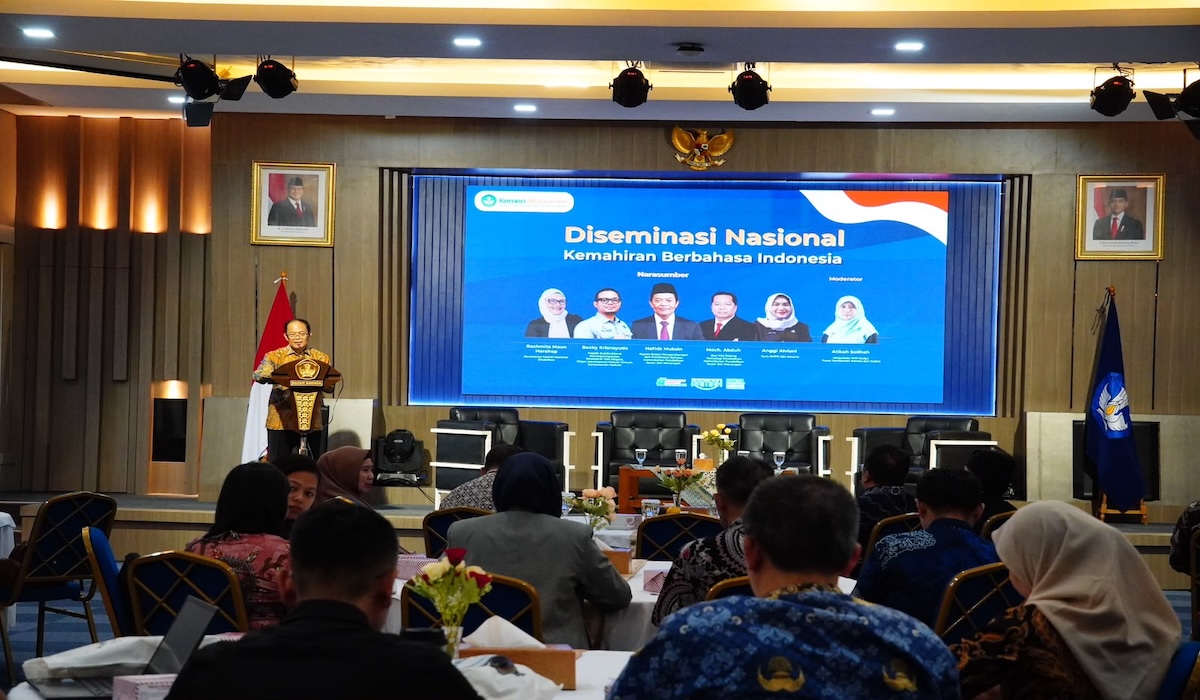
The Ministry of Primary and Secondary Education (Kemendikdasmen), through its Language Development and Fostering Agency, is expanding the mapping of Indonesian language proficiency using the Adaptive Indonesian Language Proficiency Test (UKBI Adaptif). The initiative was presented at the National Dissemination of Indonesian Language Proficiency in Jakarta on 23 June 2026, serving as a basis for formulating more targeted education and literacy policies. Through this activity, the Language Agency published the results of the Adaptive UKBI, compiled in the Indonesian Language Proficiency Map Book. The book captures the language proficiency levels of the Indonesian public at both national and provincial levels. Head of the Language Agency, Hafidz Muksin, stated that the UKBI results are not merely statistical data. According to him, the data can be used to assess the language proficiency conditions of the public across various education levels, professions, and regions. “Data on Indonesian language proficiency is important information regarding the level of Indonesian language skills at various education levels, among professionals, and in specific regions. Stakeholders can use it as evaluation material, and even as a basis for policy-making related to Indonesian language proficiency,” said Hafidz. The 2025 mapping results show that the national Indonesian Language Proficiency Score stands at 64.23. Throughout the year, the Adaptive UKBI was taken by 321,383 participants from 38 provinces and 493 districts/cities. Participation also came from 243 foreign nationals from 51 countries. This data indicates that the use of UKBI as a tool to measure Indonesian language proficiency is increasingly widespread. Nevertheless, Hafidz believes that student participation still needs to be increased. Of the total Adaptive UKBI participants in 2025, 84.9 per cent were school pupils, while university students accounted for only 10.3 per cent, or 33,080 participants. “This needs to be a concern for higher education institutions so that Indonesian language proficiency becomes an important part of improving student literacy,” he said. In addition to expanding the scope of mapping, Kemendikdasmen is developing more inclusive language services. One of these is the Adaptive UKBI for the Deaf, designed to provide equal opportunities for deaf and hard-of-hearing individuals to measure their Indonesian language proficiency. “Kemendikdasmen is committed to bridging the right to inclusive education and language as mandated by Law Number 8 of 2016 on Persons with Disabilities, which includes the right to expression, communication, and access to information,” said Hafidz. The development of this service began in 2024 and was tested nationally in October 2025. The trial involved 222 deaf and hard-of-hearing participants from various regions. Expert Staff to the Minister for Education Technology, Moch. Abduh, said the service will continue to be developed. “We will continue to prepare various forms of adaptation according to needs and technological developments,” he said.