
Education Ministry: Interactive Flat Panels Support Learning for Students with Special Needs
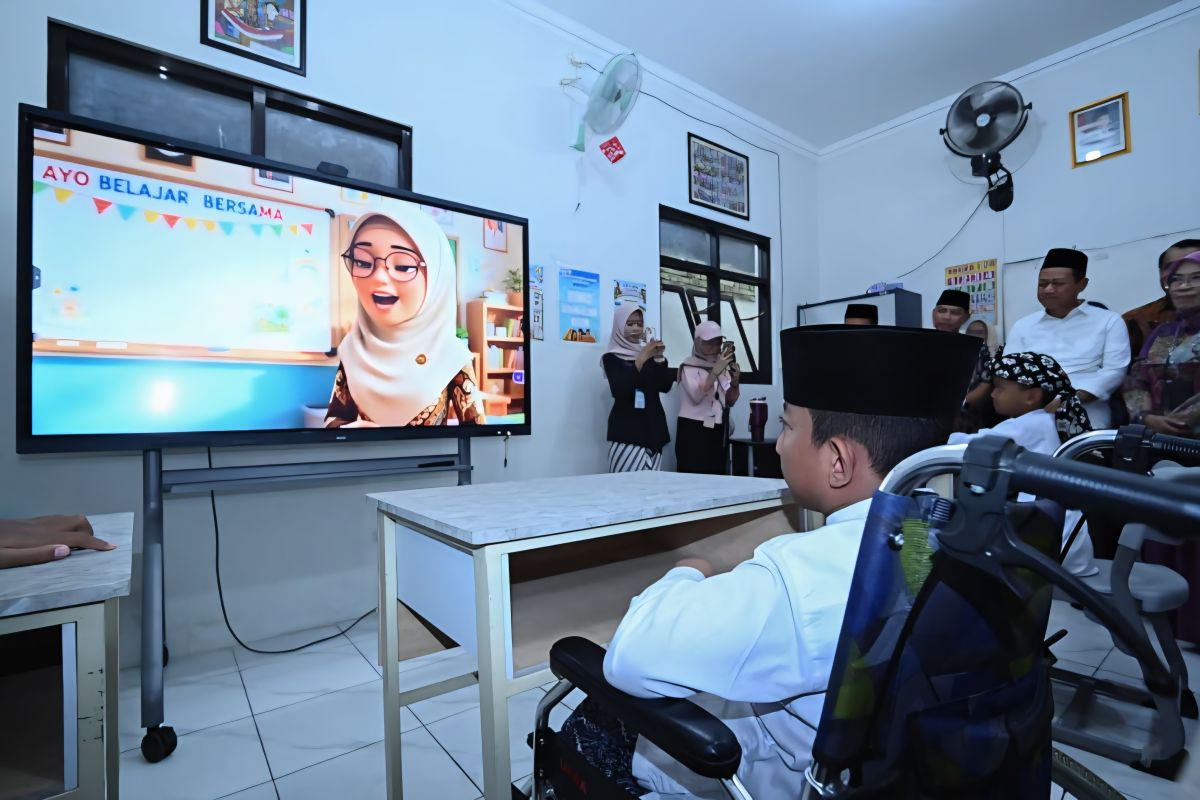
The Ministry of Primary and Secondary Education (Kemendikdasmen) has stated that the distribution and use of Interactive Flat Panels (IFP) are having a positive influence on the learning activities of students with special needs (ABK).
Minister of Primary and Secondary Education Abdul Mu’ti, in a written statement in Jakarta on Monday, emphasised that every citizen has the right to a quality education, including children with special needs, children in the 3T regions (frontier, outermost, and disadvantaged), disaster areas, and conflict zones.
“The government is committed to providing education services for all. One approach is to continue developing inclusive education so that children with special needs can learn together with their peers, build self-confidence, and develop their talents and potential,” Mu’ti said.
In addition to expanding inclusive education, the ministry is also continuously strengthening services in Special Needs Schools (SLB). “We will continue to improve educational services in SLBs, including adding more educational units, so that more children with special needs can receive education services that suit their needs,” he said.
The digitalisation of education, combined with the strengthening of special education services, is a means to ensure that every Indonesian child has an equal and meaningful opportunity to learn and develop their potential optimally.
In the subject of Pancasila Education, a teacher used an AI-based video to help students understand and practise the proper procedure for saluting the Red and White flag. Digital media is also used to train students’ listening and reading comprehension skills through digital books.
“IFP greatly assists the learning process, especially in SLBs, because learning becomes more interactive, meaningful, and enjoyable in line with the three main principles of Deep Learning. Teachers can present images, videos, and various interactive activities tailored to the characteristics and needs of the students,” said a teacher named Riska.
Despite this success, she noted that challenges remain. One issue is the varying abilities of students in using technology, meaning some still require more intensive assistance. “I provide gradual assistance, utilise peer tutoring, and choose simple, easy-to-use media so that all students can follow the lessons well,” Riska added.