
Education Ministry Distributes Science Lab Aid to 100 High Schools to Strengthen Scientific Literacy
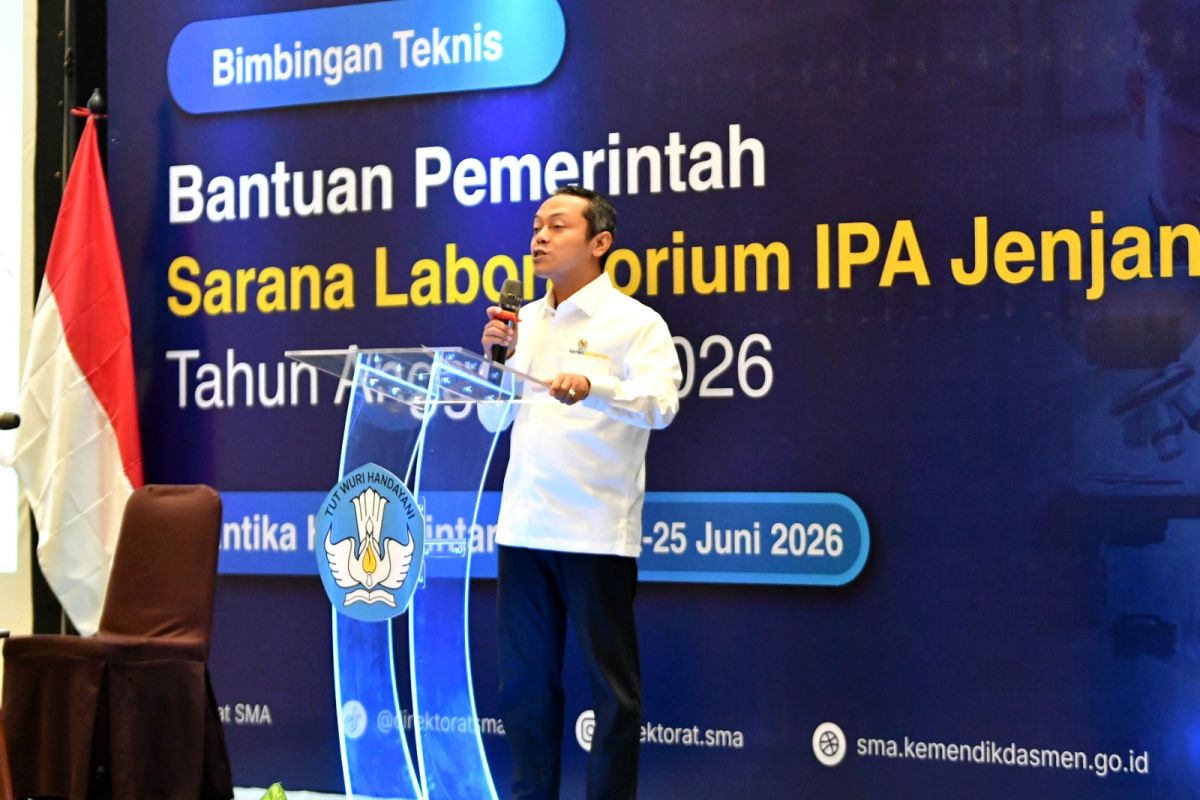
Jakarta (ANTARA) - The Ministry of Primary and Secondary Education (Kemendikdasmen) has provided science laboratory equipment to 100 selected senior high schools to strengthen the culture of science, experimental skills, and practice-based learning in schools. Deputy Minister of Primary and Secondary Education Fajar Riza Ul Haq stated in a written release in Central Jakarta on Wednesday that the science laboratory aid should not be viewed merely as material support for physical facilities, but as part of an effort to build a learning ecosystem that encourages students to understand, test, and use knowledge critically. According to him, laboratories play a strategic role in creating meaningful and contextual learning experiences. “A school without a laboratory has no learning meaning. It is just schooling, not learning. This aid is actually an effort to strengthen our children’s learning ecosystem,” said Fajar. Amid the torrent of information received by children today, Fajar assessed that this ability is becoming increasingly important so that students do not simply receive information, but are able to understand and use it appropriately. “Scientific literacy is understood when a child is able to use the information or knowledge they possess to observe phenomena in their environment. It is not just about understanding, but knowing how to use that knowledge to see the phenomena that are developing,” he said. Furthermore, Fajar assessed that laboratory practice aligns with the Deep Learning approach currently being promoted by Kemendikdasmen. “Practicum in the laboratory and the process of scientific work in the laboratory reflect deep learning practices. In the classroom, children are given theory; in the laboratory, children are asked to test that theory,” he said. He therefore invited all recipient educational units to make the laboratory a space for forming a culture of scientific thinking, curiosity, and the courage to ask questions. According to him, students need to be encouraged to experience the process of acquiring knowledge themselves so that they do not become mere consumers of information. “What we must build is a culture of scientific thinking. Our students must not only become consumers of theory or consumers of information. They must be encouraged to experience that knowledge. So the key word is that knowledge must be experienced, not just known,” Fajar stressed.