
Education Ministry: Consortium-Model Distance Learning Makes Education Flexible
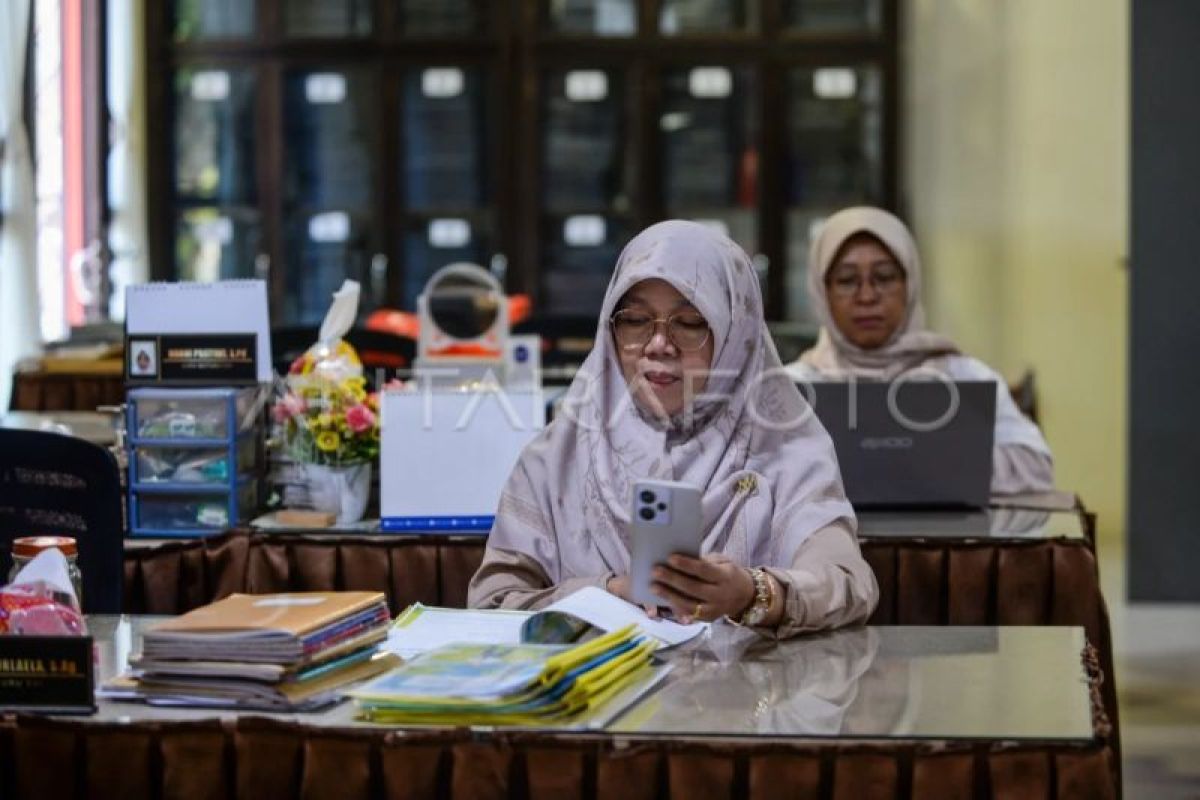
The Ministry of Primary and Secondary Education (Kemendikdasmen) has stated that the implementation of Distance Learning (PJJ) through a consortium model ensures flexible learning activities, aimed at bringing out-of-school children back into educational services.
Suharti, the Secretary-General of Kemendikdasmen, noted that the number of out-of-school children (ATS) in Indonesia remains high, at approximately four million children aged 7 to 18 years.
“The ATS group aged 16-18 is a critical age group. If they are not reached immediately, they risk becoming further distanced from educational services, potentially entering the labour market prematurely without adequate skills. Bringing ATS back to school is not merely about increasing school participation rates, but is also a social investment,” Suharti said during a webinar titled ‘SPMB PJJ: Movement to Return ATS to School through Distance Learning’ in Jakarta on Friday.
To address this, the Ministry is organising a Distance Learning Programme using a consortium model, which involves collaborating a lead school, responsible for the distance learning, with partner schools.
She explained that the lead school will act as the primary manager for academic implementation, learning development, digital system management, and quality assurance of the distance learning services.
Meanwhile, the partner schools will serve as learning service hubs located closer to the students’ locations.
So far, the Ministry has recorded that this year’s distance learning implementation is supported by 32 lead schools and 100 partner schools spread across various provinces in Indonesia, as well as one Indonesian Education Unit Abroad (SILN).
“Therefore, schools exist not merely as a place, but as a learning ecosystem capable of moving closer to the needs of the students,” concluded Suharti.