
Education Ministry: Bilingual Programme Opens Learning Opportunities for Students with Special Needs
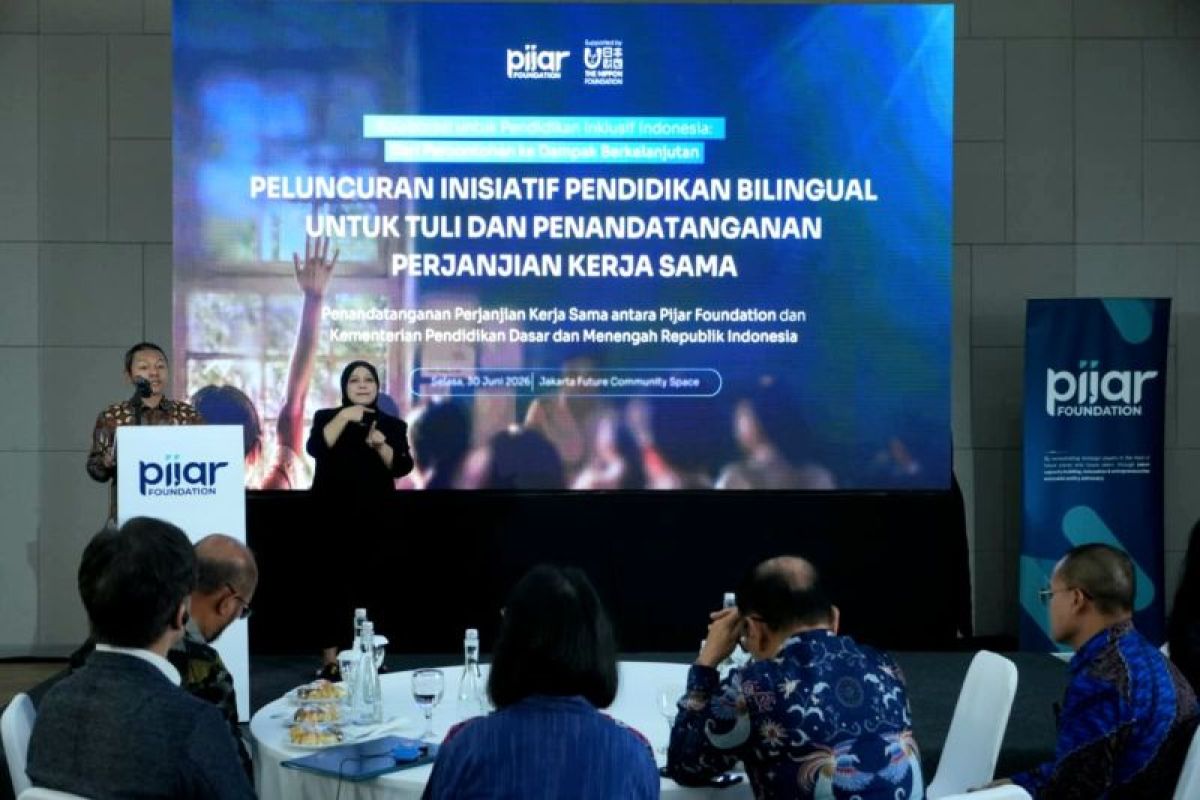
The Ministry of Primary and Secondary Education (Kemendikdasmen) has teamed up with the Pijar Foundation to provide equal opportunities for deaf students to understand lessons, develop their potential, and achieve a confident future through a Bilingual Education Programme for the deaf.
The Deputy Minister of Primary and Secondary Education, Fajar Riza Ul Haq, stated that inclusive education is part of the government’s commitment to providing equal educational services for all Indonesian children.
“Our commitment in the government is to realise quality education for all. The meaning of ‘all’ is highly inclusive, regardless of physical, sensory, intellectual, social, emotional, or psychological abilities. It is the government’s obligation to ensure our education ecosystem is truly inclusive,” Fajar said in Jakarta on Tuesday.
According to him, Kemendikdasmen does not view services for deaf students as an additional programme. Instead, the Ministry considers it an essential part of the national education ecosystem.
This step, he noted, is becoming increasingly relevant as more children with special needs (ABK) choose to study in regular schools. Out of more than 381,000 students with special needs, the Ministry noted that approximately 217,000 are currently enrolled in inclusive educational units.
“The large number of students in inclusive schools shows that we are moving towards an inclusive, rather than segregative, educational paradigm,” he added.
Through this partnership, he stated that the Pijar Foundation will introduce a bilingual learning model that combines Indonesian Sign Language (BISINDO) with written and spoken Indonesian.
On the same occasion, the Executive Director of the Pijar Foundation, Cazadira Fediva Tamzil, explained that the recognition of sign language serves as an entry point for deaf students to understand lessons while simultaneously building their thinking and interaction skills. The synergy between the government, the philanthropic world, and civil society serves as a vital foundation for expanding access to inclusive education.