
Education Ministry and Home Affairs Seek Solution for Schools Lacking New Students
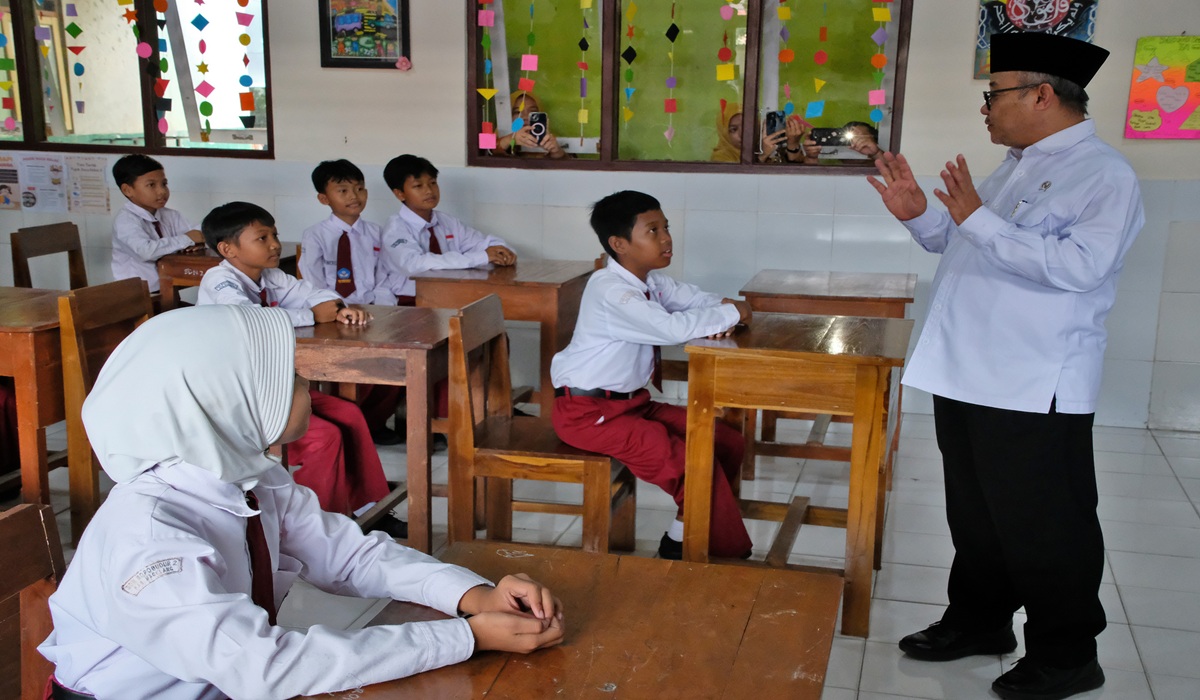
The Ministry of Primary and Secondary Education (Kemendikdasmen) and the Ministry of Home Affairs (Kemendagri) are set to formulate measures to address schools experiencing a shortage of new students. This initiative follows the government’s discovery of numerous schools with extremely low student numbers, some with only two or three pupils.
Minister of Primary and Secondary Education Abdul Mu’ti stated that the government has mapped the situation through data collection via the Basic Education Data (Dapodik). He noted that the data collection focused on schools with fewer than 100 students, including those with under 60 pupils.
“The government has collected data through Dapodik, particularly on schools with fewer than 100 students, even those below 60. This data has been submitted to the Ministry of Home Affairs, and we will formulate policies for schools with very few students,” Minister Mu’ti said in a statement on Wednesday (15/7).
According to Mu’ti, policy formulation cannot be carried out unilaterally by the central government because the management of primary and secondary schools falls under the authority of regional governments. Therefore, Kemendikdasmen will coordinate with regional governments through Kemendagri before deciding on the steps to be taken.
“We will formulate the policy together with regional governments because school management is under their authority. The policy taken will consider its impact on the community and will be announced after the joint discussions are completed,” he said.
One area experiencing a shortage of new students is Semarang. A state primary school in Semarang, Central Java, reportedly accepted only three new students for the 2026-2027 academic year.