
Education Ministry Aims to Ensure 14,000 Villages Have Kindergartens by the End of 2026
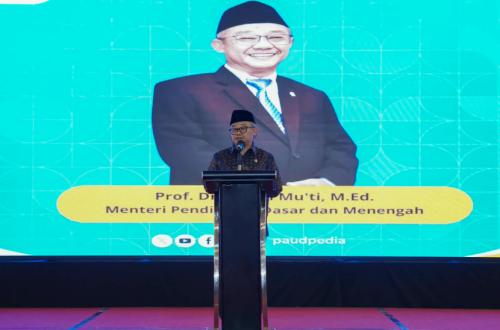
JAKARTA — The Ministry of Primary and Secondary Education (Kemendikdasmen) is working to make access to and the quality of early-childhood education (PAUD) more equitable as part of the 13-year Compulsory Education programme. The effort is important because around 14,000 villages in Indonesia still have no kindergarten (TK). The government is expanding PAUD services while improving education facilities, pupil assistance and teachers’ qualifications so that more children can receive quality education from an early age.
The affirmative measures are urgent, given that around 14,000 villages in Indonesia still lack kindergarten facilities. The government has set an ambitious target of ensuring that PAUD facilities reach all these areas by the end of 2026.
Minister of Primary and Secondary Education Abdul Mu’ti said access needed to be expanded more quickly because disparities between regions remained pronounced. “Although in Jakarta, Lampung and perhaps West Java, most villages are already served — some even have several kindergartens in one village — our data still show 14,000 villages without a kindergarten,” Abdul Mu’ti said at the finalisation of planning documents and signing of cooperation agreements for the 90th cohort of the PAUD unit revitalisation programme in Jakarta on Tuesday (3 November 2026).
Alongside expanding coverage, Kemendikdasmen is tightening oversight of the management of school-revitalisation funds. All aid must be fully spent on repairing damaged education infrastructure, with no misuse of funds.
“All the funds we distribute are for repairing damaged kindergartens. We hope they will all be managed in accordance with the applicable regulations and with integrity,” Mu’ti said.
He added that the government allows flexibility in carrying out revitalisation so that spending can respond to conditions on the ground. However, this flexibility does not mean aid recipients may disregard administrative rules. School managers have been asked to report unforeseen obstacles, such as natural disasters, promptly and transparently to avoid problems with financial accountability.
17,267 schools covered by revitalisation programme
Gogot Suharwoto, Director General of Early Childhood Education, Basic Education and Non-Formal and Informal Education, said the 2026 revitalisation programme targeted 19,940 schools: 3,865 under the regular allocation and 16,075 under the Additional Cost Allocation (ABT). “We have now signed cooperation agreements with 17,267 PAUD schools, with a total value of Rp10.9 trillion,” Gogot said.
The programme also recognises the significant role played by communities. Some 95 per cent of PAUD institutions in Indonesia are independently managed by communities, while state-run schools account for only around 5 per cent.
As part of an integrated policy package beginning in 2026, Kemendikdasmen is providing annual assistance of Rp450,000 through the Smart Indonesia Programme (PIP) for kindergarten pupils, prioritising 888,000 children approaching primary-school age. For teachers, the government is supporting those without a D4 or bachelor’s degree through the Recognition of Prior Learning (RPL) scheme, offering scholarships of Rp3 million per semester. The scheme has reached 12,500 teachers this year.
Mu’ti also stressed that improved facilities must go hand in hand with appropriate teaching methods. Educators are encouraged to restore PAUD’s core principle of “play as learning”, without burdening children with rigid academic demands or ceremonial traditions such as graduation ceremonies in caps and gowns.
“We must make everything enjoyable; kindergarten children must not learn in an atmosphere of pressure,” he said.
Through wider access, facility upgrades, pupil support and improved teacher qualifications, Kemendikdasmen is seeking to strengthen the foundations of education from early childhood. The programme’s success will be measured not only by increased availability and improved facilities, but also by whether every child can grow, play and learn in a safe, inclusive and enjoyable environment.
Source: jawawa.id (https://jawawa.id/newsitem/education-ministry-aims-to-ensure-14-000-villages-have-kindergartens-by-the-end-of-2026-1794286260)
Originally published by Republika (https://news.republika.co.id/berita/to9qao490/kemendikdasmen-targetkan-14000-desa-miliki-tk-hingga-akhir-2026), translated from Indonesian