
Education Minister: School Grounds Can Become a Source of Learning
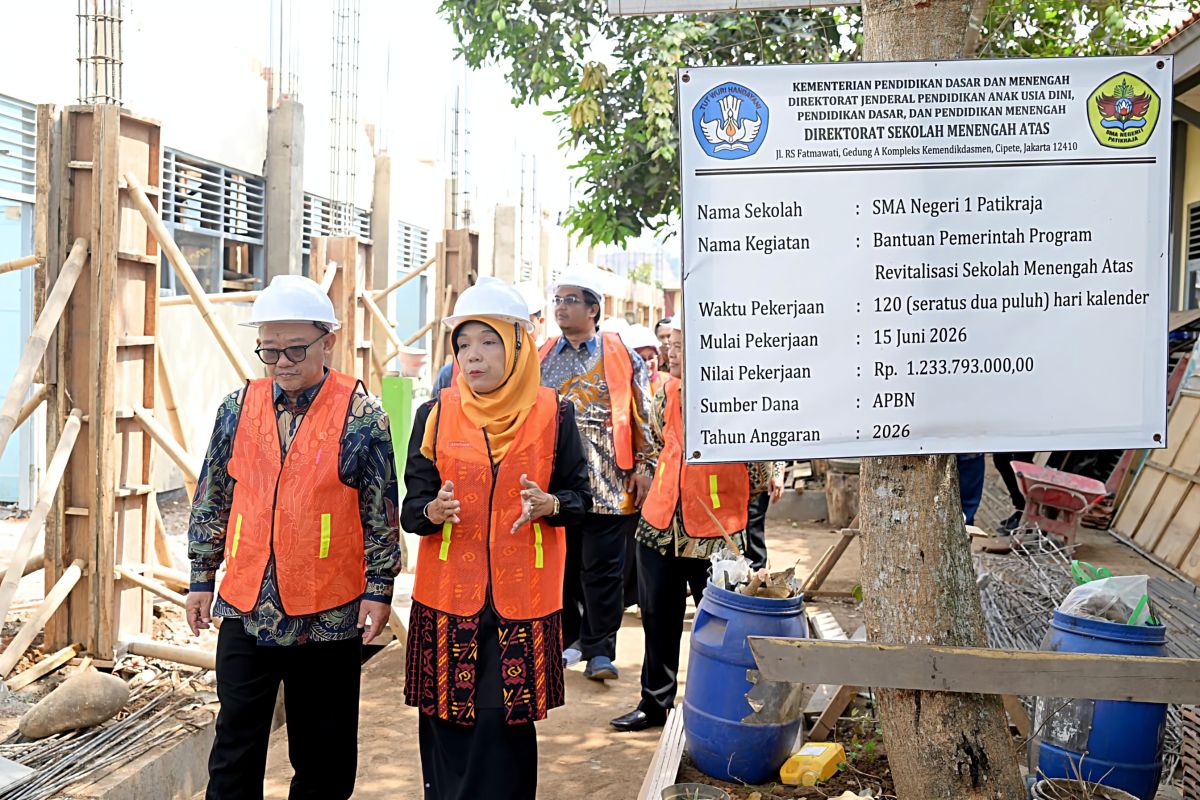
Jakarta (ANTARA) — Minister of Primary and Secondary Education Abdul Mu’ti has urged schools to make use of their surroundings as learning resources to support the implementation of deep learning and foster students’ character and concern for the environment.
“Deep learning is, among other things, integrated with the creation of a school environment known as the hidden curriculum,” Mu’ti said in a written statement in Jakarta on Tuesday.
He proposed installing information boards by trees on school grounds, giving their common and scientific names, characteristics and benefits so that students can learn through direct observation.
With this approach, Mu’ti said, school grounds would serve not only as a place for teaching and learning, but also as a space where students can connect classroom knowledge with everyday life.
He explained that the concept of the hidden curriculum refers to the values, habits and experiences students learn through their environment and daily activities at school.
He also stressed the importance of managing and maintaining educational facilities so that available resources can be used effectively and sustainably to support learning.
In Central Java, the 2025 school revitalisation programme covered 1,783 schools, with a budget of Rp1.475 trillion, and supported 23,430 jobs, Mu’ti said.
For 2026, the ministry recorded 5,443 schools in the province that had signed cooperation agreements, worth Rp4.169 trillion. Funds totalling Rp2.434 trillion had been disbursed to 4,597 schools, supporting 62,609 jobs.
In Banyumas regency, the 2025 revitalisation programme covered 30 schools, with a budget of Rp29.786 billion, and supported 499 jobs.
For 2026, the Ministry of Primary and Secondary Education recorded 176 schools in Banyumas that had signed cooperation agreements worth Rp114.875 billion. Funds totalling Rp69.387 billion had been disbursed to 156 schools, supporting 1,996 jobs.