
Education Minister Extends PIP to 888,000 Kindergarten Pupils
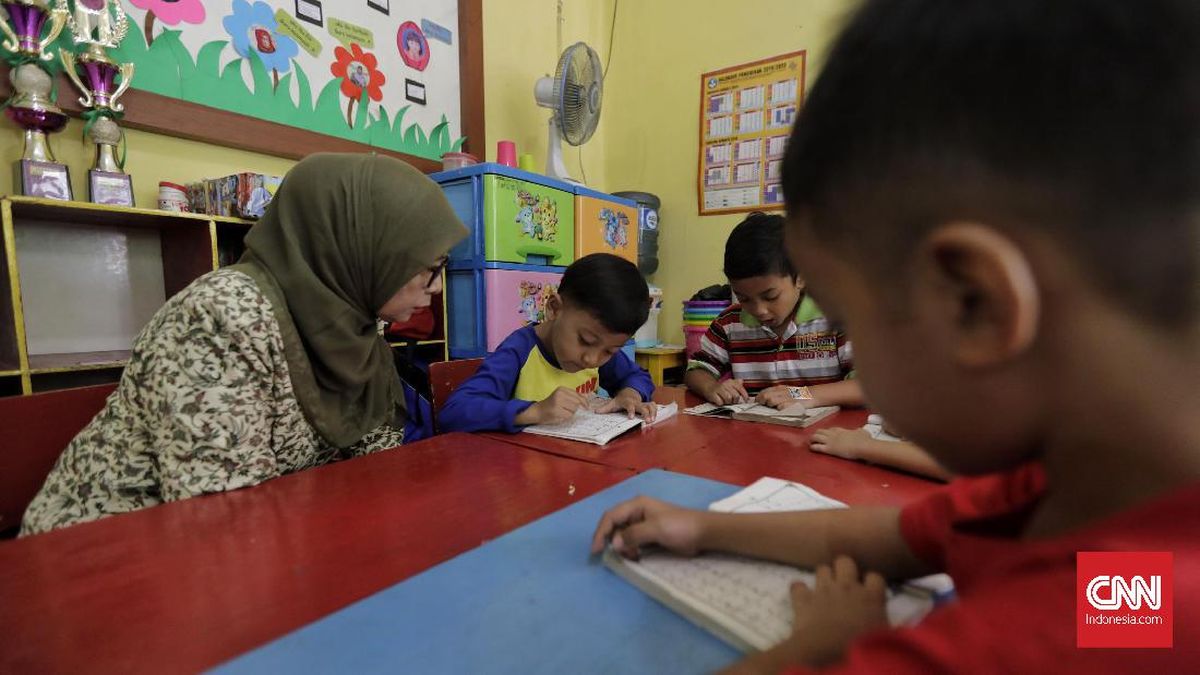
Minister of Primary and Secondary Education Abdul Mu’ti said the Smart Indonesia Programme (Program Indonesia Pintar, or PIP) has been expanded to include kindergarten (TK) and early childhood education (PAUD).
Mu’ti said this is the first time kindergarten pupils will receive PIP assistance. A total of 888,000 pupils are set to receive the education support.
“We would like to announce that this year, as a breakthrough by the President, kindergarten pupils will receive PIP assistance for the first time. We have allocated it this year for 888,000 kindergarten pupils,” Abdul Mu’ti said at an event outlining the Ministry of Primary and Secondary Education’s achievements over two years, at the ministry’s building in Senayan, Central Jakarta, on Monday (26 October).
Mu’ti said that, according to 2025 data, PIP assistance had been distributed to 19 million pupils across Indonesia, with a total budget of Rp13.43 trillion.
He broke down the number of recipients by education level: 10.43 million primary school pupils, 4.42 million junior secondary pupils, 2.10 million senior secondary pupils and 2.05 million vocational secondary pupils.
For 2027, Mu’ti is targeting 19.48 million PIP recipients, including 888,000 kindergarten pupils. To date, the programme has reached 13.6 million pupils.
Mu’ti also outlined the annual assistance amounts for each education level: Rp450,000 for primary school and kindergarten pupils, Rp750,000 for junior secondary pupils, and Rp1.8 million for senior and vocational secondary pupils.
He said PIP also covers non-formal education through equivalency programmes. Students in non-formal schools each receive Rp1.8 million.
“We would also like to say that those studying at Community Learning Centres (PKBM) receive assistance of an equivalent amount,” Mu’ti said.
PIP provides support to pupils from poor or economically vulnerable families so they can continue their education. The cash assistance is intended to ease education-related costs and prevent children from leaving school because of financial hardship.
Pupils do not apply for PIP independently. Recipients are selected through data collection, nomination and verification by schools and relevant agencies.
Those selected receive a Student Savings (Simpanan Pelajar, or SimPel) passbook and a debit or ATM card to withdraw the assistance.
PIP funds can be used for education needs such as books and stationery, uniforms and school supplies, transport between home and school, pocket money, course fees for formal education pupils, and additional practical training or internship costs.
The assistance is intended to help pupils continue their education without being burdened by financial constraints.
Source: jawawa.id (https://jawawa.id/newsitem/education-minister-extends-pip-to-888-000-kindergarten-pupils-1793053231)
Originally published by CNN Indonesia (https://www.cnnindonesia.com/nasional/20261026185539-20-1419852/mendikdasmen-perluas-jangkauan-pip-untuk-888-ribu-anak-tk), translated from Indonesian