
Education is not about power or money, says Muhammadiyah chief Haedar Nashir
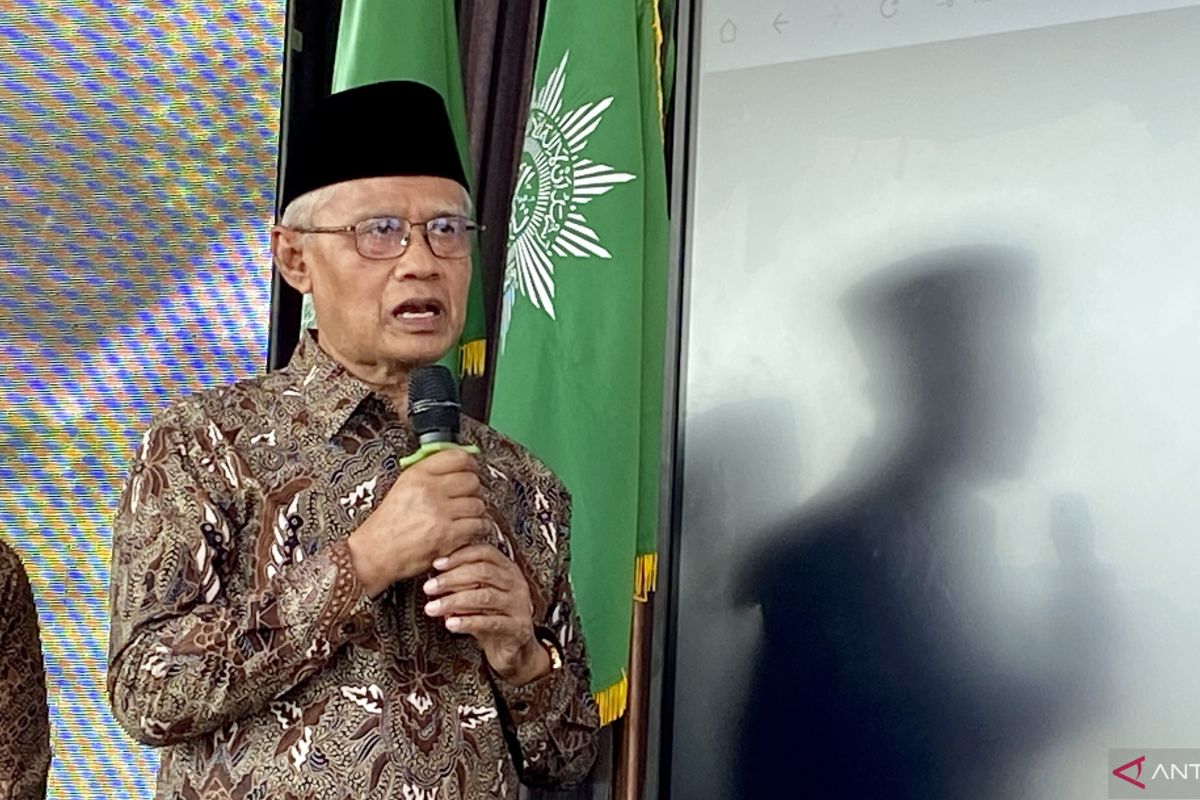
Yogyakarta (ANTARA) - The General Chairman of the Central Board (PP) of Muhammadiyah, Haedar Nashir, has urged education policymakers not to base their service on the interests of power, let alone economic interests. “It is wrong if we position education as a factor of power, especially as a factor of money,” Haedar said in Bantul on Saturday. He expressed hope that anyone entrusted with making policy in the education sector, whether heads of departments, ministers, directors, or school principals, would uphold this principle. “No matter what, education is not a matter of position and power. To position it as such is a mistake,” he said. According to Haedar, service in the field of education is a great responsibility to advance the intellectual life of the nation, which faces increasingly complex challenges. “Schools and universities are not a path to seek money. If that is the path taken, the outcome will be seen for itself,” he said. He called on all stakeholders to reorient their perspective on education in Indonesia. “Here, whoever is entrusted with the mandate from the central to the lowest levels must understand that this is a matter of responsibility in terms of advancing the nation’s intellect,” he said. Haedar noted that Muhammadiyah has contributed to the education sector for more than a century through its service in educating the nation’s children, particularly those from lower-middle-income families. “That is extraordinary service, especially before independence, when the government was not yet present,” he said. According to him, the world of education in Indonesia still faces major challenges because every change of regime often causes the long-term direction of educational development to be interrupted and restarted from scratch. “We do not have a roadmap for a long-term strategy to advance the intellectual life of the nation as the goal of education,” he said. As a result, Haedar continued, policies that emerge with each change of government period tend to be practical and short-term. “That is indeed important, but it is not long-term,” he said. Nevertheless, he assessed that Indonesia currently has a long-term educational development direction through the Golden Education 2045 vision. To realise this goal, according to Haedar, a strategy involving reactualisation, revitalisation, reform, and transformation of education is needed. “That is one of the tasks for the government and school principals to translate,” he said.