
Education and Human Development Ministers Review School Revitalisation in Bogor Regency
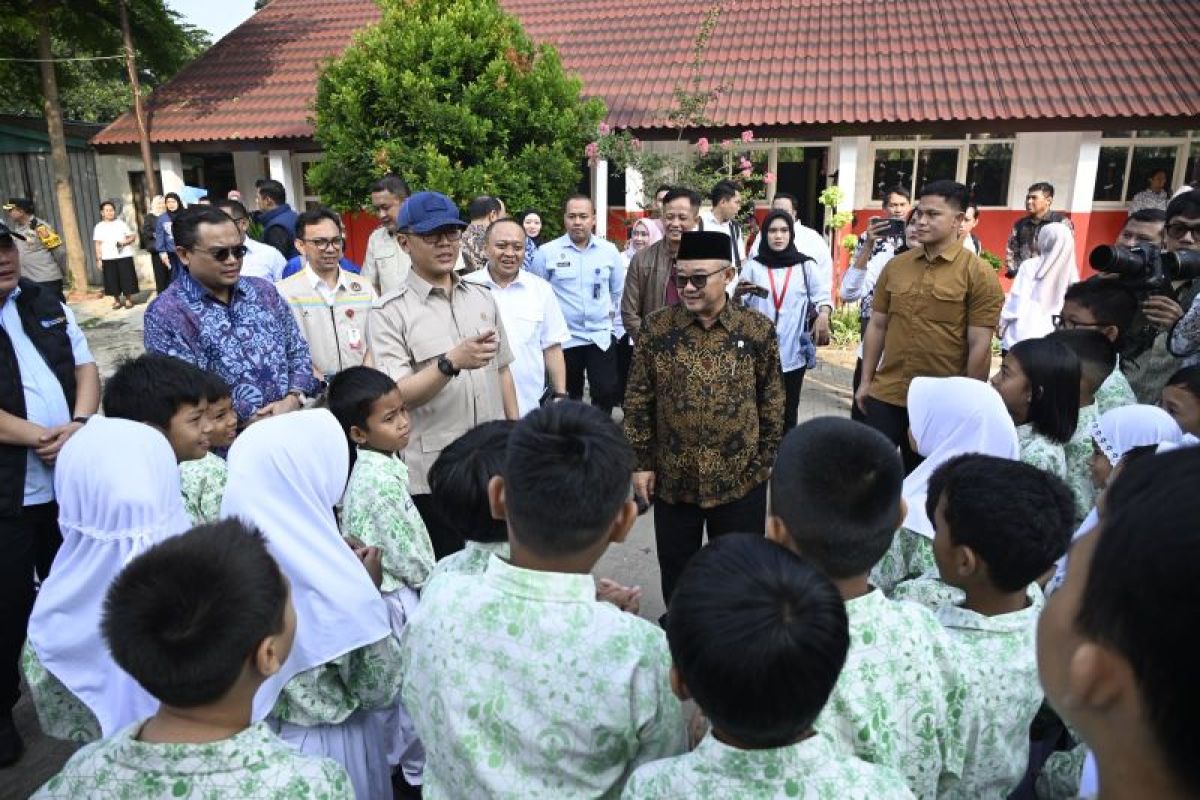
Jakarta (ANTARA) — Minister of Primary and Secondary Education Abdul Mu’ti accompanied Coordinating Minister for Human Development and Culture Sugiono on a visit to inspect the results of the school revitalisation programme at Cirimekar 02 State Primary School in Bogor Regency, West Java.
The visit also provided an opportunity to review the School Unit Revitalisation programme, the use of the Learning Digitalisation programme, and to share a meal with children through the Free Nutritious Meals (MBG) programme.
In a written statement issued by the Ministry of Primary and Secondary Education in Central Jakarta on Thursday, Mu’ti encouraged pupils to make the most of their improved learning environment by increasing their enthusiasm for studying.
Cirimekar 02 State Primary School head Bagus Eko Kurniawan said the school had been in a concerning condition before the revitalisation, with leaking classrooms, severely damaged ceilings and damaged floors.
Under the revitalisation programme, the school received assistance worth Rp951,543,177. The funding covered the renovation of three classrooms and the school health unit room, the construction of toilets and sanitation facilities, and the construction of an administration room.
Bagus said the improvements had not only transformed the school’s physical condition but also enabled teaching and learning to take place more effectively. Teachers, pupils and parents had welcomed the changes.
“The revitalisation has had a significant impact on our school’s facilities and infrastructure, allowing learning at the school to run well,” Bagus said.
In addition to the revitalisation, Cirimekar 02 State Primary School also received an Interactive Flat Panel (IFP) under the Learning Digitalisation programme.
Year Five teacher Satya Dewanta said the IFP had been used to support learning needs for about a year.
Science is among the subjects that uses the device most frequently, including to illustrate parts of the body, sound, light and other topics.
Satya said using the IFP made lessons feel closer to children’s everyday lives, as they were already accustomed to interacting with digital devices.
“They are more confident in expressing their opinions. The IFP has further inspired their motivation to learn,” Satya said.