
Educating People, Not Merely Teaching
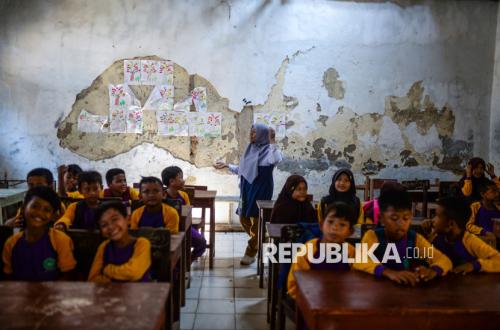
Education today faces increasingly complex challenges. Advances in technology, social change, the development of artificial intelligence and the demands of 21st-century competencies have transformed the educational landscape. Schools and madrasahs are competing to improve the quality of learning, update curricula, develop teaching methods and make use of various digital tools.
Yet amid all this progress, there is a fundamental question we need to consider: is our education system truly educating people, or is it merely busy teaching students?
This question matters because educational success should not be measured solely by a person’s mastery of knowledge, high marks, qualifications or success in academic competition. Education should, in essence, form people with faith, good character, intelligence, a sense of responsibility and social concern.
In other words, education is not simply the transfer of knowledge from teacher to pupil. It is a process of building awareness, shaping character and fostering human values.
When teaching takes priority over educating
One issue that deserves attention in education is the tendency to define learning success too narrowly. Teachers are often faced with demands to complete course material, meet curriculum targets, fulfil administrative requirements and achieve academic assessment results. All of these matter, but they must not displace education’s primary purpose.
We can find students with strong academic abilities who have yet to show behaviour that reflects courtesy. Some are clever at answering questions but have not learned to respect others. Some are proficient with technology but do not yet know how to use it wisely. Indeed, many social problems show that intellectual ability does not always go hand in hand with moral maturity.
This is where the distinction between teaching and educating becomes important.
Teaching places greater emphasis on imparting knowledge and developing skills, while education has a broader scope: shaping people through the cultivation of values, the practice of good conduct, role-modelling and the development of character.
The two must not be separated. Teaching is part of education, but education must not be reduced to teaching alone.
Education from the perspective of tawhid
In the Islamic view, education has a fundamental purpose: to form people who know Allah SWT, understand the purpose of their creation and live in accordance with His guidance.
Allah SWT says in Surah Adh-Dhariyat, verse 56:
“ I did not create jinn and humans except to worship Me.”
This verse provides a theological foundation for the idea that human life is oriented towards submission to Allah SWT. Education should therefore produce not only skilled and productive people, but also people with spiritual awareness and moral responsibility.
Education based on tawhid places faith at the foundation of human development. Knowledge is advanced to recognise the greatness of Allah, character is built through the practice of the values of faith, and skills are directed towards benefiting life.
In this framework, educational success cannot be measured simply by how much knowledge students acquire, but also by the extent to which that knowledge guides them to become better people.
A crisis of adab amid growing knowledge
We live in an age when information is readily available. Children can access a wide range of knowledge through the internet, social media and artificial intelligence. Yet ease of access to information does not automatically make someone wise.
Knowledge without values can lose its direction. Intelligence without morality can be misused. Ability without responsibility can create new problems for society.
Education must therefore once again give serious attention to the development of adab—the ethics and proper conduct associated with learning and life.
In the Islamic scholarly tradition, adab holds an important place in the pursuit of knowledge. Knowledge is not only about what someone knows, but also how they use it, how they treat their teachers, whether they respect others and how they fulfil their responsibilities.
Questions of adab cannot be resolved simply by adding subjects or making disciplinary rules. They require a consistent educational process, a supportive environment, the cultivation of habits and the setting of an example.
Teachers, parents and educational institutions share responsibility for building this culture of adab.
Teachers are more than transmitters of material
Amid changes in the times, the role of teachers is becoming even more important. When information can be obtained through a range of technologies, teachers can no longer serve merely as sources of information. They must be guides, facilitators, role models and mentors in the development of students’ character.
Artificial intelligence may help explain theories, prepare teaching materials, provide exercises and answer many questions. But educating people requires something deeper than simply providing correct answers.
Students need guidance to distinguish right from wrong, understand the consequences of their actions, respect differences, exercise self-control and develop a sense of responsibility.
This is where the teacher’s role cannot be reduced to merely delivering lesson content.
Teachers who educate do not only ask whether their students have understood the lesson. They also pay attention to how they behave, interact and apply good values in everyday life.
Restoring education to its true purpose
In the author’s analysis, one of the greatest challenges facing Indonesian education is not simply a matter of curricula, facilities or technology, but how to restore education’s focus on forming the whole person.
We need an education system capable of integrating intellectual, spiritual, emotional and social intelligence. It should not set knowledge against religion, technological progress against human values, or professional competence against good character.
Achieving this requires a continuous educational process involving three important stages: integration, internalisation and implementation.
First, integration means connecting knowledge with the values of faith and morality, as well as with real life.
Second, internalisation means embedding those values in students’ awareness and character so that they do not remain mere knowledge.
Third, implementation means translating values that have been understood and absorbed into real conduct in everyday life.
Education will not achieve its true purpose if it stops at the stage of knowing. Knowledge must be absorbed and put into action.
Conclusion
Ultimately, we need to recognise that education’s purpose is not merely to produce clever people, but to form people who think rightly, behave well and contribute to life.
We need a generation that can compete but also has integrity; one that not only masters technology but can use it responsibly; and one that possesses not only intellectual ability, but also faith and good character.
Teachers must therefore remember that their primary task is not simply to complete the lesson material, but also to help form people with knowledge, faith and good works.
Teaching can help someone learn something, but educating helps them understand how they should live.
True education does not merely produce clever people; it nurtures people of good character who can build a better life and civilisation.
Source: jawawa.id (https://jawawa.id/newsitem/educating-people-not-merely-teaching-1795586014)
Originally published by Republika (https://opini.republika.co.id/berita/tp1lyb393/mendidik-manusia-bukan-sekadar-mengajar), translated from Indonesian